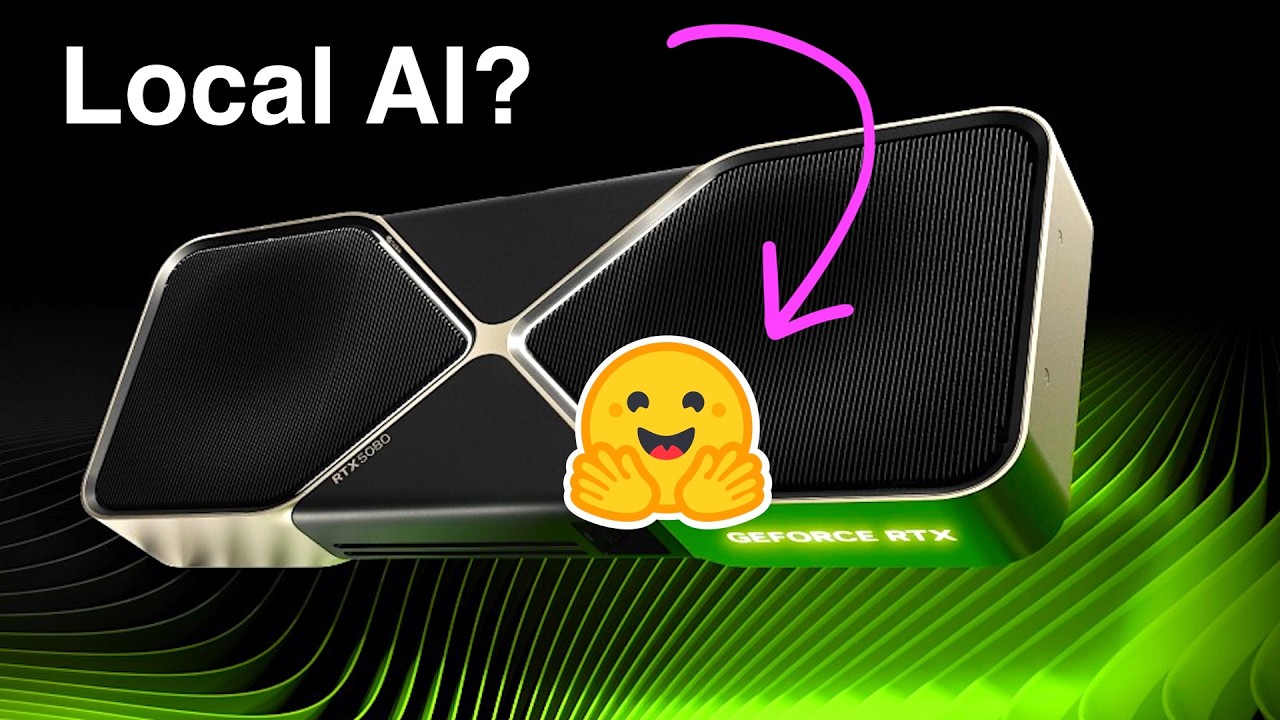
The Nvidia RTX 5080 GPU is an underrated option not only for gaming but also for local AI inference tasks. While it is somewhat limited by its 16 GB of VRAM, it offers impressive performance relative to its price, especially when compared to the higher-end RTX 5090 and the older RTX 3090. The RTX 5080 features fifth-generation tensor cores and a strong number of streaming multiprocessors, making it well-suited for parallel execution tasks common in AI workloads. Its gaming capabilities are also solid, making it a versatile choice for users interested in both gaming and AI applications.
In terms of raw performance, the RTX 5080 outperforms the RTX 5060 Ti significantly and even edges out the RTX 5070 in some benchmarks. It has higher boost clocks and better memory bandwidth than the 5060 Ti, which is crucial for AI workloads. Although the RTX 4090 remains superior in many respects, the 5080 offers more AI TOPS (a specific Nvidia metric) and comparable memory bandwidth, making it a compelling mid-tier option. The RTX 5090, while more powerful, is substantially more expensive, often costing three to four times as much as the 5080, which raises questions about cost-effectiveness.
One downside is the lack of a 24 GB “RTX 5080 Super” variant, which Nvidia initially teased but never released. This limits the GPU’s ability to handle larger AI models that require more VRAM. Despite this, the 5080 performs well with many popular local AI models such as Gemma 4, Miniax, Magestro, and Quen 3, delivering reasonable throughput for agentic AI tasks and local coding applications. It is considered a solid pro mid-tier GPU for those wanting to run AI models locally without investing in the more expensive 5090 or multiple GPUs.
Availability is a challenge for the RTX 5080, as it is often out of stock at major retailers and more commonly found on secondary markets like eBay or Facebook Marketplace, typically priced around $900. While it generally costs more than a 3090, the 3090 remains a better value if you can find one, especially since the 3090 has more VRAM. However, the 5080 benefits from newer driver support and modern architecture, which may make it a more reliable choice for some users despite the VRAM limitation.
Recent benchmarking efforts, including those by MicroEnter and community contributors, have provided valuable insights into the RTX 5080’s performance with various AI models. Although consistent and comprehensive benchmarks are still evolving, early results show the 5080 is capable of handling a range of local AI workloads effectively. The video encourages viewers to share their experiences and preferences regarding GPUs for local AI, highlighting the 5080 as a noteworthy option for those seeking a balance between cost, performance, and modern features.