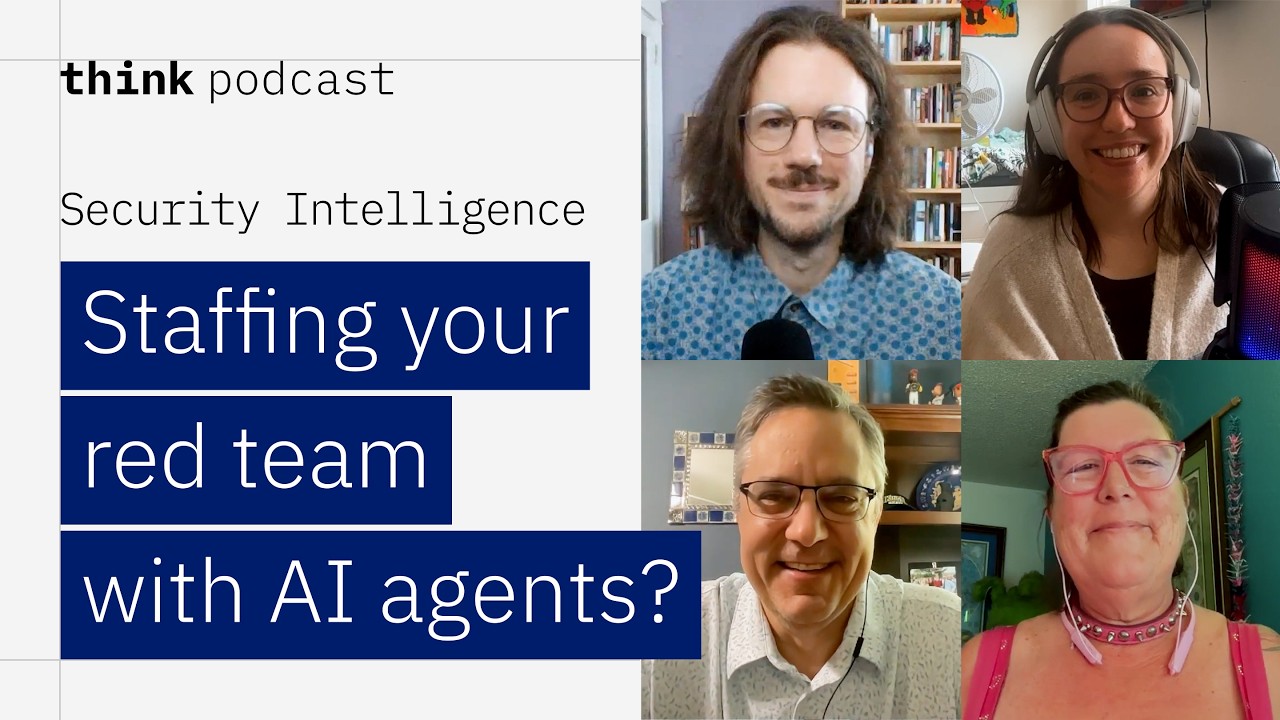
The podcast discusses the potential and risks of using AI agents like OpenClaw for penetration testing and the challenges posed by ephemeral AI-generated software, emphasizing the necessity of human oversight and controlled environments to ensure security. It also highlights the importance of integrating AI thoughtfully into cybersecurity practices—balancing automation with human judgment—to enhance threat detection and response amid rising ransomware incidents and evolving cyber threats.
The Security Intelligence podcast episode explores the use of AI agents like OpenClaw in penetration testing, sparked by Sophos’s experiment where they unleashed OpenClaw on a legacy on-prem network. The AI agent successfully identified 23 actionable vulnerabilities, demonstrating its potential as a security partner. However, panelists emphasized the importance of guardrails to prevent unintended damage and highlighted the unpredictable nature of AI agents once set on a task. While some expressed full trust in AI for pen testing, others urged caution, underscoring the need for human oversight and controlled environments to harness AI effectively.
The discussion then shifted to the broader implications of AI in cybersecurity, particularly the rise of ephemeral software—AI-generated, on-demand applications that may be used briefly and discarded. Panelists expressed concern that such software might proliferate rapidly without proper security hygiene, leading to a “graveyard” of vulnerable applications that persist beyond their intended lifespan. This scenario complicates vulnerability management and compliance, especially as many users creating these apps may lack security expertise. The consensus was that while AI can improve coding and vulnerability detection, human involvement remains crucial to ensure security standards are met.
Panelists also debated the realistic integration of AI into the software development lifecycle, with some optimism that AI could help “shift left” by identifying and fixing vulnerabilities early in the coding process. However, they acknowledged the irony that AI-generated code often contains flaws, partly because non-expert users prompt the AI and because perfect secure coding is challenging even for humans. The solution proposed involves layered defenses, including AI tools monitoring other AI outputs, creating a multi-tiered security approach that combines automation with human judgment to manage risks effectively.
The episode concluded with an analysis of ransomware trends, noting a 30% increase in ransomware incidents compared to only a 10% rise in security spending. Panelists critiqued the direct comparison, emphasizing that increased spending does not automatically translate to better security outcomes. Instead, they advocated for smarter allocation of resources, focusing on areas where AI can augment security operations, such as autonomous threat investigations and identity threat detection. The goal is to leverage AI to handle the overwhelming volume of threats while maintaining human oversight to guide strategic decisions and improve overall security posture.
Ultimately, the panelists agreed that cybersecurity teams are well-positioned to lead AI adoption due to their experience with risk management and their need for tools to handle vast data and threats. They encouraged organizations to start small by integrating AI in familiar areas like threat detection and gradually expand its use. The key takeaway is that AI is a powerful but double-edged tool requiring careful implementation, continuous human involvement, and adaptive security strategies to effectively defend against evolving cyber threats in an increasingly complex digital landscape.