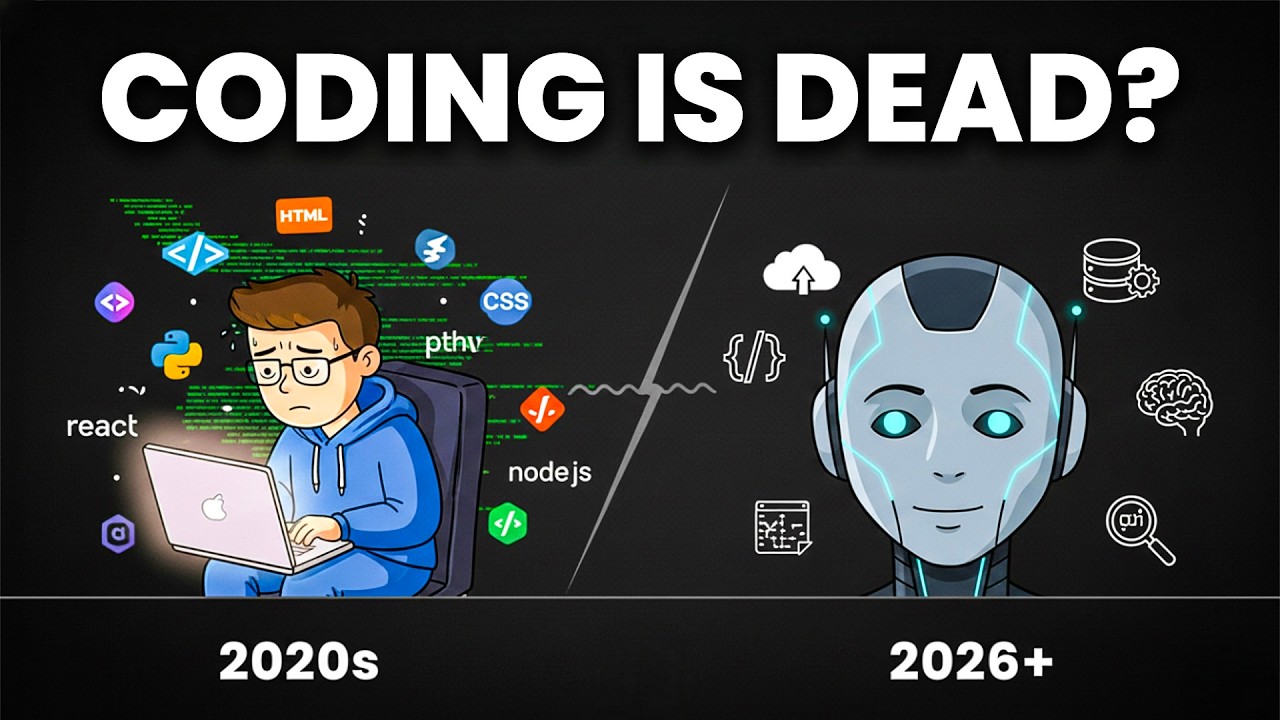
The video argues that learning to code in 2026 remains valuable, not just for traditional programming jobs but as a versatile skill that empowers problem-solving, innovation, and independence in a digital world increasingly shaped by AI. It emphasizes that coding is the new literacy, essential for translating human problems into technical solutions, and encourages learners to pursue it with genuine passion and effective methods rather than viewing it as a quick path to high salaries.
The video begins by addressing the shifting narrative around learning to code, especially with the rise of AI. While coding was once hailed as the safest career path, the advent of AI has led some to advise against it. However, the speaker argues that both perspectives miss the point. Coding is no longer just about job prospects; it’s about empowering individuals to solve problems independently and build solutions without relying on others. Coding skills extend beyond software development into areas like product design, data analysis, automation, and leadership, making it a valuable asset in many technical roles.
The speaker emphasizes that coding is the new literacy in the digital age. Even if one does not become a full-time developer, understanding code provides a competitive edge and enhances one’s ability to innovate. The current environment is the cheapest and most accessible time in history to build software products, thanks to affordable cloud hosting, powerful design tools, and free distribution channels via social media. This democratization allows solo developers and indie founders to create profitable products without large teams or funding, a possibility that disappears if one cannot code.
Despite AI’s impact on the job market, the Bureau of Labor Statistics projects significant growth in software development roles, particularly in specialized fields like AI engineering, data engineering, and cybersecurity. Learning to code in 2026 is less about traditional programming and more about translating human problems into technical solutions and leveraging AI tools effectively. The speaker highlights the importance of how one learns to code, recommending platforms like boot.dev that use interactive, gamified learning methods and AI tutors to foster deeper understanding rather than rote memorization.
The video also candidly acknowledges that coding is not for everyone. It cautions against viewing programming solely as a quick path to a high salary without genuine interest. Success and long-term satisfaction in coding come from a passion for problem-solving and a curiosity about how things work. Those who do not enjoy these aspects may find other career paths more fulfilling. The speaker stresses that the core reasons to learn coding remain valid despite AI’s rise, and the best time to start is now, before others seize the opportunity.
In conclusion, the video dispels the myth that AI has made coding obsolete and reframes coding as a versatile, empowering skill essential for innovation and career growth in 2026 and beyond. It encourages viewers to consider their aptitude and passion for problem-solving when deciding to learn coding and warns against relying on superficial trends like “vibe coding.” The speaker invites viewers to explore further resources and emphasizes that coding opens doors not just to jobs but to creating something entirely one’s own.