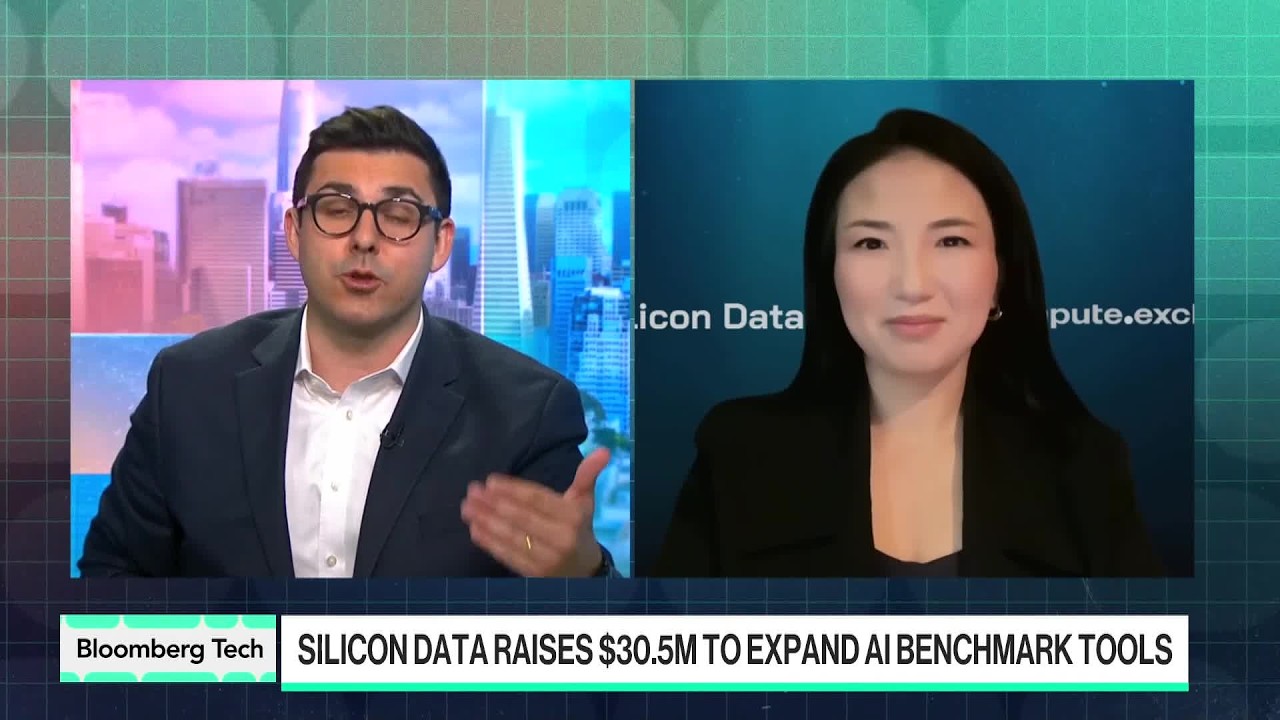
Silicon Data has raised $30.5 million in Series A funding to enhance its AI compute benchmarking tools, aiming to become the independent standard for evaluating AI chips, tokens, and models, with backing from major investors who are also potential clients. The company is collaborating with CME to launch GPU futures contracts based on its benchmarks, providing market participants with risk management tools amid evolving AI hardware, while monitoring key indicators to assess potential oversupply in AI infrastructure.
Silicon Data, a company specializing in pricing and performance benchmarks for AI compute, has raised $30.5 million in a Series A funding round to expand its tools and capabilities. CEO Carmen Li, formerly head of strategic alliances for enterprise data at Bloomberg, shared that the company aims to become the independent referee for the entire AI compute stack. This involves developing new indices and next-generation benchmarking services to support the growing variety of AI chips, tokens, and models, which will be used to design products and software applications.
The funding round was led by Gavin Baker with Valor through the Avalor Trade’s AI Fund, alongside other notable investors such as CME, F Prime (part of Fidelity), DRW, and Jump Trading. These investors are not only financial backers but also potential clients, aligning well with Silicon Data’s goal to provide useful and market-relevant benchmarking products. The involvement of these industry leaders underscores the strategic importance of Silicon Data’s offerings in the AI compute ecosystem.
A significant development discussed is CME’s plan to launch GPU futures contracts settled against Silicon Data’s benchmarks, specifically for the H100 and H100 Neo cloud on-demand indices. Scheduled for October 5, these futures will allow natural owners of GPU servers to hedge against price volatility by shorting futures, while consumers of GPU compute can lock in prices by going long. This initiative aims to provide a risk management tool for market participants amid the rapidly evolving AI hardware landscape.
Carmen Li also addressed questions about GPU depreciation and the economic value of older generations of chips. Despite natural depreciation, GPUs like the A100 remain valuable due to their applicability in various workflows and smaller AI models. The residual value of these assets depends on their future cash flow potential, similar to other depreciating assets like aircraft carriers or ships. This nuanced understanding helps Silicon Data provide accurate benchmarks that reflect real-world usage and pricing dynamics.
Finally, Li highlighted three key signals from Silicon Data’s data that could indicate an oversupply of AI infrastructure in the next two to three years: declining spot prices, a downward-sloping forward curve (indicating falling future prices), and decreasing residual values in the secondary market for servers. Currently, spot prices have been stable or rising, and the forward curve is contango, suggesting no immediate oversupply. Monitoring these indicators will be crucial for stakeholders to understand supply-demand dynamics in the AI compute market.