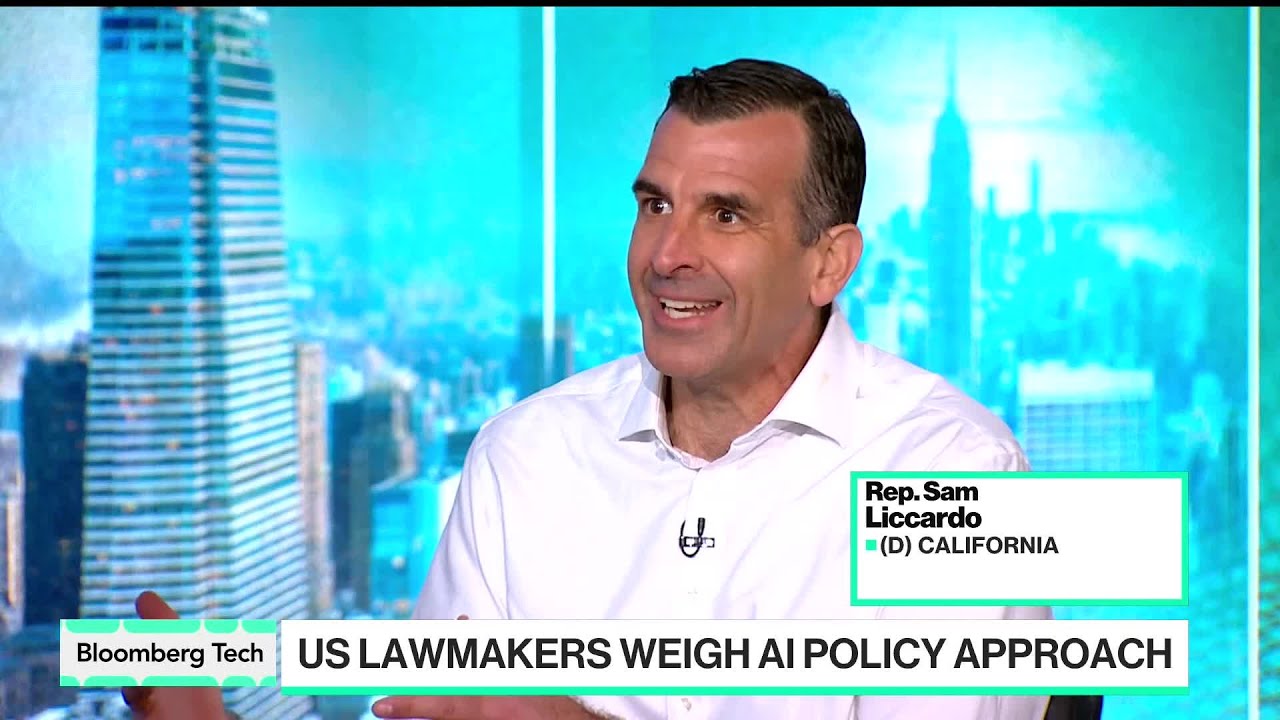
A Silicon Valley congressman called for a national AI policy, arguing that decisions about AI safeguards should be made through public debate and legislation rather than private deals between tech companies and the Pentagon. He proposed measures to protect companies advocating responsible AI use, emphasized the need for bipartisan solutions, and suggested that government should collaborate with industry and experts to create flexible, effective AI regulations.
A Silicon Valley congressman discussed the evolving relationship between tech companies in his district and the Pentagon, particularly in light of recent events involving Anthropic and OpenAI. He noted that Silicon Valley has a strong libertarian streak, with many supporting Anthropic’s efforts to bring AI policy discussions into the public sphere. The congressman criticized the current process, where important decisions about AI safeguards are made in private negotiations between the Pentagon and individual companies, arguing that these should be public debates with clear rules set by both Congress and the administration.
He highlighted the need for national AI policy, pointing out that Congress has historically lagged behind technological advancements, as seen with the decades-long delay in passing data privacy legislation. The congressman argued that the lines proposed by Anthropic for responsible AI use are reasonable and should be considered as models rather than grounds for punitive action. He emphasized that industry can play a constructive role in informing government policy, and that public discussion is essential because AI impacts everyone, especially in areas like public surveillance.
Addressing the challenge of keeping up with rapid technological change, the congressman acknowledged Congress’s slow pace but revealed he would introduce a provision to the Defense Production Act. This provision would prevent federal agencies from retaliating against companies like Anthropic when they propose reasonable limits on their technology’s deployment. He stressed the importance of drawing clear lines around AI risks and taking industry warnings seriously, while also noting the need for bipartisan support for such measures.
The congressman expressed concern about the increasing reliance on executive orders to regulate AI, arguing that Congress should reclaim its constitutional authority to legislate on these issues. He warned that executive actions can be problematic and sometimes unconstitutional, and that a national conversation is needed to ensure diverse communities across the country are represented in AI policy—not just those in Silicon Valley. He advocated for a balanced approach to AI regulation, neither stifling innovation nor allowing unchecked acceleration, and called for bipartisan solutions to address issues like job displacement and utility costs.
Finally, the congressman acknowledged the complexity of regulating AI, especially regarding mass surveillance and autonomous weaponry. He argued that government alone cannot keep up with the pace of technological change and should instead rely on industry and academic experts to establish best practices. He proposed legislation that would incentivize companies to meet these standards, offering benefits like federal preemption if they comply, while subjecting non-compliant companies to state-level regulations. This approach, he suggested, would allow for more flexible and effective governance of rapidly evolving AI technologies.