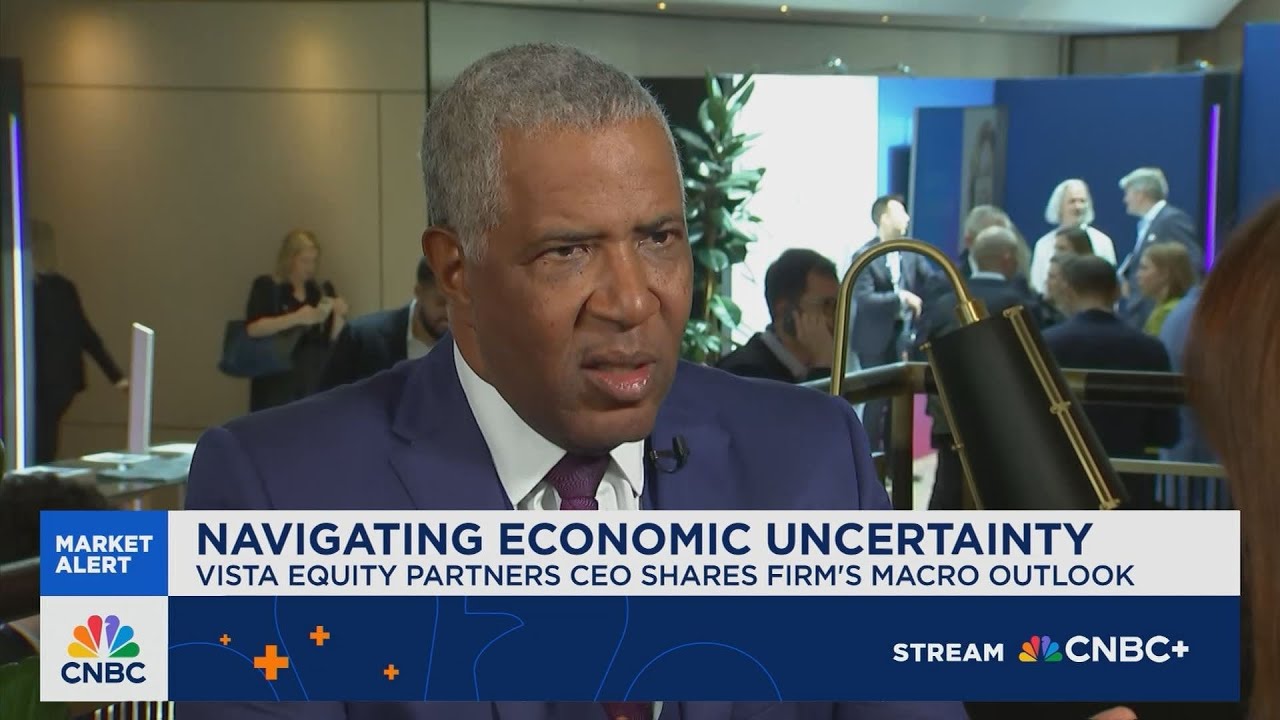
In the interview, Robert Smith discusses the transformative impact of artificial intelligence (AI) as a general-purpose technology with significant implications for the global economy. He highlights how his company, Vista, is leveraging AI to convert enterprise software companies into more efficient, cloud-based factories, resulting in exponential productivity gains. Smith emphasizes that AI can dramatically improve various aspects of business operations, such as product development, customer support, and growth, potentially making some companies more profitable and competitive or risking their future if unprepared.
Smith explains that AI is revolutionizing the workforce, particularly knowledge workers who generate substantial economic value. He notes that AI agents can handle tasks previously performed by multiple employees, increasing productivity and efficiency. For example, customer service agents can now manage many more customers with AI assistance, which could threaten jobs but also create opportunities for workers to orchestrate and manage these AI-driven processes. The key for businesses is to adopt AI early and effectively to stay competitive in this evolving environment.
The conversation also touches on the importance of being fast and first in the AI race, especially in the context of quantum computing and cybersecurity. Smith discusses how his company is building scalable AI systems and forming partnerships with major players like OpenAI and Google to accelerate adoption. He highlights the potential of quantum encryption to protect AI agents from cyber threats, which is an area of active development with specific partners. Speed and scale are crucial for gaining a competitive advantage in AI and related technologies.
Smith reflects on the valuation bubble in tech and enterprise software, noting that his firm has taken several companies private after high valuation peaks. He sees significant opportunities in healthcare and other regulated sectors, where AI can expand market size and improve operational efficiency. By creating administrative and operational AI agents tailored to these environments, his company aims to generate substantial returns while navigating regulatory complexities. The focus remains on building trusted, compliant AI solutions that can deliver value across various industries.
Finally, Smith discusses the evolving landscape of international trade and how enterprise software provides insights into global economic shifts. He suggests that trade negotiations, especially with China, are influencing supply chains and tariffs, with AI tools helping model and evaluate these changes. Smith remains optimistic that resolving trade issues will create new opportunities for growth and strategic advantage. Overall, he underscores the importance of rapid innovation, strategic partnerships, and leveraging AI to stay ahead in a rapidly changing technological and economic environment.