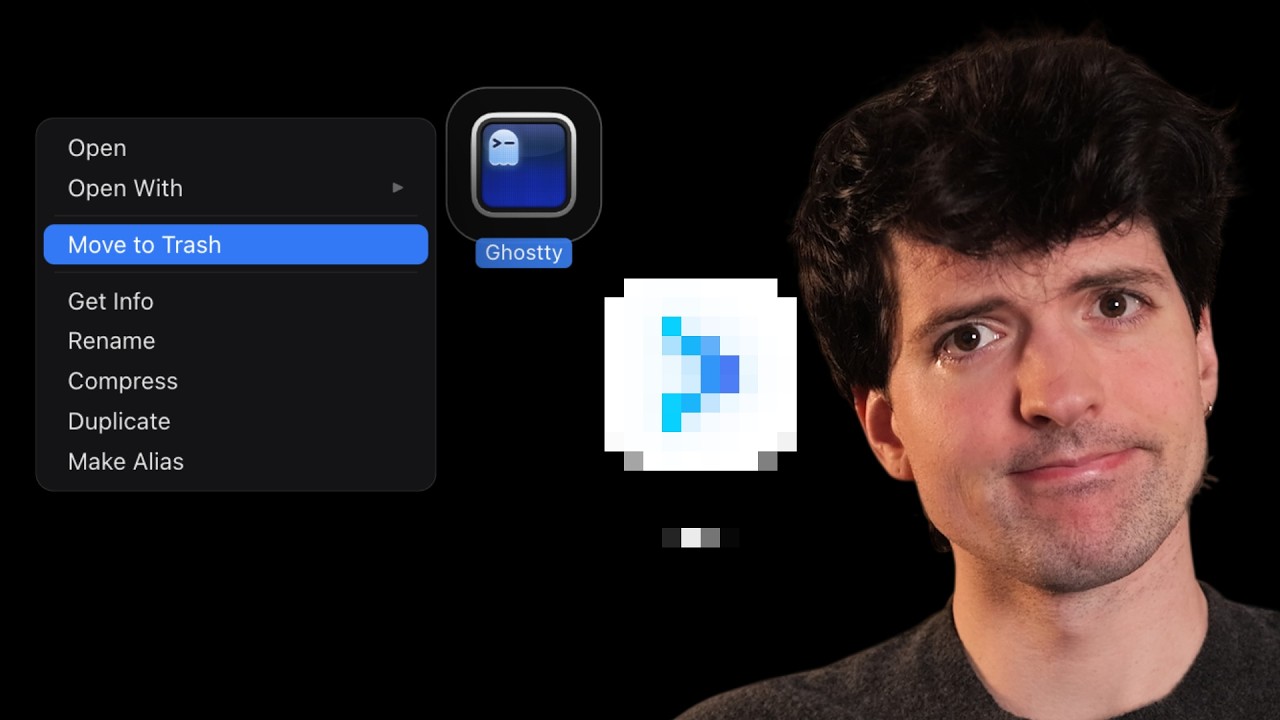
The creator discusses their decision to stop using Ghostty, a terminal emulator they had been loyal to for a long time, in favor of a new tool called Semox. They explain that while Ghostty is fast, reliable, customizable, open source, and generally excellent, their workflow needs have evolved. Specifically, the traditional terminal multiplexer setup (like tmux) no longer fits the branching, parallel nature of their current work. The hierarchy and organization offered by multiplexers became limiting as their projects and tasks became more complex and interconnected.
Semox, built on the same core library as Ghostty (libghostty), offered a new way to manage terminal sessions and projects. The creator highlights how Semox allows for better organization, with features like sidebars, renaming, pinning, and easy navigation between different projects and tasks. This structure aligns more closely with how their work is split across multiple projects and tasks, making it easier to manage everything in parallel. The integration with tools like Claude Code and the ability to quickly spin up different environments within the same interface further improved their productivity.
Despite its strengths, Semox is not perfect. The creator points out some bugs, such as duplicated status lines in their shell and issues with the built-in browser, which lacks support for extensions and proper authentication. These annoyances, however, are not dealbreakers, and the overall experience is still superior to previous solutions. The creator also expresses a desire for even more advanced features, such as infinite nesting and scrollable panes, inspired by their positive experience with the Neri window manager, which allows for more flexible and intuitive navigation between windows without the constraints of traditional tiling.
The video also touches on broader frustrations with existing operating system features like macOS Spaces, which the creator finds slow, unintuitive, and poorly suited for complex, parallel workflows. They argue that the future of developer tools lies in applications that can manage multiple tasks and contexts seamlessly, potentially integrating terminals, browsers, and editors into a single, highly customizable interface. Semox, in their view, is an early but promising step in this direction, showing that it’s possible to rethink how developers organize and interact with their work.
In conclusion, the creator is excited about the direction tools like Semox are taking, even as they acknowledge that the landscape is still rapidly evolving. They encourage others to experiment, build, and iterate on these ideas, as the current generation of tools often feels like a rough draft of what’s possible. While they have moved off Ghostty for now, they remain open to further changes and improvements, emphasizing that the future of developer productivity will depend on tools that better match the chaotic, parallel nature of modern software development.