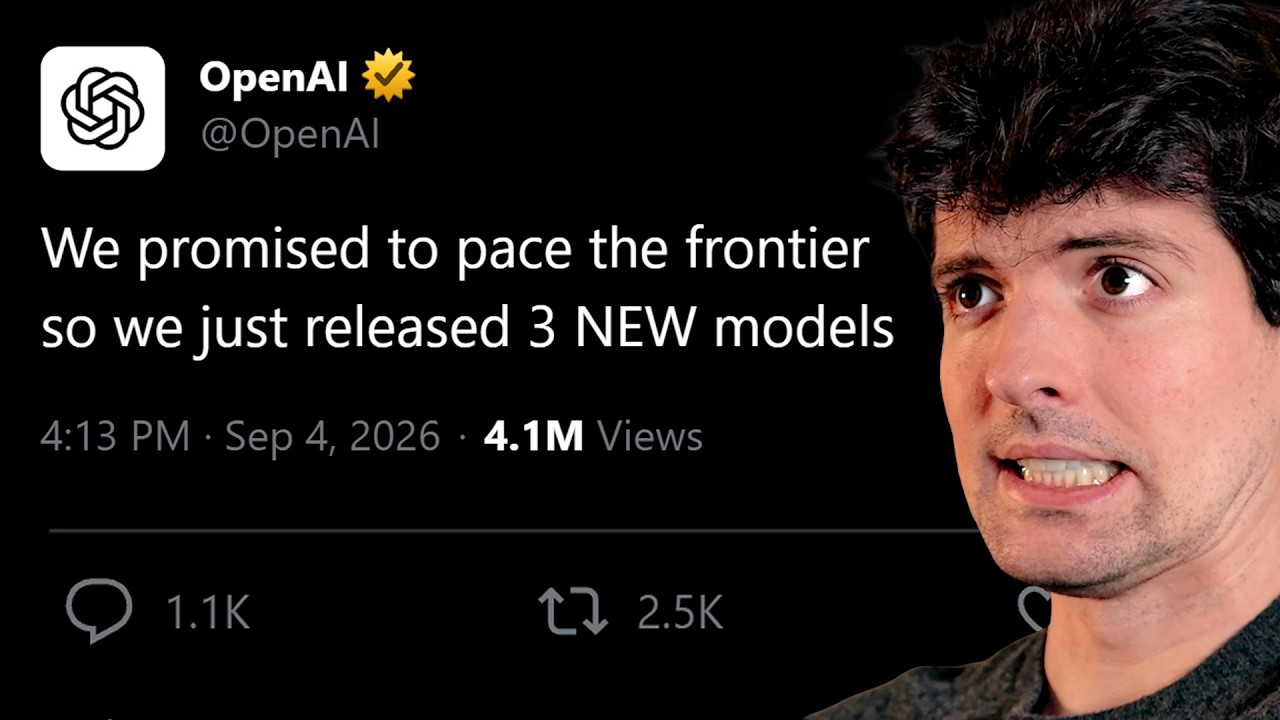
The video explains that “pacing the frontier” in AI development involves managing the rate of innovation to ensure safety and comprehensibility, rather than halting progress, by balancing model efficiency with interpretability. It emphasizes that recent steady model releases reflect this approach, focusing on reducing errors and improving reliability to create a sustainable and safer AI ecosystem.
The video discusses the concept of “pacing the frontier” in AI development, a topic that recently sparked widespread debate following an article by Daario and reactions from prominent figures. The creator humorously acknowledges the meme culture around the topic but emphasizes the importance of understanding what pacing truly means. Contrary to popular belief, the recent steady release of models like Gro 47, Opus 55, and GPT6 variants actually exemplifies effective pacing. The key idea is that pacing isn’t about halting progress but managing the rate of innovation to ensure safety and comprehension.
A central concern driving pacing is the fear of an uncontrollable “takeoff,” where AI models improve themselves so rapidly and opaquely that humans lose understanding and control. The video uses the analogy of programming languages evolving from assembly to C to illustrate how abstraction and efficiency gains can exponentially increase complexity and reduce comprehensibility. Similarly, as AI models become more efficient and capable, their internal workings become harder to interpret, posing risks if their behavior cannot be adequately monitored.
The video highlights the trade-offs between model efficiency and interpretability, using examples from OpenAI and Anthropic. OpenAI focuses on making models more efficient, sometimes at the cost of making their reasoning traces harder to understand, while Anthropic tends to prioritize interpretability, even if it means less efficiency. This balance is crucial because better monitoring and understanding of AI behavior are essential for safe pacing. The reasoning tokens used by models serve as a window into their thought processes, and reducing these tokens to improve efficiency can inadvertently reduce transparency.
Further, the video clarifies misconceptions about benchmarks, explaining that they measure not just peak performance but also consistency and failure rates. Models like Opus 5.5 improve the “floor” by reducing dumb mistakes, making them more reliable for longer workflows without necessarily pushing the “ceiling” of raw capability. This approach aligns with pacing goals: focusing on safer, more dependable, and cost-effective models rather than chasing ever-higher intelligence that could increase risks.
In conclusion, pacing the frontier means prioritizing the development of AI models that are less prone to errors, easier to understand, and more affordable, rather than solely pursuing maximum capability. This strategy fosters a sustainable AI ecosystem where improvements are incremental and manageable, reducing potential dangers. The video encourages viewers to appreciate this nuanced approach and recognize that current model releases reflect thoughtful pacing efforts aimed at balancing innovation with safety and usability.
Useful Links