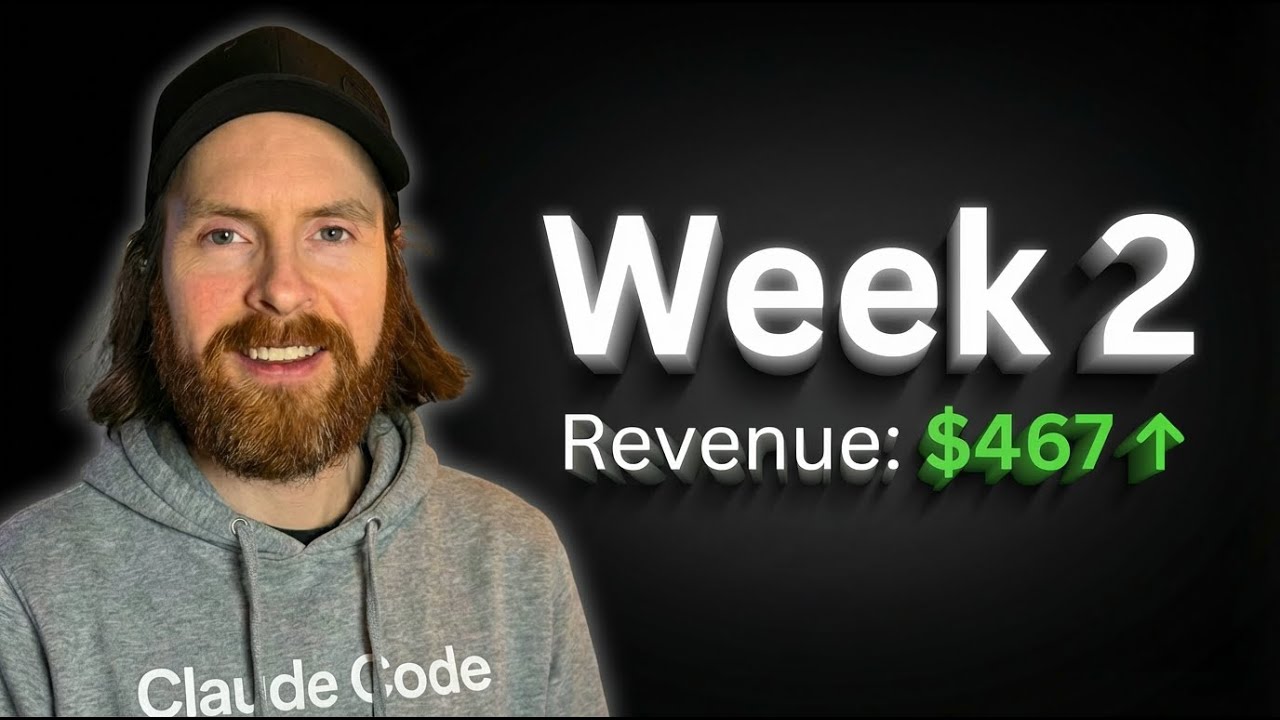
In this week two update of building AI-native micro businesses, the creator shares progress on several fronts, focusing on transparency and practical insights. The video begins with a revenue breakdown for January, showing $467 earned so far from various AI-powered side projects, including an AI-generated video course platform and several YouTube Shorts channels. The creator emphasizes that these ventures are built using cloud code and AI automation, with minimal manual intervention, and highlights the value and scalability of such micro businesses.
A major highlight of the week is the viral success of a new YouTube Shorts channel, where a single video garnered nearly half a million views in just 15 hours and brought in 1,500 subscribers in one day. The creator demonstrates that AI-generated content can still achieve significant reach and monetization, dispelling doubts about the viability of such approaches. Screenshots and analytics are shared to illustrate the rapid growth and revenue potential of these channels, reinforcing the effectiveness of the AI-driven workflow.
The video then shifts to a hands-on segment where the creator builds an email agent using Claude’s cloud code and Google Cloud Platform (GCP). Step-by-step, the process of setting up a Gmail API connection, configuring OAuth consent, and generating credentials is explained. The creator successfully tests the agent by reading and sending emails, showcasing how easily AI tools can automate routine tasks. This email agent is intended for use in upcoming projects, demonstrating the iterative and practical approach to building useful AI utilities.
Next, the creator briefly explores Claude Co-Work, a new interface for cloud code, by analyzing a large fitness dataset from Kaggle and generating a short presentation with key insights. While the findings are basic, the demonstration highlights the potential of integrating data analysis and presentation generation within an AI workspace. The creator also experiments with connectors, such as Gmail integration, but ultimately prefers the custom-built MCP agent for email tasks.
Finally, the creator previews updates to the AI video course, sharing a snippet of the automation workflow used for generating viral videos. Plans are discussed for experimenting with the new Qwen 3VL embeddings model, which supports multimodal data and could enable advanced video and image search capabilities for future projects. The video concludes with reflections on the importance of video content for marketing AI micro businesses, a summary of current channel growth (over 2 million views across new channels), and a look ahead to more experiments and updates in the coming weeks.