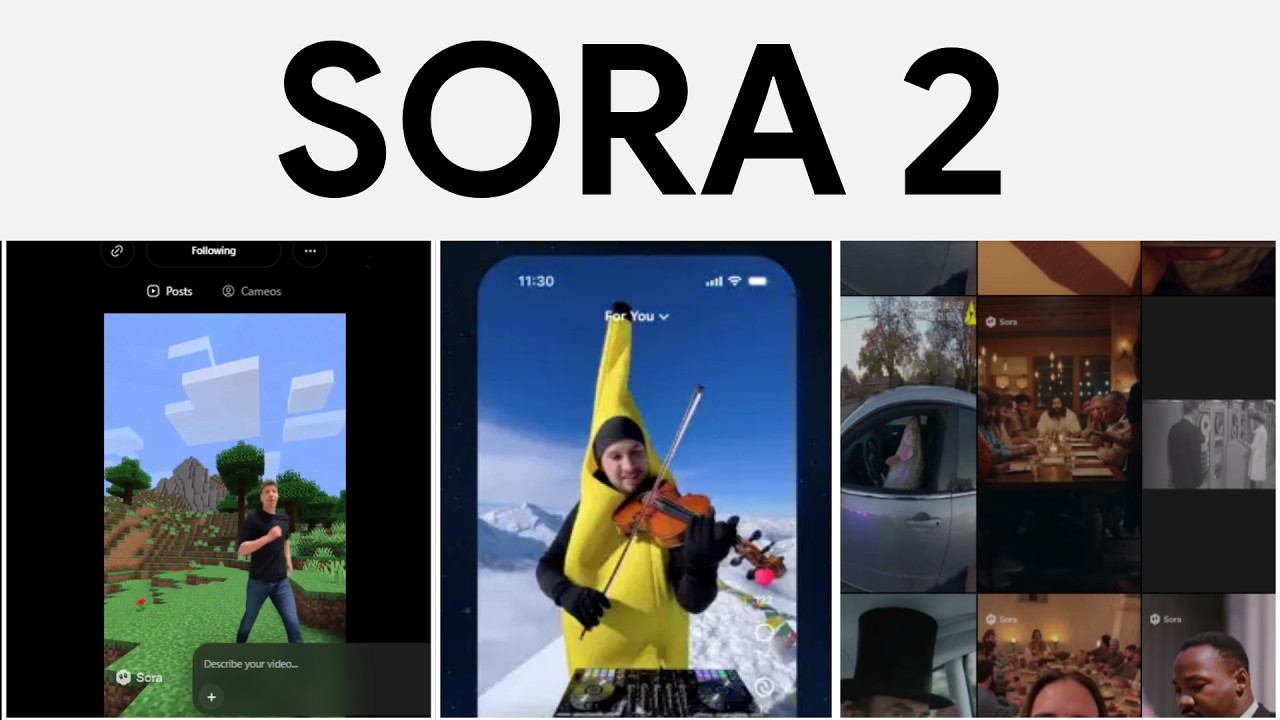
The video discusses OpenAI’s launch of Sora 2, a significant advancement in AI video generation technology. Sora 2 builds on the original Sora model, which was previewed in early 2024 but took time to become widely accessible. Since then, competitors like Google and various Chinese companies have released comparable or even superior video generation models. However, Sora 2 stands out with its ability to generate longer-form videos in 1080p quality, complete with synchronized audio, lip-syncing, sound effects, and music, showcasing a highly impressive multimedia capability.
Beyond the model itself, OpenAI has introduced an iOS-only app that allows users to generate and share AI-created videos. The app is currently invite-only but is expected to open up to more users soon, with an Android version likely on the horizon. Notably, content generation within the app is free, which is remarkable given the computational demands of video generation. The app also features a social network-like feed, similar to TikTok or YouTube Shorts, where users can scroll through and engage with AI-generated short videos, creating a new platform for content sharing and discovery.
A unique feature of Sora 2 is the “cameos” system, which lets users create personalized avatars by filming themselves and recording voice samples. These avatars can then be inserted into AI-generated videos, either by the user or by others with permission. Users can customize how their avatars appear and control who can use them, adding a layer of personalization and social interaction. The app also supports remixing videos and uploading images, enhancing creative possibilities. Rendering videos with cameos takes longer than simple text-to-video generation, suggesting different underlying models are at work.
The video also explores the broader strategic implications of OpenAI’s move into social networking and content creation. With ChatGPT nearing a billion users, OpenAI needs sustainable monetization strategies beyond token sales. The introduction of a social feed opens the door to advertising revenue, similar to established platforms like Facebook and TikTok. While OpenAI is unlikely to heavily monetize ChatGPT with ads, integrating ads into the Sora 2 social feed could provide a lucrative business model. This approach aligns with trends in the tech industry, where social networks dominate monetization through advertising and branded content.
Finally, the video reflects on OpenAI’s evolving role from a frontier AI model developer to a company building consumer-facing products and ecosystems. The launch of Sora 2 and its associated social network represents a pivot toward engaging a broad user base with multimodal AI experiences. This contrasts with other AI companies like Anthropic, which focus more on enterprise applications. The video encourages viewers to share their thoughts on this shift and highlights the growing importance of multimodal AI tools in attracting and retaining users in the competitive AI landscape.