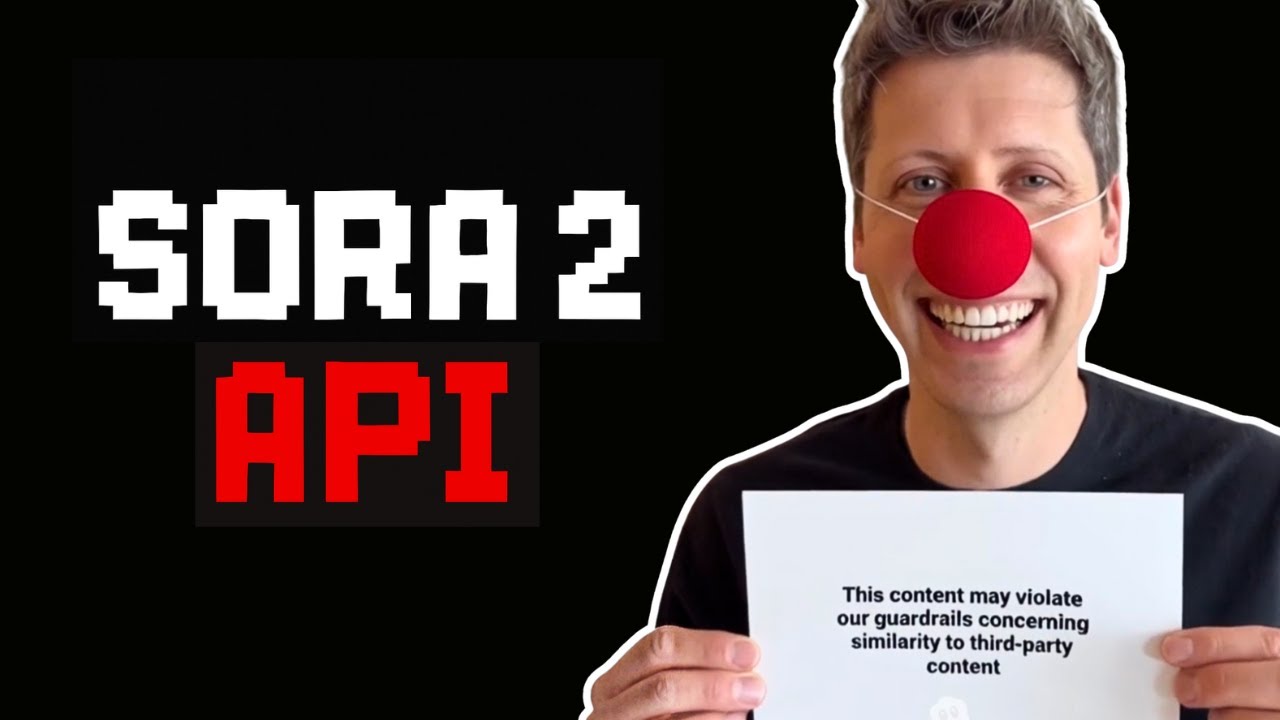
In this video, the presenter dives into the Sora 2 API, a new video generation model from OpenAI, introduced during their recent developer day. The presenter highlights two versions of the model: the standard Sora 2, which offers fast generation and good quality, and the Sora 2 Pro, which provides higher resolution and better quality but at a slower speed and higher cost. Pricing details are discussed, with the Pro version costing up to $5 for a 10-second video at 1024p resolution, making it relatively expensive for frequent use. Despite the cost, the presenter finds the API straightforward and easy to use, with simple code snippets for generating videos.
The presenter demonstrates generating videos using the Sora 2 API, starting with a humorous meme video created using the standard model. The video quality is noted as good, and interestingly, the generated videos do not include any watermarks. Next, the presenter tests the Sora 2 Pro model at maximum resolution, producing a higher-quality video with clearer details and improved sound. However, the higher cost of $5 per video is a limiting factor for extensive use, especially for casual or hobbyist creators.
One of the standout features explored is the image input capability, where users can provide an image as part of the video generation prompt. The presenter shows a storyboard example involving a character jumping on a rooftop trampoline, and the generated video closely follows the storyboard and maintains a handheld camera style. This feature is still somewhat restricted but shows promise for creative video generation based on user-provided images. The presenter also mentions that the first frame of the generated video matches the input image, a behavior consistent with other video models.
Another exciting feature covered is the remix functionality, which allows users to modify existing videos by changing specific details such as hairstyle or accent. The presenter demonstrates this by remixing a video of a woman being interviewed, altering her hairstyle to an 80s ponytail and changing her accent to British. This remix capability offers flexibility for refining or customizing videos without starting from scratch, which could be valuable for content creators looking to iterate on their work efficiently.
In conclusion, the presenter finds the Sora 2 API impressive and fun to experiment with, though the cost remains a significant consideration. They note that the API has restrictions, especially around generating realistic human faces, but overall, it offers exciting possibilities for AI-driven video creation. The presenter plans to explore more features in future videos, including real-time voice generation and testing other OpenAI models. They encourage viewers to try out the Sora 2 API while being mindful of the expense, expressing optimism about potential use cases and future improvements.