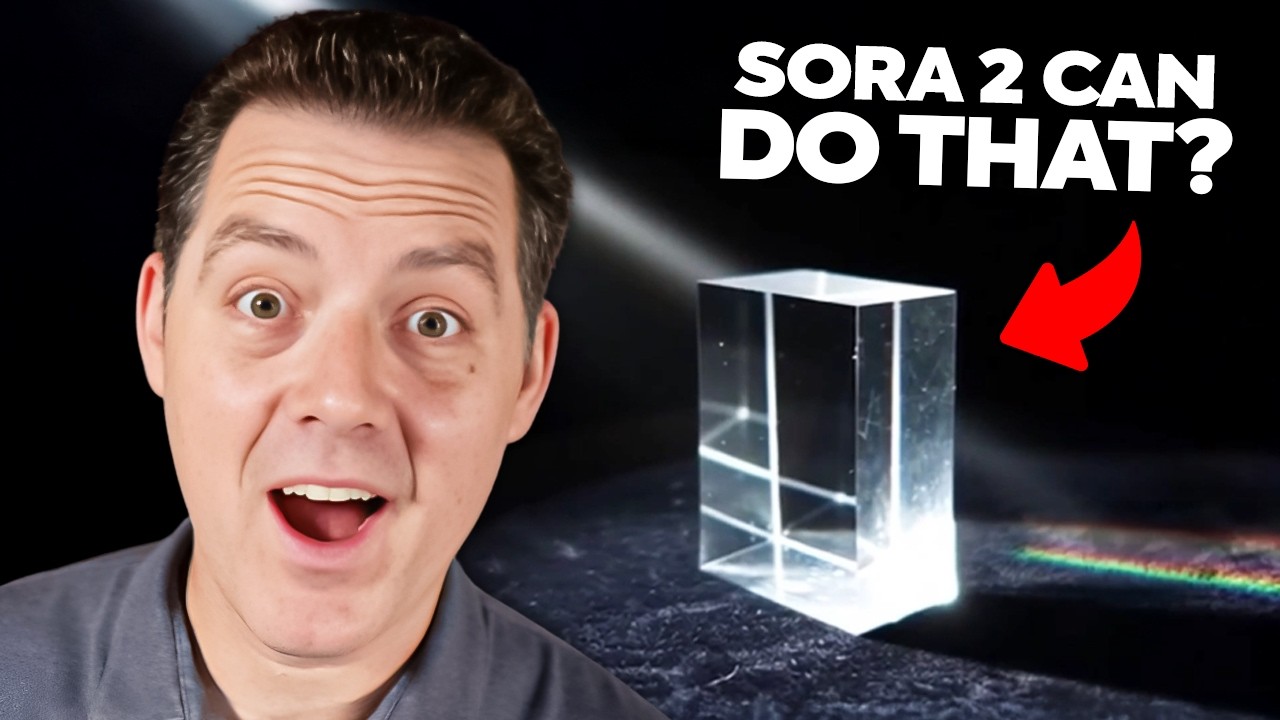
The video showcases Sora 2, an impressive AI-powered video generation tool that allows users to create highly customizable and entertaining videos. The creator demonstrates various fun applications, such as recreating iconic shows like Celebrity Deathmatch, generating characters like SpongeBob doing drill rap, and even blending popular video game worlds like Zelda and Pokémon. The tool operates in a copyright “wild west,” enabling users to animate their favorite characters freely, with the creator encouraging viewers to use his likeness for cameos. The versatility of Sora 2 is highlighted through its ability to stitch together multiple clips to form full episodes and place characters into different environments, including Minecraft and real-life Mario Kart scenarios.
A significant focus of the video is on Sora 2’s ability to replicate real people with remarkable accuracy. The creator and his team members undergo face scans, resulting in avatars that closely resemble their real-life appearances, complete with detailed lighting and reflections. While the facial accuracy is impressive, some inconsistencies appear in voice replication and minor morphing in hair and skin textures. The video also explores various scenarios featuring the avatars, such as historical reenactments, podcasts, and humorous situations, demonstrating both the strengths and occasional glitches in the AI’s rendering capabilities.
The video delves into Sora 2’s handling of physics, fine motor skills, and environmental effects. Fluid dynamics, smoke, fire, and reflections are rendered with high realism, as seen in examples like honey pouring, incense smoke, and a horse running through water. However, the AI struggles with intricate hand movements, such as playing keyboards or shuffling cards, where unnatural finger positioning and object morphing occur. The tool excels in creating natural-looking crowds, weather phenomena like snowfall, and complex lighting effects, including lens flares and prism rainbows, showcasing its potential for producing visually stunning scenes.
Sora 2 also demonstrates capabilities in style transfer and non-photorealistic rendering, successfully generating animations in watercolor, Pixar-like styles, and stop-motion aesthetics. The AI can handle text and motion graphics to some extent, though it occasionally misrepresents details like dates or handwriting accuracy. The creator highlights the user-friendly interface, where users scan their faces and input descriptive prompts to generate videos, with options to tag others for cameos and adjust video orientation. Despite some limitations, the tool offers a powerful platform for creative video production with a wide range of applications.
In conclusion, the creator expresses enthusiasm for Sora 2, praising its fun and innovative features while acknowledging areas for improvement. The video encourages viewers to try the platform, subscribe to the newsletter for access codes, and explore the creative possibilities it offers. Sponsored segments introduce related AI coding tools and powerful hardware for AI workloads, complementing the overall theme of cutting-edge technology. The video ends on a lighthearted note, showcasing humorous and imaginative uses of Sora 2, reinforcing its appeal as an exciting tool for both creators and fans of AI-generated content.