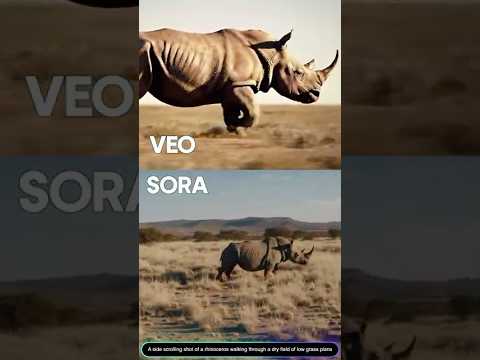
The video compares two AI video generation models, Sora and VEO 2, highlighting that VEO 2 outperforms Sora in handling physics and movement, despite some flaws like garbled text and limited controls. The creator expresses concern about the implications of these advancements for traditional video creators in an increasingly automated landscape.
In the video, the creator discusses their recent experience with two AI video generation models: Sora and VEO 2. They initially reviewed Sora, OpenAI’s video generation model, which they found impressive at the time. However, the landscape changed when Google unveiled VEO 2, which the creator believes is significantly better than Sora. They note that VEO 2 seems to handle challenges related to physics and moving objects more effectively than Sora, which often struggled with these aspects.
The creator highlights specific shortcomings of Sora, mentioning that it frequently exhibited noticeable flaws in the movement and physics of objects within the generated videos. In contrast, VEO 2 appears to produce more convincing representations of physical movement, leading to a more realistic viewing experience. Despite skepticism from some viewers who believe that Google is only showcasing the best examples of VEO 2, the creator has conducted extensive testing and confirms that VEO 2 outperforms Sora in various scenarios.
While acknowledging VEO 2’s superiority, the creator also points out that it is not without its flaws. They mention persistent issues with garbled text in the generated videos and difficulties when attempting to create complex scenes with multiple elements. Additionally, the version of VEO 2 they tested lacks certain controls that Sora offers, such as resolution settings and video length adjustments, suggesting that the model may have been rushed to compete with OpenAI’s announcement.
The creator draws a comparison between the data sources used by Sora and VEO 2, suggesting that Google’s ownership of YouTube provides it with a significant advantage in training its AI model. They mention a recent feature added to YouTube that allows creators to opt out of third-party scraping for AI training, but emphasize that this does not prevent Google from utilizing its own data. This difference in data access may contribute to the rapid advancements seen in VEO 2’s capabilities.
In conclusion, the creator expresses concern about the implications of these advancements for video creators. With AI-generated videos evolving quickly and models like VEO 2 demonstrating superior performance, they ponder whether traditional video creators will be able to compete in an increasingly automated landscape. The video serves as a reflection on the current state of AI video generation and its potential impact on the creative industry.