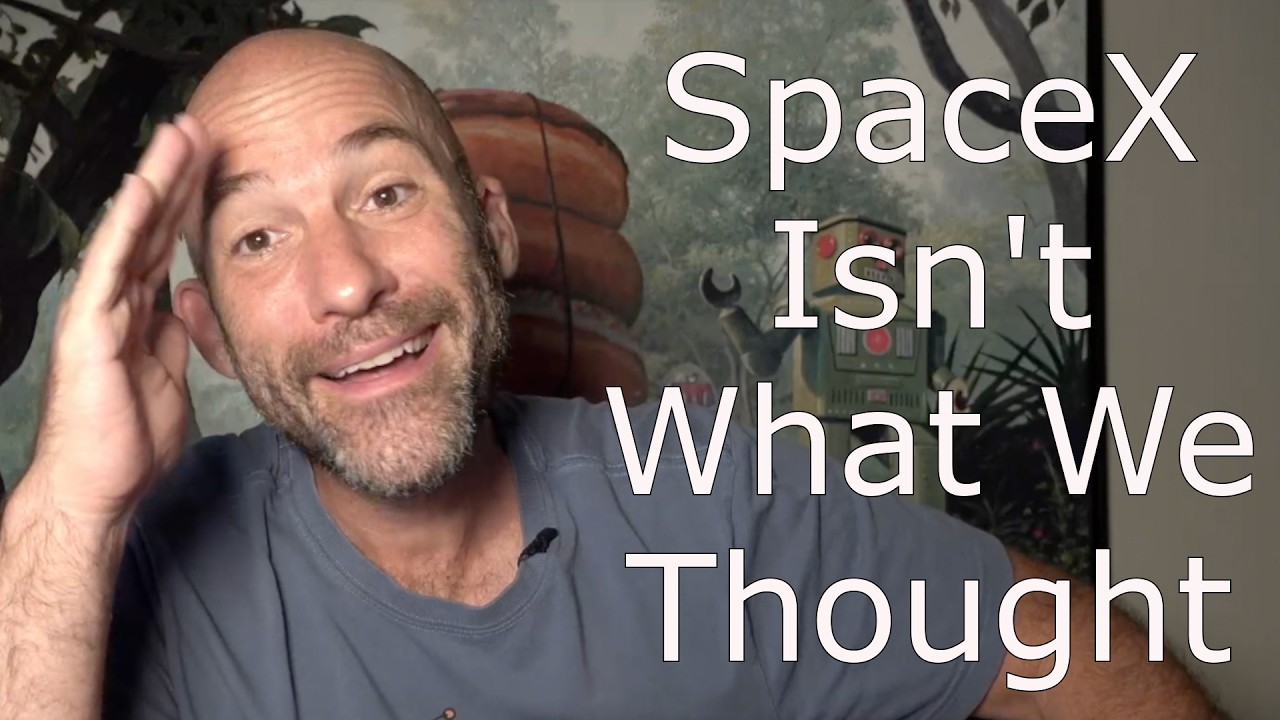
The video highlights SpaceX’s unexpected shift from space launches to AI, with AI revenue now surpassing traditional space business and driven mainly by leasing data center capacity to major clients, raising questions about the sustainability and uniqueness of this model in an oversaturated market. It also critiques the hype around SpaceX’s ventures like Starlink, suggesting that despite its massive valuation, the company’s current revenue streams and business focus may not justify its lofty market expectations.
The video discusses the surprising shift in SpaceX’s revenue streams, highlighting that Elon Musk recently stated SpaceX’s AI revenue is expected to surpass all other revenue sources by next month. This marks a significant change from the company’s traditional identity as a space launch provider. Despite SpaceX’s massive valuation of $1.5 trillion, its space launch business generated less than $1 billion in the last quarter, which is notably low compared to other sectors like AI and connectivity services. The AI segment already accounts for about a third of SpaceX’s quarterly revenue, with $2.56 billion out of $7.81 billion, surpassing space products and approaching the revenue generated by Starlink’s connectivity services.
The AI revenue primarily comes from renting out data center capacity to major clients such as Anthropic and Google, who pay hundreds of millions monthly for compute resources. While SpaceX has introduced an AI product called Grock, it appears that most of the AI revenue is not from direct sales of Grock but from these large-scale data center leases. The video points out the irony that SpaceX, originally known for space exploration, is now competing in the crowded AI infrastructure market alongside established players like AWS, Azure, and Meta, which already dominate AI cloud services.
The presenter expresses skepticism about the long-term value and uniqueness of SpaceX’s AI business model. They argue that the AI data center market is becoming oversaturated, with massive overbuilding of capacity driven by financial engineering rather than genuine demand. This could lead to a commoditization of AI infrastructure services, potentially diminishing SpaceX’s competitive edge and valuation once the AI bubble bursts. The video also contrasts SpaceX’s AI ambitions with its relatively modest space launch revenue, questioning whether the company’s current trajectory aligns with the lofty expectations set by its valuation.
Additionally, the video critiques the hype around SpaceX’s other ventures, such as Starlink, suggesting that while it may be valuable in rural or underserved areas, it is unlikely to replace traditional fiber internet for most users. The presenter also shares personal anecdotes about societal values and market dynamics, noting how some seemingly trivial or less innovative ventures can outperform more groundbreaking projects in terms of revenue and public interest. This reflection underscores the unpredictable nature of market success and the challenges SpaceX faces in justifying its valuation based on its current revenue streams.
In conclusion, the video casts doubt on the narrative that SpaceX is primarily a space exploration company or a revolutionary AI leader. Instead, it portrays SpaceX as pivoting towards becoming an AI data center provider in a highly competitive and potentially oversaturated market. The presenter predicts that SpaceX might eventually be absorbed by Tesla, following Elon Musk’s pattern with other ventures, and questions whether the company’s current business model and revenue sources truly justify its massive valuation. The video invites viewers to reflect on these points and consider the broader implications for SpaceX’s future.