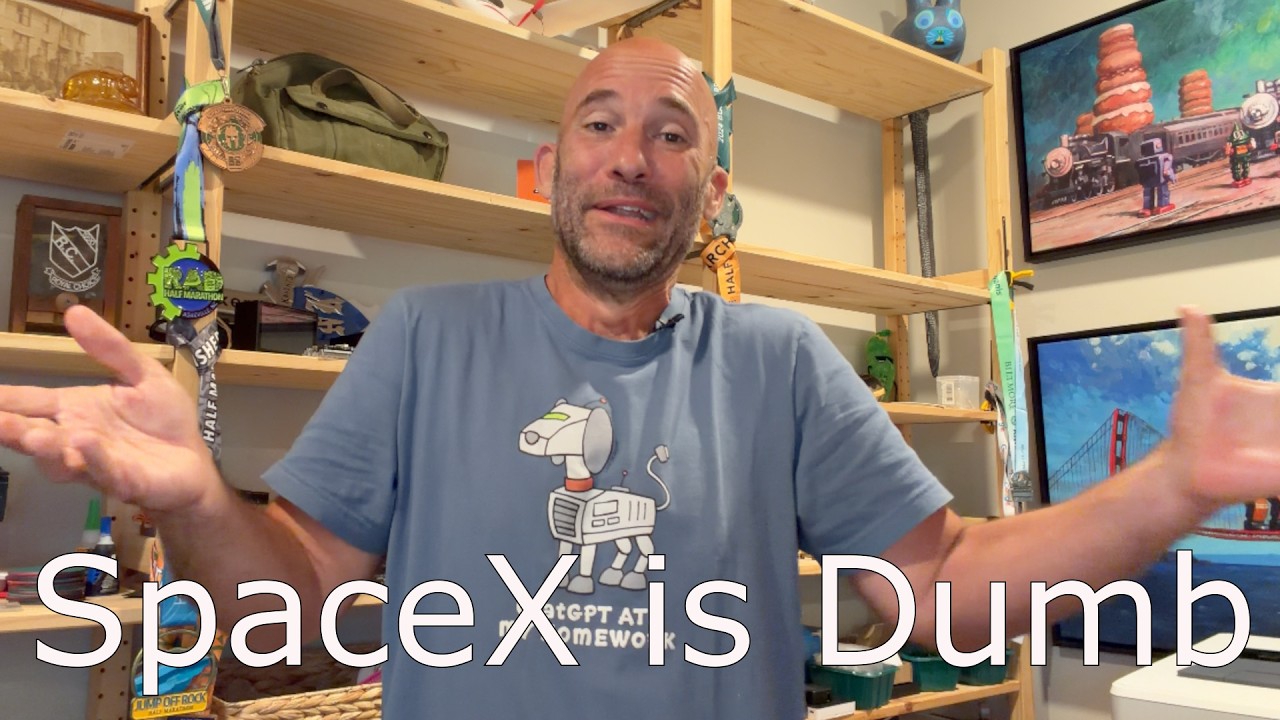
In a recent discussion highlighted by Fortune, Reid Hoffman, a prominent Silicon Valley figure, criticized SpaceX’s AI ambitions, stating that SpaceX is “not an AI company” and describing its AI division, XAI, as “a complete train wreck.” Hoffman pointed out that all original co-founders of XAI have left, and the company is on its third restart. He argued that SpaceX’s strategy appears to be leveraging its market capitalization to acquire AI companies, such as the recent purchase of Cursor, rather than developing genuine AI capabilities internally. This critique reflects a broader skepticism about the true value and profitability of current AI ventures.
The video commentator reflects on the unusual camaraderie among AI industry leaders, noting that unlike typical tech rivalries characterized by aggressive competition, AI executives have been unusually cooperative, almost as if “roasting marshmallows” together. This unusual behavior is attributed to the shared understanding that the AI technology being promoted is overhyped and unlikely to deliver the promised returns. Since many companies are essentially working with similar large language model (LLM) technologies, publicly attacking competitors could backfire, as criticisms could apply equally to themselves.
The commentator also shares a personal perspective as someone with Asperger’s syndrome, explaining the difficulty in interpreting the non-verbal, often passive-aggressive communication common in tech leadership. The recent shift toward open conflict among AI companies is seen as a return to a more familiar and understandable dynamic. The emerging disputes, such as Hoffman’s public criticism of SpaceX’s AI efforts, are welcomed as a sign that the AI bubble might be unraveling and that the industry is entering a more realistic and competitive phase.
Further, the video discusses the complex financial entanglements within the AI ecosystem, where companies like Microsoft, OpenAI, Nvidia, and others are deeply interconnected through investments and service agreements. This circular financing has so far discouraged open conflict, but as tensions rise, the analogy of the scorpion and the frog is used to illustrate the inevitability of betrayal and conflict despite mutual dependencies. The commentator warns organizations to be cautious about deeply integrating AI technologies into their core systems, given the uncertainty and potential risks involved.
Finally, the video draws parallels with past tech industry disruptions, such as Oracle’s acquisition and subsequent shutdown of virtualization software and Broadcom’s price hikes after acquiring VMware, which forced costly migrations for customers. These examples serve as cautionary tales about the risks of relying heavily on dominant tech providers. The commentator urges patience and prudence regarding AI adoption, suggesting that rushing to embed AI deeply into critical infrastructure could lead to significant problems as the AI industry continues to evolve and possibly face turmoil.