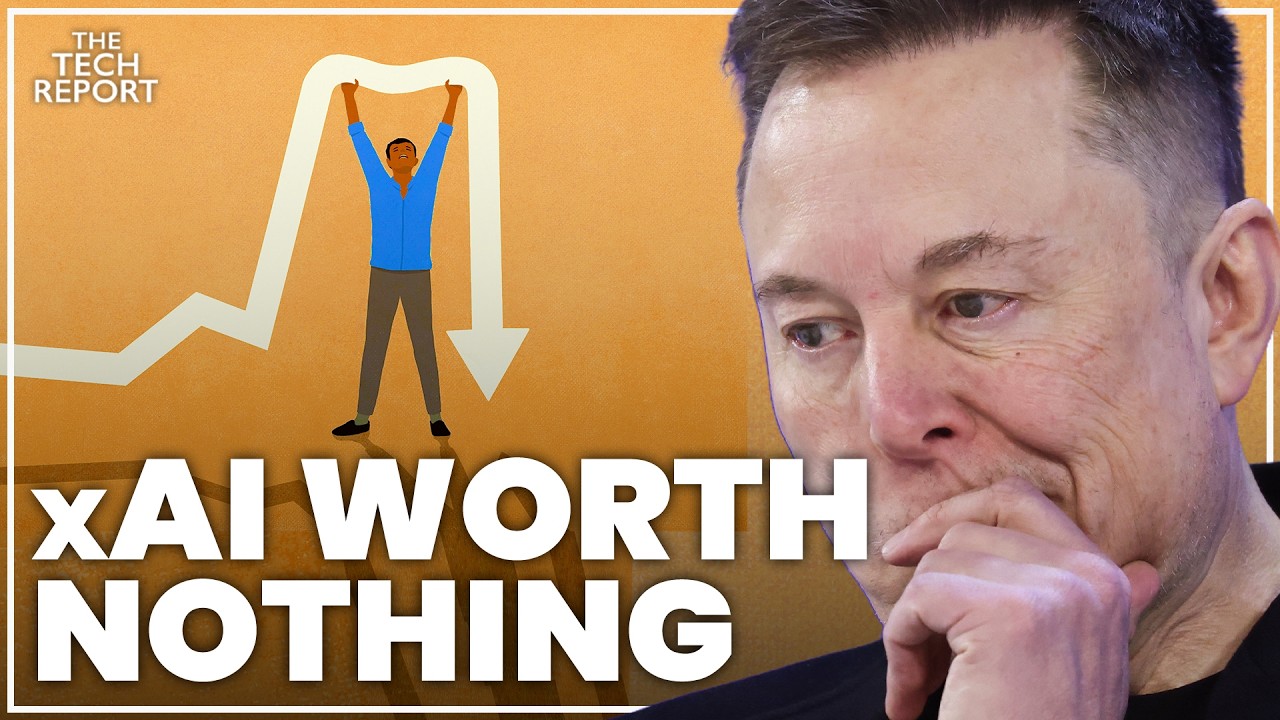
In this discussion, Eli the Computer Guy and Isaac analyze the recent financial struggles of Elon Musk’s companies, particularly SpaceX and Tesla. They highlight concerns about SpaceX’s IPO, noting that only a small percentage of shares were initially available, creating artificial demand and inflating the stock price. As more shares unlock and become tradable, the stock price has significantly dropped, raising doubts about the company’s true valuation. Despite Elon Musk’s reputation and past successes, there is skepticism about the actual economic value SpaceX brings, especially given its revenue is comparable to platforms like OnlyFans and its AI division, xAI, lacks a clear competitive edge.
The conversation delves into the challenges facing SpaceX’s AI efforts, particularly the Grok AI model, which struggles to differentiate itself in a crowded market dominated by players like OpenAI, Anthropic, and Google. Even government employees with access to Grok prefer other AI services, casting doubt on its market relevance. This lack of distinct value contributes to the perception that xAI adds little to SpaceX’s overall worth, with some analysts suggesting it holds near zero valuation. The discussion also touches on the broader issue of whether Elon Musk’s ambitious projects, such as space-based data centers and AI chips, have tangible economic benefits or are more speculative in nature.
Eli critiques Elon Musk’s pattern of overpromising and underdelivering, pointing out numerous high-profile product delays and failures, including Tesla’s Cybertruck and Cybercab. While Musk’s early success with electric vehicles was groundbreaking, his current ventures seem less grounded in practical value. The idea of a technological singularity, where AI surpasses human intelligence, is also questioned, with Eli expressing skepticism about its immediate relevance or impact on everyday life. Instead, he advocates for focusing on narrow AI applications that solve specific problems effectively.
The discussion further explores the potential reputational damage to Elon Musk as his companies face financial headwinds and unmet expectations. Retail investors, who hold a significant portion of SpaceX shares, are experiencing substantial losses, leading to public outcry on social media. Despite this, Musk’s mythos as a visionary entrepreneur remains strong, though the sustainability of his ventures is increasingly uncertain. The conversation raises concerns about the broader implications for American society if key infrastructure and technology providers like SpaceX and Tesla falter due to financial instability.
Finally, the conversation situates SpaceX and Tesla’s struggles within the context of a possible AI and tech bubble burst. Eli points to larger warning signs in the industry, such as massive collateral requirements and financial backstops demanded by data center providers for companies like Oracle, Anthropic, and OpenAI. These financial pressures indicate significant stress in the AI sector beyond just Musk’s companies. While SpaceX’s stock decline is a notable indicator, the broader challenges facing AI infrastructure and investment suggest a more systemic issue in the tech market, signaling potential turbulence ahead.