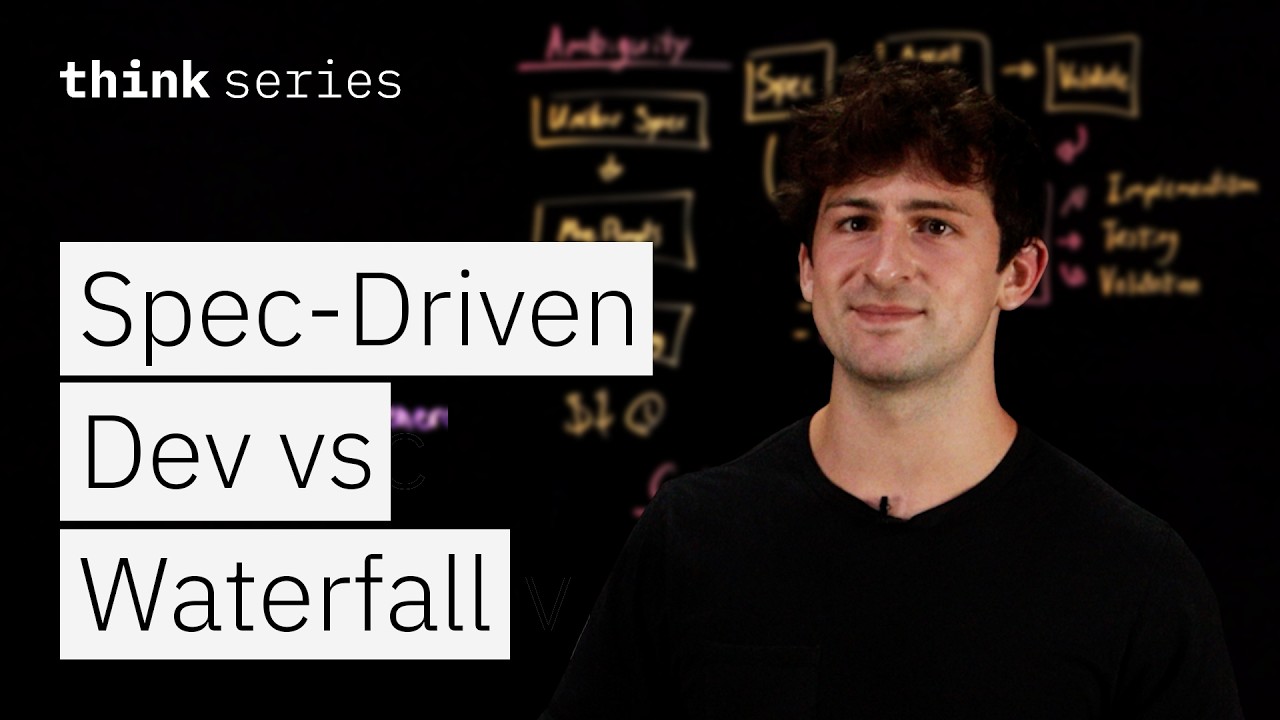
The video discusses the differences between Spec-Driven Development (SDD) and the traditional Waterfall method, especially in the context of AI-assisted coding. It begins by describing a common scenario where developers use AI tools to add features or fix bugs, but often the AI-generated code doesn’t exactly meet expectations. This leads teams to emphasize creating detailed initial specifications or prompts for the AI, a practice known as Spec-Driven Development. However, some developers question if this approach is just a modern version of the Waterfall method.
Waterfall is explained as a linear, step-by-step software development process where requirements are fully defined upfront, followed by design, implementation, testing, and deployment. Each phase must be completed before moving to the next, with the specification created at the very beginning. This approach often leads to expensive changes if requirements evolve during development, late validation of the product, and outdated specifications by the time of deployment. These drawbacks led the industry to adopt more iterative and agile methodologies.
In contrast, Spec-Driven Development also starts with a specification but treats it as a living document within a continuous loop. The AI agent builds from the initial spec, the output is validated, and the spec is refined based on new learnings or edge cases. This iterative cycle happens over hours or days rather than months, allowing for rapid adjustments. The spec is version-controlled alongside the code, preventing it from becoming stale and enabling it to guide implementation, testing, and validation simultaneously.
The video highlights how AI changes the dynamics of specification and development. AI agents rely heavily on clear context provided by the spec to avoid making incorrect assumptions. Ambiguity in requirements leads to multiple prompt iterations, increasing time and cost. A well-crafted spec reduces these cycles and improves efficiency. Additionally, AI can assist in drafting and updating specs during development. Specs can also cover non-functional requirements like security and compliance, which traditionally appeared late in the Waterfall process but can now be integrated early and continuously.
Finally, the video advises not to over-specify every task; small bug fixes may not need a formal spec, but larger features or modernization projects benefit greatly from Spec-Driven Development. Unlike Waterfall, which locks requirements upfront, SDD keeps specifications connected throughout the development process. As AI takes on more coding responsibilities, the quality of the spec becomes increasingly crucial to the quality of the final product. The video concludes by encouraging viewers to like and subscribe for more content on technology and AI.
Useful Links