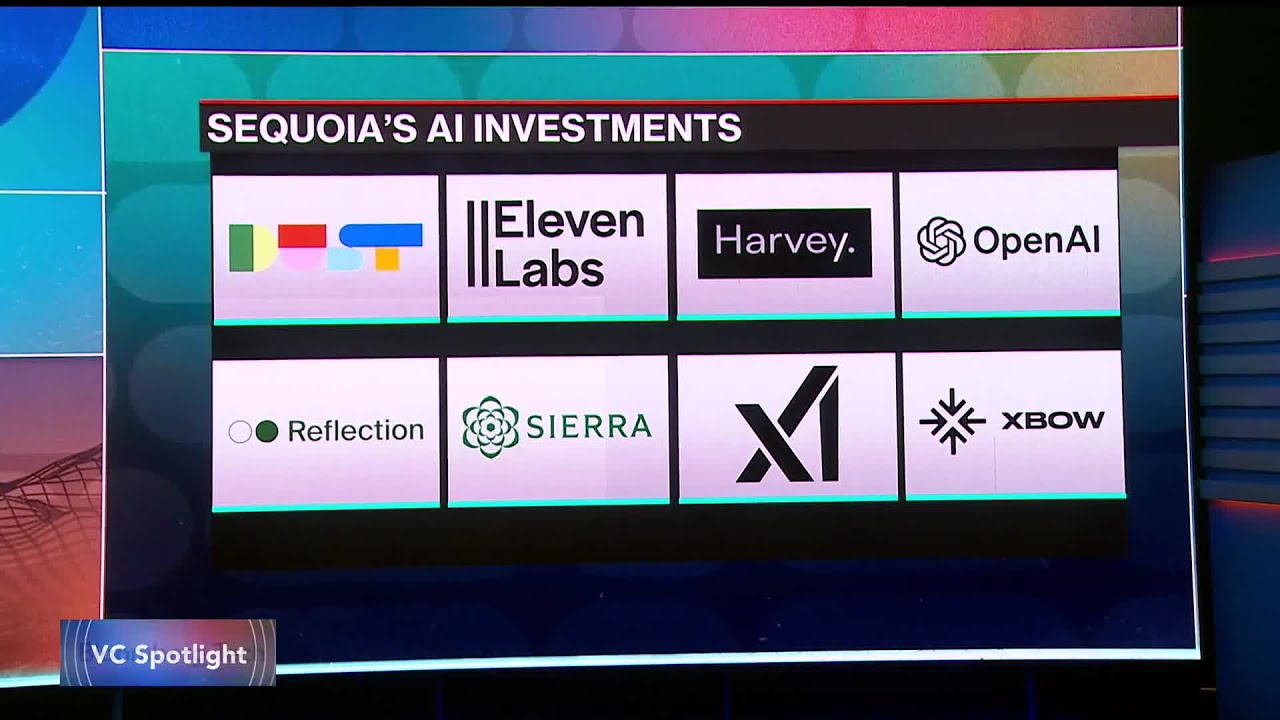
Sequoia’s Buhler discusses the growing trend of investing in specialized artificial intelligence (AI), which he refers to as “Specialized Intelligence” or ISI. He predicts that 2026 will be a pivotal year for AI capabilities focused on specific domains, building on momentum seen in 2025. Examples include Waymo’s self-driving cars, which now operate at a safety level ten times better than human drivers, and Anthropic’s coding-focused AI, which has become mainstream for developers. These advancements highlight how AI is moving beyond general intelligence to excel in targeted, high-impact areas.
Buhler emphasizes that while some specialized AI companies, like Waymo and Anthropic, have required significant capital to train and deploy their models, others started small and focused on deep expertise in a single area. He cites Harvey, an AI for legal professionals, as an example of a company that began with a narrow focus and user obsession, eventually becoming indispensable to over a thousand legal and tax professionals. The adoption of such specialized tools is so profound that users claim they would rather give up coffee for a year than lose access to Harvey.
Looking ahead, Buhler identifies new opportunities for specialized AI in both the physical and digital worlds. In the physical realm, Sequoia has invested in Verkada, an AI-powered physical security company that enhances the effectiveness of security personnel and accelerates investigations, as demonstrated during a bomb threat at a major airport. In the digital space, XPO, an AI penetration tester, has rapidly surpassed human experts in identifying cybersecurity vulnerabilities, becoming the top-ranked entity on the global HackerOne leaderboard.
Buhler acknowledges the challenge of scaling these specialized AI companies quickly, especially as more capital and competition enter the market. He encourages founders to be courageous and deeply knowledgeable in their chosen domains, focusing on delighting customers with tailored solutions. He highlights Open Evidence, a healthcare AI that assists physicians in diagnosing complex cases, as an example of how specialization and domain expertise can lead to transformative impact and efficiency in critical industries.
Finally, Buhler addresses the changing landscape of early-stage investing, where so-called “seed rounds” can now reach hundreds of millions of dollars. He explains that Sequoia prioritizes the quality and long-term potential of a business over the size of its initial funding round. Their approach is to evaluate whether a company would be viable even without the AI component, and to partner with founders who are committed to building enduring businesses. This philosophy guides their participation in increasingly large early-stage investments, ensuring that capital is deployed wisely to support the most promising specialized AI ventures.