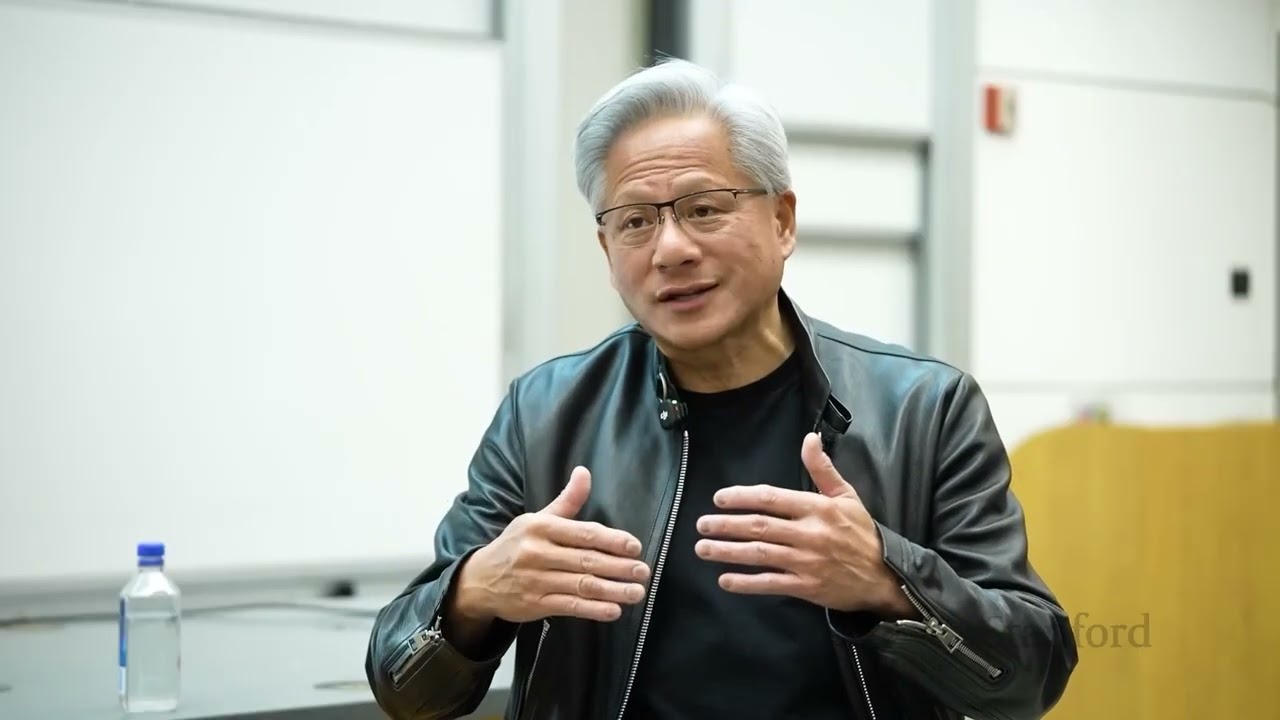
In this engaging discussion, Jensen Huang, CEO of NVIDIA, explores the transformative evolution of computing driven by artificial intelligence (AI). He highlights that for over six decades, the fundamental computing model remained largely unchanged since the IBM System 360, but AI has radically altered how software is written, executed, and applied. Huang emphasizes the shift from pre-recorded content to real-time generated, contextually relevant computing, which demands a complete rethinking of software development, hardware architecture, and deployment strategies. He illustrates this with examples like self-driving cars, where AI and deep learning have unlocked previously insurmountable challenges, signaling a new era in computer science and industry.
A key theme Huang discusses is the concept of co-design, where hardware, software, compilers, and architectures are developed in harmony rather than in isolation. NVIDIA exemplifies this approach, achieving unprecedented computational performance gains—up to a million times improvement over a decade—far surpassing traditional Moore’s Law expectations. This co-design philosophy enables tackling computationally intensive problems across diverse fields such as graphics, molecular dynamics, and deep learning. Huang stresses that this integrated design approach is crucial for sustaining innovation and scaling AI capabilities efficiently.
On education and open source, Huang advocates for integrating AI deeply into curricula, not only as a subject but as a tool for learning and research. He foresees a future where AI accelerates knowledge acquisition and research productivity, complementing foundational principles taught in universities. Regarding open source, he supports transparency and openness to ensure AI safety, security, and democratization. NVIDIA actively contributes to foundational AI models across various domains, enabling broader scientific and industrial advancements. Huang argues that open systems allow for better scrutiny and defense against potential AI risks, contrasting with opaque black-box models.
Huang also addresses practical challenges in computing infrastructure, such as resource utilization and energy efficiency. He explains that high utilization metrics (MFU) are not always desirable due to the need for overprovisioning to handle peak loads and avoid bottlenecks. Instead, performance should be measured by meaningful outputs like tokens generated per watt, reflecting true intelligence efficiency. He describes NVIDIA’s architectural innovations, such as the Grace Blackwell and Vera Rubin systems, designed to optimize AI training, inference, and agent-based continuous computing. Huang underscores the importance of anticipating bottlenecks and investing in sustainable energy to meet the growing computational demands of AI.
Finally, Huang shares insights on leadership, strategy, and the future of the tech industry. He candidly discusses early mistakes at NVIDIA, such as missteps in mobile computing, and how strategic pivots led to success in robotics and AI. He encourages resilience and embracing challenges as essential for growth. On geopolitical concerns, Huang argues against restricting general-purpose computing technology, emphasizing the importance of competition and collaboration for innovation. He calls for institutions like Stanford to invest significantly in shared supercomputing resources to empower research. Throughout, Huang maintains an optimistic vision for AI’s potential, grounded in rational analysis and a commitment to advancing technology responsibly.