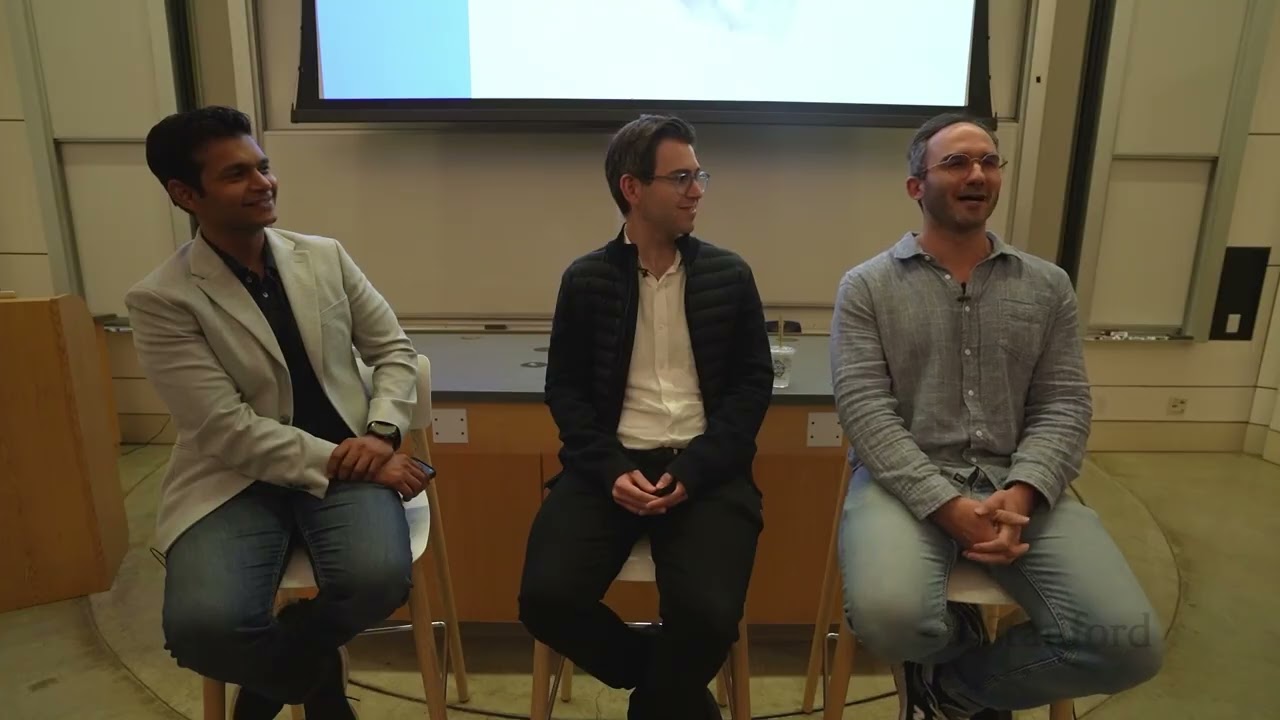
The session featured two distinguished guests, Eric Abrams from Anthropic and Josh from Shai Discovery, who are pioneering the integration of AI in life sciences, particularly drug discovery and development. Eric leads biology and life sciences at Anthropic, focusing on accelerating the entire R&D process in life sciences using AI models like Claude. Josh, with a background in coding and biology, founded Shai Discovery to create a computer-aided design (CAD) suite for molecules, aiming to revolutionize drug design by enabling zero-shot generation of drug candidates. Both emphasize the transformative potential of AI to drastically shorten drug development timelines and improve drug efficacy.
The drug development process was outlined in detail, highlighting its complexity and lengthy duration, typically spanning 10 to 15 years from target identification to FDA approval. Eric explained the multiple stages, including target selection, drug design, preclinical testing, and clinical trials, each with distinct challenges and bottlenecks. AI’s role is seen as pivotal across these stages, from accelerating target discovery and drug design to optimizing clinical trial processes and regulatory interactions. Both guests underscored that AI could reduce the preclinical phase from years to potentially weeks, and improve clinical trial efficiency by enabling better patient recruitment and trial design.
Josh elaborated on Shai Discovery’s focus on molecular generation, particularly antibody design, which constitutes a significant portion of approved drugs today. He highlighted the potential for AI to not only speed up drug discovery but also to create more effective medicines that could simplify clinical trials by producing larger effect sizes. Eric complemented this by discussing Anthropic’s broader vision of training AI models to handle the entire drug development pipeline, including basic research and clinical development, and integrating these models into user-friendly products for scientists.
Both speakers addressed the question of why AI-driven drug discovery is becoming viable now. They attributed this to advances in large language models, increased computational power, and the availability of vast biological data sets. Additionally, geopolitical pressures, such as competition with China in biotech innovation, are accelerating the adoption of AI in the US. They also discussed the evolving business models in biotech, noting a shift from traditional drug sales to tool and platform-based approaches, with AI-powered tools becoming increasingly valuable and democratizing drug discovery.
Finally, the discussion touched on future challenges and opportunities, including expanding AI capabilities to new drug modalities beyond antibodies, discovering novel drug targets, and automating wet lab experiments through AI integration with laboratory instruments. Both guests expressed excitement about the potential for AI to enable autonomous drug programs and emphasized the importance of iterative feedback loops in accelerating discovery. They also shared insights on promising therapeutic areas like muscle mass enhancement and sleep disorders, while cautioning about the hype surrounding purely software-based solutions without integration into physical experimentation.