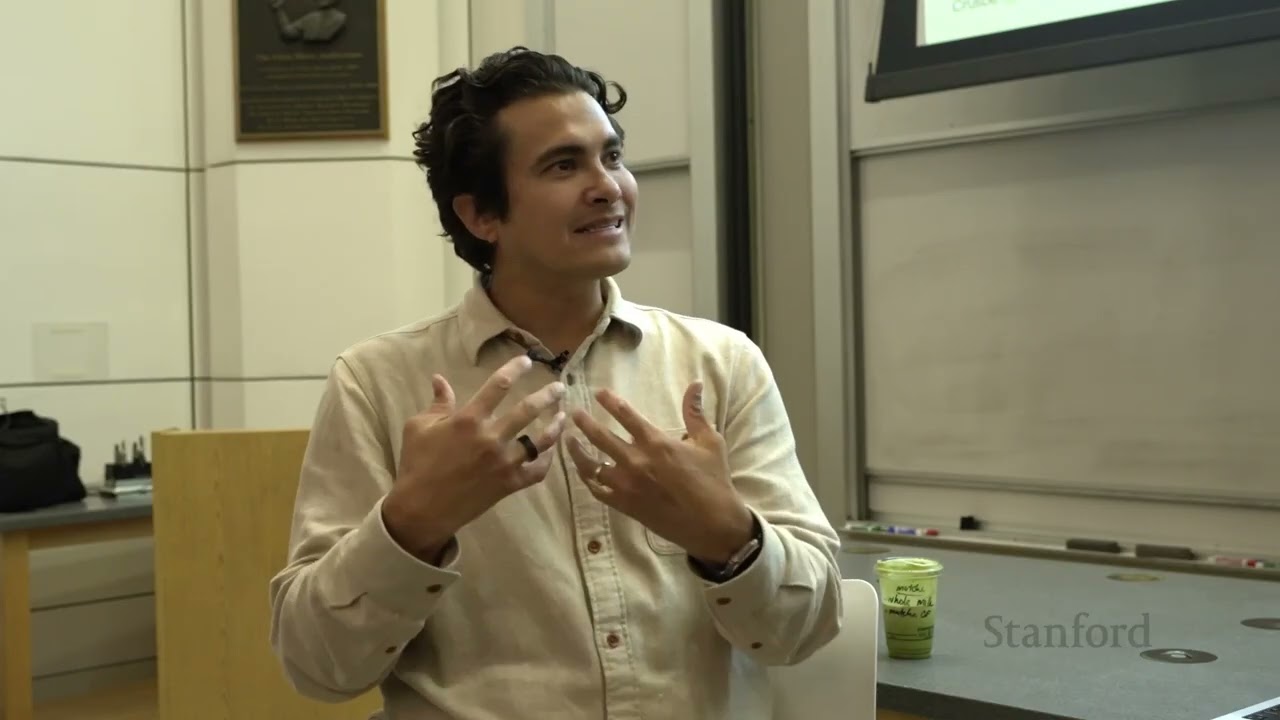
The discussion centers on the massive capital expenditure by hyperscalers on AI data centers, highlighting the unprecedented scale and speed of investment, which surpasses historic projects like the Manhattan Project and even the US highway system. Chase Lockmiller, founder and CEO of Crusoe, explains that data centers are the physical backbone powering AI technologies, housing the GPUs and infrastructure necessary for training and running AI models. He emphasizes that AI production fundamentally relies on a combination of data, algorithms, compute power, energy, and the physical data centers themselves, with Crusoe focusing primarily on the compute, energy, and data center infrastructure layers.
Lockmiller elaborates on the economics of AI infrastructure, framing AI as a form of digital labor that can be scaled rapidly through investments in data centers and GPUs, contrasting this with traditional labor growth which is slow and constrained by biological and social factors. Crusoe’s strategy is vertically integrated, addressing energy sourcing, data center construction, and compute deployment to overcome bottlenecks that shift across power availability, hardware components, and labor. He highlights the importance of locating data centers in regions with abundant, low-cost renewable energy, such as Abilene, Texas, where Crusoe has built one of the largest AI computing campuses, leveraging excess renewable energy and local infrastructure.
The conversation dives into the detailed breakdown of costs involved in building and operating these AI data centers, including power distribution, cooling systems, labor, and the physical construction materials. Labor shortages in skilled trades like electricians and plumbers are identified as significant bottlenecks, alongside rising costs for gas turbines and other critical equipment. Lockmiller also discusses the compute infrastructure costs, noting that GPUs represent the largest portion of IT capital expenditure, followed by networking, CPUs, and storage. He points out that despite the high upfront costs, the revenue generated by renting compute capacity can lead to a payback period of around four years, which can be shortened with managed AI services.
Addressing the future of compute pricing and commoditization, Lockmiller suggests that while older compute technology may commoditize over time, cutting-edge GPUs and large-scale deployments will continue to command premiums due to their complexity and scale. He also touches on innovations in the electrical infrastructure of data centers, predicting significant opportunities for advancements in power electronics and distribution that could disrupt traditional players. On emerging trends, he expresses cautious optimism about data centers in space, acknowledging the technical and operational challenges but recognizing their potential long-term role in AI infrastructure.
Finally, Lockmiller offers advice to students and professionals, emphasizing the importance of continuous learning and adaptability over specific technical knowledge. He encourages embracing the process of growth and leveraging AI tools to enhance productivity and problem-solving. His philosophy underscores that success in the rapidly evolving AI economy will depend on one’s ability to learn, adapt, and apply new technologies effectively, rather than solely on formal education or initial expertise.