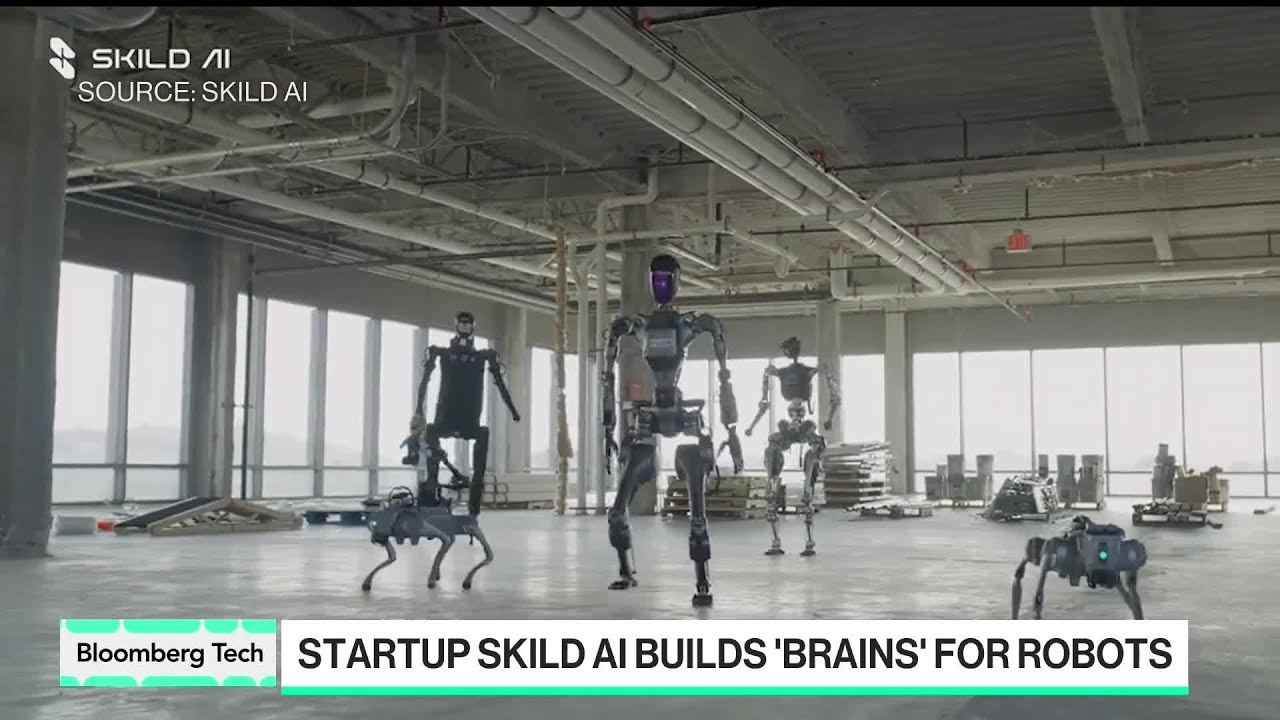
A robotics startup has raised $1.4 billion to develop what it calls a “robot brain,” attracting major investors such as Nvidia, Samsung, and LG. The company’s core competence lies in building advanced software that can serve as the intelligence for a wide range of robots, rather than focusing on hardware. The founder emphasizes that while robotics has been a field of interest for decades, the main barrier to widespread adoption has been the lack of a sufficiently advanced “brain” to control robots in diverse environments and tasks.
The company’s approach is to create a universal “embodied brain” that can be used by any robot, for any task. This is a significant departure from traditional robotics, where each robot is typically programmed for a specific function. The founder draws an analogy to large language models, noting that while there is an “internet” of data for language and vision, there is no equivalent for robotics. To overcome this, the company uses alternative data sources, such as videos of humans performing tasks, and combines this with advanced simulation techniques to train its models.
Rather than relying solely on simulated or synthetic data, the startup’s method involves both observing real human behavior and practicing in virtual environments. This dual approach allows the robot brain to learn efficiently and safely, as real-world mistakes can be costly. The software is designed to run on GPUs, making it scalable and adaptable to various robotic platforms.
The company has already begun generating significant revenue, primarily from enterprise applications. Its technology is being deployed in sectors such as point-to-point delivery, security, data centers, and manufacturing. While the long-term goal is to bring robotics into consumer homes, the current focus is on commercial and industrial use cases where the technology can be immediately impactful.
Despite competition from other companies working on physical intelligence and world models for robots, the founder believes their approach is unique. The key differentiator is the combination of learning by watching humans and practicing in simulation, which mimics how people learn new skills. This strategy, the founder argues, is the “magic recipe” for scaling robotics and enabling robots to perform a wide variety of tasks with a single, adaptable brain.