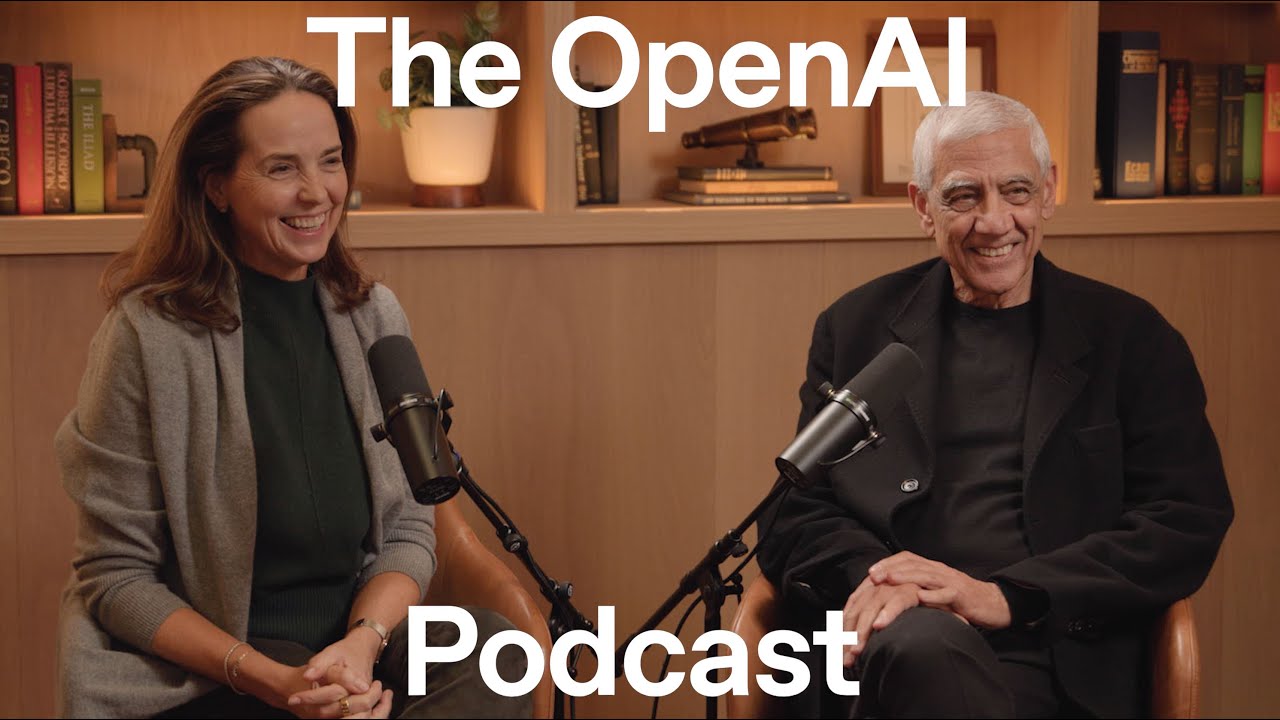
In this episode of the OpenAI Podcast, host Andrew Mayne is joined by Sarah Friar, CFO of OpenAI, and Vinod Khosla, founder of Khosla Ventures, to discuss the current state and future trajectory of the AI industry. The conversation centers on the rapid evolution of AI, likening its impact to foundational infrastructure such as electricity rather than limited-use platforms like Netflix. The guests highlight that AI demand is currently constrained only by the availability of compute power, not by a lack of use cases or interest. They predict that 2026 will see significant maturation in agentic systems, especially multi-agent systems capable of handling complex tasks for both enterprises and consumers, such as automating ERP systems or planning intricate travel itineraries.
A key theme is the “capability gap”—the difference between what AI can do and how much of that potential is actually being utilized. Both Friar and Khosla note that most users, whether individuals or enterprises, are only scratching the surface of AI’s capabilities, often using less than 30% of what is possible. They draw parallels to the early days of mobile technology, where initial use cases were basic, but over time, new functionalities emerged as users and developers became more sophisticated. The guests emphasize that as people learn to harness AI more fully, productivity and efficiency gains will accelerate across industries.
The discussion delves into the transformative impact of AI in healthcare, where AI is already augmenting doctors’ expertise and empowering patients to make more informed decisions. Regulatory hurdles remain, particularly around AI’s ability to diagnose or prescribe, but the panel is optimistic about ongoing progress. OpenAI’s internal data shows a massive and growing use of ChatGPT for health-related queries, both by consumers and physicians. This democratization of expertise is seen as a major step forward, with AI lowering the cost of medical intelligence and enabling better outcomes at scale.
On the business side, Friar explains how OpenAI’s investment in compute infrastructure is tightly correlated with revenue growth, and how the company is evolving from a single-product, single-cloud model to a multidimensional ecosystem with multiple products, pricing tiers, and business models. The conversation addresses concerns about an AI bubble, arguing that real demand—measured by API calls and actual usage—continues to outpace supply, distinguishing the current AI boom from speculative bubbles of the past. Examples are given of companies achieving dramatic productivity gains by integrating AI into core business processes, reducing the need for repetitive manual labor and enabling teams to focus on higher-value work.
Finally, the guests discuss the future landscape for startups and the broader economy. While foundational models will continue to improve, there remains ample opportunity for startups to build specialized solutions on top of these models, especially where unique data and complex workflows are involved. The conversation touches on the coming revolution in robotics, predicting that the robotics industry could surpass the automotive sector in size within 15 years. As AI and robotics drive down the cost of labor and expertise, the panel foresees a deflationary economy with higher standards of living and new societal challenges, such as redefining work and ensuring equitable access to the benefits of AI.