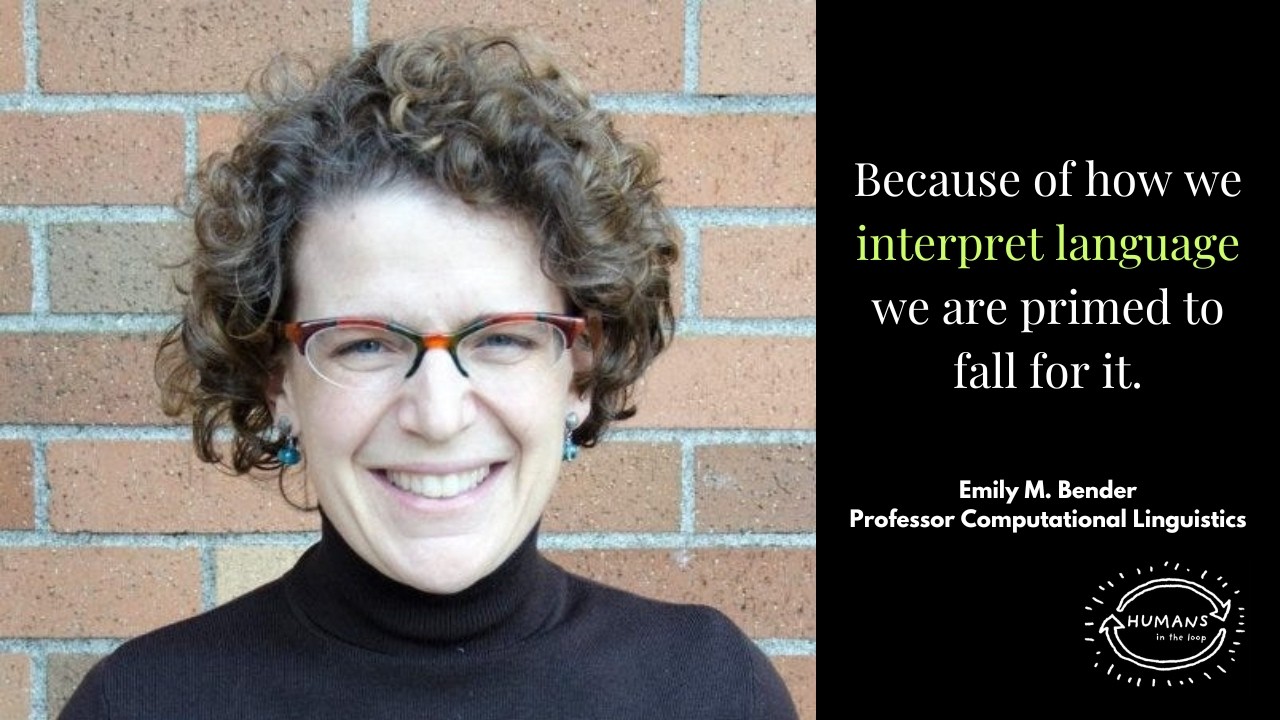
In this insightful conversation, Emily M. Bender, a professor of computational linguistics, unpacks the complexities surrounding large language models (LLMs) and the hype around artificial intelligence (AI). She clarifies that computational linguistics involves studying how language works and how computers can be used to process and generate language, a field that has gained prominence with the rise of LLMs like GPT-3 and ChatGPT. Bender emphasizes that these models do not “understand” language or possess intelligence; rather, they predict the most likely next word in a sequence based on patterns learned from vast datasets. This fundamental nature leads to the “stochastic parrots” metaphor, highlighting that these models merely mimic language without comprehension.
Bender co-authored the influential “Stochastic Parrots” paper in 2020, which critically examined the environmental, ethical, and social impacts of scaling up language models. The paper highlighted issues such as the massive energy consumption, embedded biases, poor data curation, and the monopolization of research focus on large models, rather than genuine democratization or shared governance of AI technology. She stresses that the popular narrative of AI democratizing access is misleading because true democracy involves shared power, not just broader access controlled by a few corporations. Moreover, she expresses deep mistrust toward the tech industry’s motives, citing exploitation, environmental harm, and lack of accountability.
The discussion also addresses the polarized narratives around AI: the boosters who claim AI will revolutionize and solve all problems, and the doomers who predict catastrophic outcomes. Bender argues that both perspectives are flawed and speculative, rooted in anthropomorphizing AI and misunderstanding its capabilities. She warns against the illusion that AI systems like ChatGPT think or reason, explaining that humans instinctively attribute agency to language outputs, which can lead to misplaced trust. This is particularly dangerous in critical domains like healthcare, where AI-generated outputs can introduce errors that are difficult to detect and correct.
Regarding the impact of AI on jobs, especially in software engineering, Bender acknowledges that while AI tools like code generators can assist, they do not replace the full scope of human expertise required for designing, maintaining, and understanding complex systems. She cautions that over-reliance on AI-generated work can create technical debt and workforce challenges, as the knowledge and skills needed to manage these systems may diminish. The conversation also critiques the hype around continuous scaling of models and the geopolitical “AI arms race” narrative, emphasizing that these are driven more by corporate and political agendas than by scientific reality.
Finally, Bender advocates for a more nuanced and regulated approach to AI development, focusing on specific, well-defined use cases rather than chasing generalized intelligence myths. She calls for better evaluation practices, transparency, and respect for human expertise, urging society to resist the seductive but misleading narratives pushed by tech companies. Her key message is to value and trust human skills and judgment, recognizing that current AI technologies are tools with limitations, not sentient beings or infallible problem solvers.