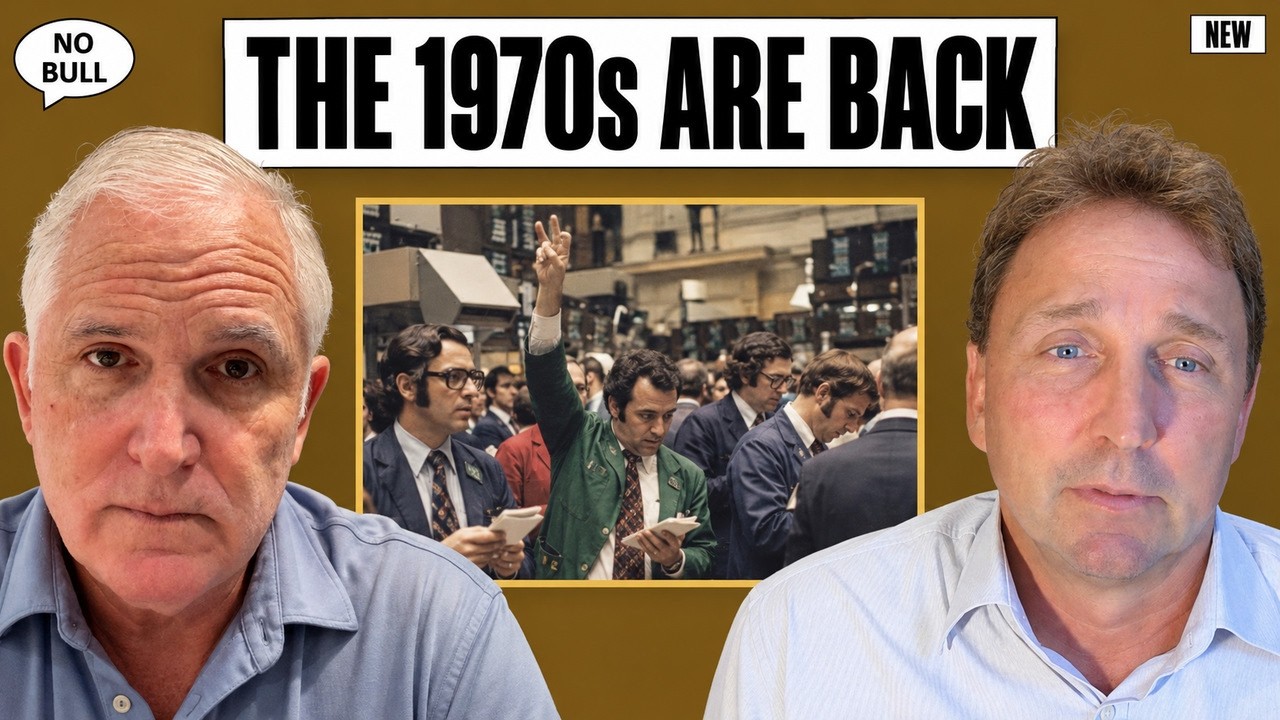
In this insightful discussion, Russell Clark and George explore the complexities of the current financial markets, focusing on the interplay between rising interest rates, inflation, and the ongoing AI-driven capital expenditure boom. Clark emphasizes that to truly slow down the economy, central bank rates like the Fed or ECB would need to reach around 8-9%, a level far above current rates. He highlights the intense capital war in the tech sector, particularly between Elon Musk and competitors, which is driving massive spending and borrowing, thereby pushing up the cost of capital. Despite concerns about a potential AI bubble bursting, Clark suggests that the market is more likely to continue absorbing capital until a significant bond market crisis forces political change.
The conversation delves into the gold and bond trade, with Clark explaining the dynamics behind the gold-TLT (Treasury bond) strategy. He notes that gold’s performance is closely tied to whether central banks cap bond yields through policies like yield curve control. While gold has been relatively stagnant, bond yields have risen sharply, validating the short bond position in the trade. Clark also discusses the evolving political landscape, particularly in the US and France, where populist movements are reshaping fiscal policies. He points out that political shifts, such as a Democratic win in the US midterms, could significantly impact gold and treasury markets, potentially leading to higher yields and inflation expectations.
Clark provides a nuanced view of Japan’s unique economic situation, explaining how historical trade agreements and geopolitical considerations have shaped its bond market and currency policies. He argues that Japan’s rising bond yields reflect a shift as banks experience deposit shrinkage and increased loan growth, signaling renewed investment and economic activity. This contrasts with other developed markets where bond yields remain volatile. Clark sees Japan as a growth opportunity, given its stable property market and increasing investment, which could influence global bond yields and investment flows.
On the topic of energy and commodities, Clark expresses a bearish long-term outlook on oil, citing the decoupling of oil demand from GDP growth due to the rise of electric vehicles and renewable energy. He suggests that oil is becoming a “dead asset” as global energy consumption patterns shift. Additionally, he touches on geopolitical strategies, such as US policies aimed at reducing reliance on Middle Eastern oil, which may accelerate the transition to renewables. This shift also ties into broader themes of fiscal and monetary policy, where Clark sees gold as a critical asset amid declining trust in US treasuries, especially following geopolitical tensions and sanctions.
Finally, Clark offers practical investment advice, advocating for a cautious approach that avoids repeating common market mistakes. He favors Japanese equities and selective emerging markets over US equities, which he views as expensive and vulnerable to rising yields. He warns that bond yields are likely to surprise on the upside, challenging the conventional wisdom of low-rate environments. Clark underscores the importance of understanding the political and macroeconomic context, suggesting that markets will remain volatile until a political or economic crisis prompts significant policy shifts. Overall, the discussion highlights the need for investors to adapt to a changing regime characterized by higher inflation, rising interest rates, and geopolitical uncertainty.
Useful Links