Emil Chetty, leading data and AI product at Wise, addresses the frustration users face when constantly having to approve every step an AI assistant takes, especially in complex financial operations. He highlights the disconnect between the promise of AI assistants to simplify tasks and the reality where users end up overwhelmed with approval requests. Wise, a global technology company focused on seamless cross-border money management, aims to reduce this complexity by giving AI agents useful autonomy without turning customers into human APIs who must approve every minor action.
Wise operates a vast global payments network connecting over 90 local banks and payment providers, serving nearly 19 million customers and handling massive cross-border volumes. However, regulatory requirements demand strict control and accountability over financial transactions, which complicates the deployment of autonomous AI agents. Unlike coding agents that focus on safety of actions, payment agents must verify customer authorization for each transaction, necessitating immutable agreements that define the scope of what the agent can do.
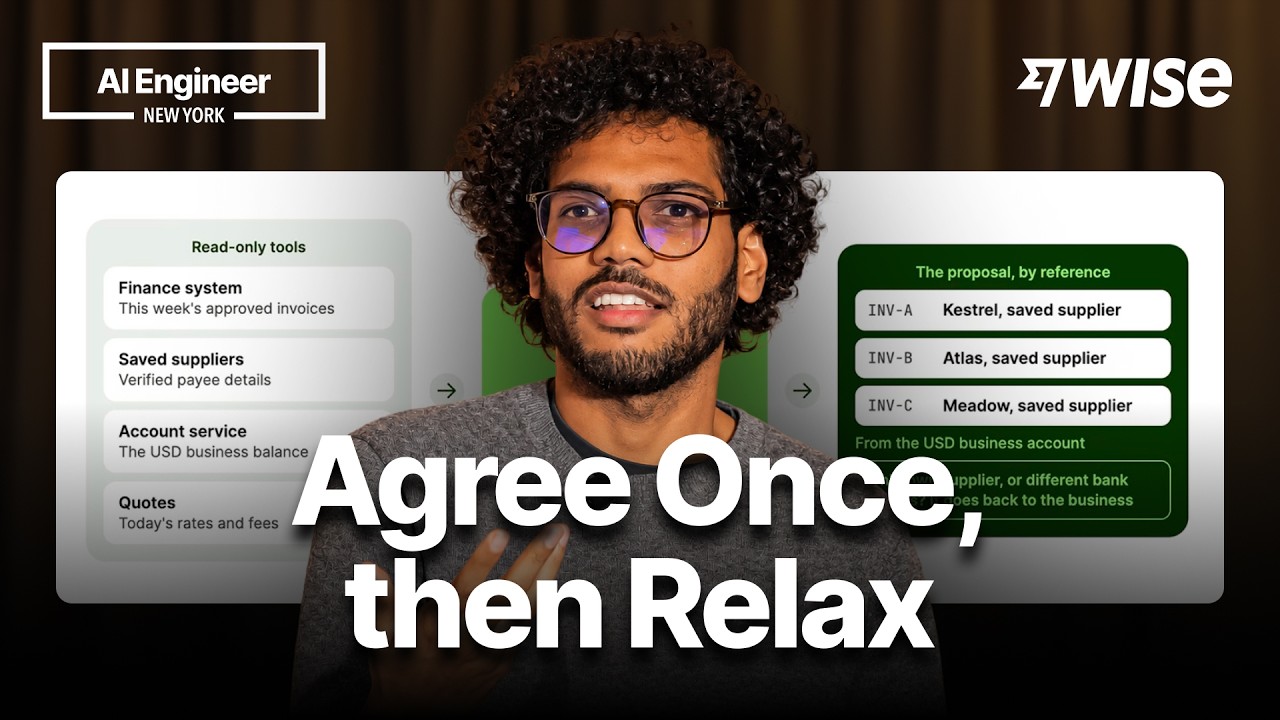
To solve this, Wise proposes a system where customers approve a single, clear job proposal rather than every individual step. The AI agent explores and gathers necessary information with limited read-only access, then presents a detailed, human-readable job summary for customer approval. Once approved, this job becomes immutable and machine-readable, allowing the agent to autonomously execute tasks within the agreed boundaries while the underlying services enforce compliance and security.
This approach separates the planning and execution loops, enabling resilience and flexibility. If issues arise, such as changes in payment quotes or system failures, the agent can re-plan within the approved job or prompt the customer for a new agreement if fundamental terms change. The system also guards against malicious actions like prompt injections by ensuring that the agent cannot alter the immutable job agreement, with downstream services enforcing the approved terms.
In conclusion, Emil emphasizes the importance of shifting from step-by-step approvals to job-level agreements that empower AI agents to act autonomously within defined limits. This method reduces user friction, maintains regulatory compliance, and ensures accountability, ultimately delivering on the promise of AI assistants to simplify complex tasks. His key message: stop making humans act as APIs by requiring constant approvals, and instead delegate jobs with clear, enforceable agreements.