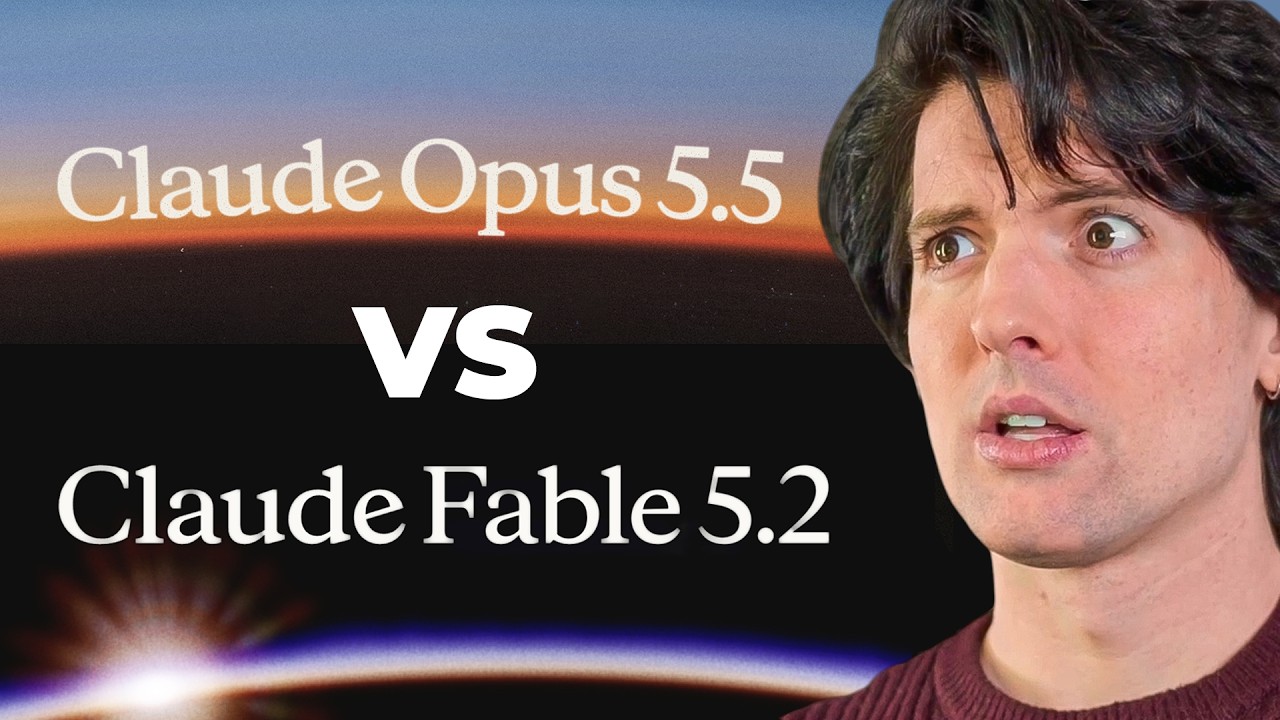
The video discusses the current landscape of AI models for coding, highlighting the overwhelming number of options available compared to just a year ago. The presenter narrows the focus to two primary models worth considering for day-to-day coding tasks: Opus 55 and Fable 52. He emphasizes that while many models exist, only these two offer the best balance of cost, capability, and practical utility, especially when factoring in subscription plans that provide significant token usage benefits. The video also introduces Browserbase as a sponsor, a tool that enhances agent capabilities by providing internet access, which greatly expands what AI agents can accomplish.
The presenter explains the pricing and efficiency advantages of Opus 55, particularly when used with a $200 subscription plan, which offers far more tokens and better value than other models, including open-weight alternatives. He critiques other models like Sonnet 55 and Haiku 55 for being either too expensive or less effective for coding tasks, recommending Haiku mainly for bulk data analysis rather than code generation. The discussion then shifts to the nuances of choosing between Opus 55 and Fable 52, noting that while Opus is generally preferred for most tasks due to its reliability and cost-effectiveness, Fable excels in handling more complex, creative, or exploratory coding challenges.
Anthropic’s recommendations are reviewed, suggesting starting with Opus 55 at medium effort for everyday work and moving to higher effort levels or Fable 52 for tougher problems. The presenter shares personal insights on the models’ behavior, describing Opus as the “teacher’s pet”—meticulous, eager to please, and thorough but sometimes overly cautious and prone to feature creep. In contrast, Fable is likened to the “smart but lazy student” who is willing to take risks, cut corners, and come up with creative solutions, sometimes missing details but often finding innovative approaches that Opus might overlook.
The video delves into practical examples from the presenter’s own work, illustrating how Opus is excellent for building detailed, reliable environments and handling verifiable tasks, while Fable shines in identifying subtle edge cases and pushing boundaries in long-running or complex projects. The analogy of two engineers—one meticulous and cautious, the other intuitive and decisive—is used to explain when to use each model. Opus is best for tasks requiring precision and thoroughness, whereas Fable is better suited for tasks needing creativity, exploration, or a final push to merge code that has been stuck in review.
In conclusion, the presenter encourages viewers to use Opus 55 as the default model and turn to Fable 52 when more creativity or a different perspective is needed. He appreciates both models for their unique strengths and recommends experimenting with effort levels to find the right balance. The video ends with a reflection on the evolving AI model landscape, the hope for future improvements that eliminate the need for effort-level tuning, and an invitation for feedback on this style of in-depth, analogy-rich content. The overall message is that choosing the right AI model is less about finding a single perfect option and more about understanding the complementary roles of Opus and Fable in real-world coding workflows.