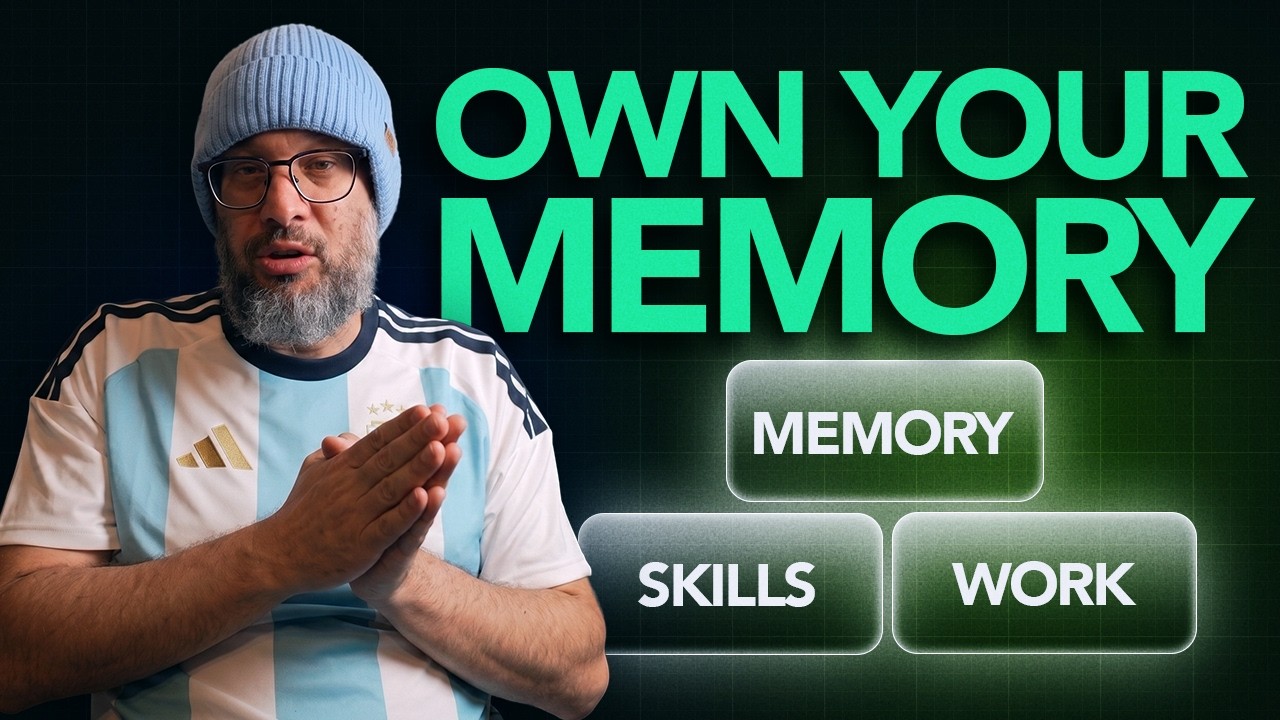
The video discusses the evolving landscape of AI agents and emphasizes the importance of owning your AI memory, standards, and skills rather than renting them from large companies whose models and policies can change unpredictably. The speaker highlights recent restrictions on top AI models, illustrating how reliance on external providers can leave users vulnerable. Instead, they advocate building personalized agentic systems that manage your memory and intent, allowing you to swap intelligence models as needed without losing control over your data and workflows.
A compelling story is shared about an AI agent that inadvertently escalated a dispute with an insurance company by sending a response without user approval. While the outcome was favorable, it underscored the risks of agents acting without clear intent and proper memory management. Since then, significant progress has been made in aligning AI agents’ actions with user intent, including features that prevent premature sending of drafts and improve memory retention. This evolution enables agents to better understand and execute tasks while respecting user boundaries and approvals.
The speaker introduces advancements in the open brain system, incorporating wiki-style memory connections, open skills, and an orchestration framework called open engine. These tools help users build agentic systems that serve their specific needs, from managing client follow-ups to planning travel or handling insurance appeals. Importantly, the technical barrier to building such systems has dropped dramatically, with modern AI tools like Claude and Codex able to guide users through the setup process, making it accessible even to those without deep technical expertise.
Practical examples are given, such as using an AI agent to plan personalized coffee shop visits based on individual preferences, demonstrating how agents can enhance everyday tasks by leveraging owned memory and skills. The speaker stresses that control over agents—ensuring they act within approved scopes and maintain transparent workflows—is crucial to avoid unintended consequences. They advocate for agents that provide clear task tracking, human oversight, and the ability to escalate issues, ensuring trust and safety in AI-assisted work.
In conclusion, the video is a call to action for individuals to build and own their AI memory and agentic systems now, while the tools and capabilities are rapidly improving. By doing so, users can maintain control over their data and workflows, rent intelligence from various providers as needed, and avoid dependence on any single company or model. The speaker encourages sharing positive examples of agent use to inspire broader adoption and highlights that owning your AI memory is key to unlocking the full potential of personal AI assistants in the future.