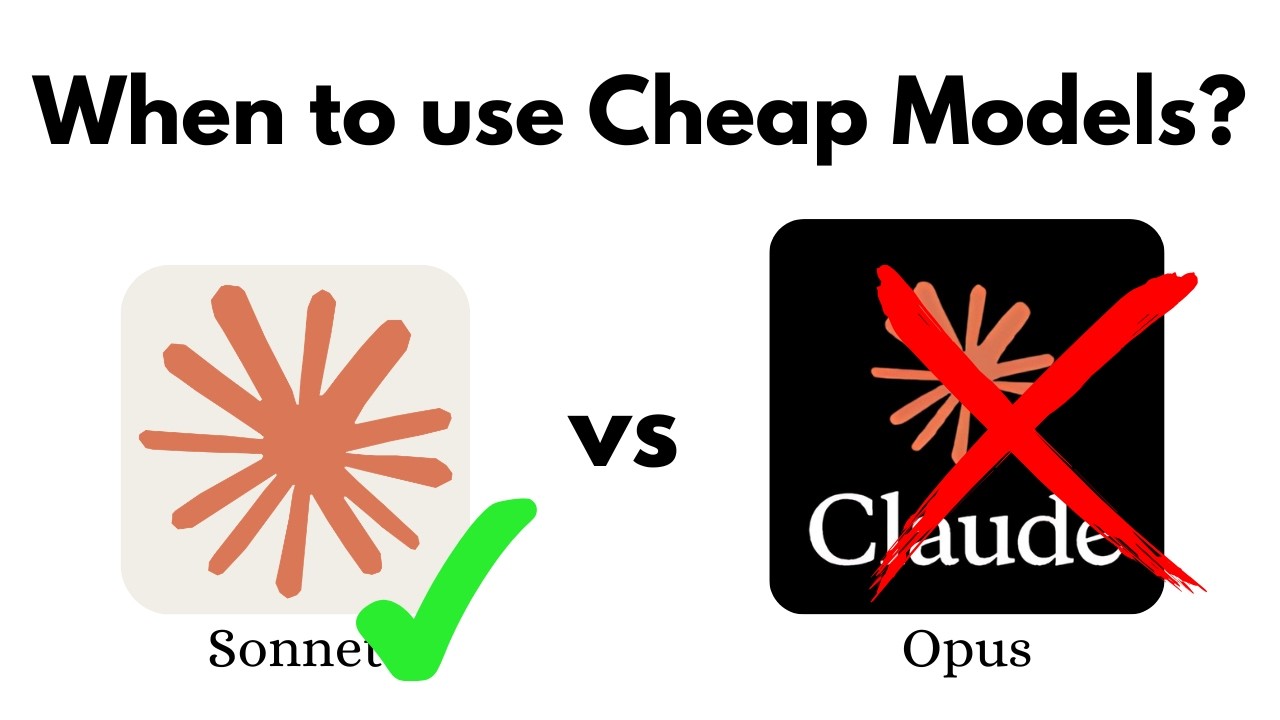
The video discusses when to use cheaper versus more expensive AI models for coding tasks, using Anthropic’s Sonnet and Opus models as examples. The creator addresses a viewer’s question about model selection by comparing the pricing and capabilities of Opus 4.6 and Sonnet 4.5. Opus is significantly more expensive, costing about $2,000 for 80 million tokens compared to Sonnet’s $1,200 for the same usage. This price difference becomes substantial for developers who use AI models heavily, making it important to choose the right model for the right task.
The general rule of thumb presented is to use AI when you don’t want to code something yourself. For tasks you could easily do manually, Sonnet (the cheaper model) is recommended. For tasks that require deeper thought or judgment, Opus (the more expensive model) is preferable. The creator emphasizes that cheaper models are best suited for simple, well-structured tasks such as code refactoring, data formatting, straightforward Q&A, and template-based code generation.
Specific examples of tasks suitable for cheaper models include shortening FAQs, converting JSON to Markdown, adding basic error handling, or making simple UI changes like setting a background color. These are routine, low-risk tasks where the cost savings of using a cheaper model make sense, and the risk of errors is minimal. The creator points out that there’s no reason to spend extra money on Opus for these straightforward jobs.
In contrast, more expensive models like Opus are better for ambiguous, multi-step, or judgment-heavy problems. These include architectural decisions, choosing databases or schemas, diagnosing why a landing page isn’t working, or redesigning a UI from scratch. Such tasks often require a broader understanding of the codebase, the ability to weigh trade-offs, and the generation of actionable, prioritized recommendations. The creator notes that Opus provides more detailed, actionable, and prioritized responses in these complex scenarios.
To illustrate the difference, the creator runs the same complex question through both Sonnet and Opus: “What would break if 50 users hit thumbnail generation at the same time?” Opus not only responds faster but also identifies more issues, provides actionable fixes, and offers effort estimates and prioritization. Sonnet’s response is less thorough and actionable. The video concludes by encouraging viewers to match the complexity of their coding task to the appropriate AI model to save money and get better results, and invites them to join the creator’s online community for further discussion and resources.