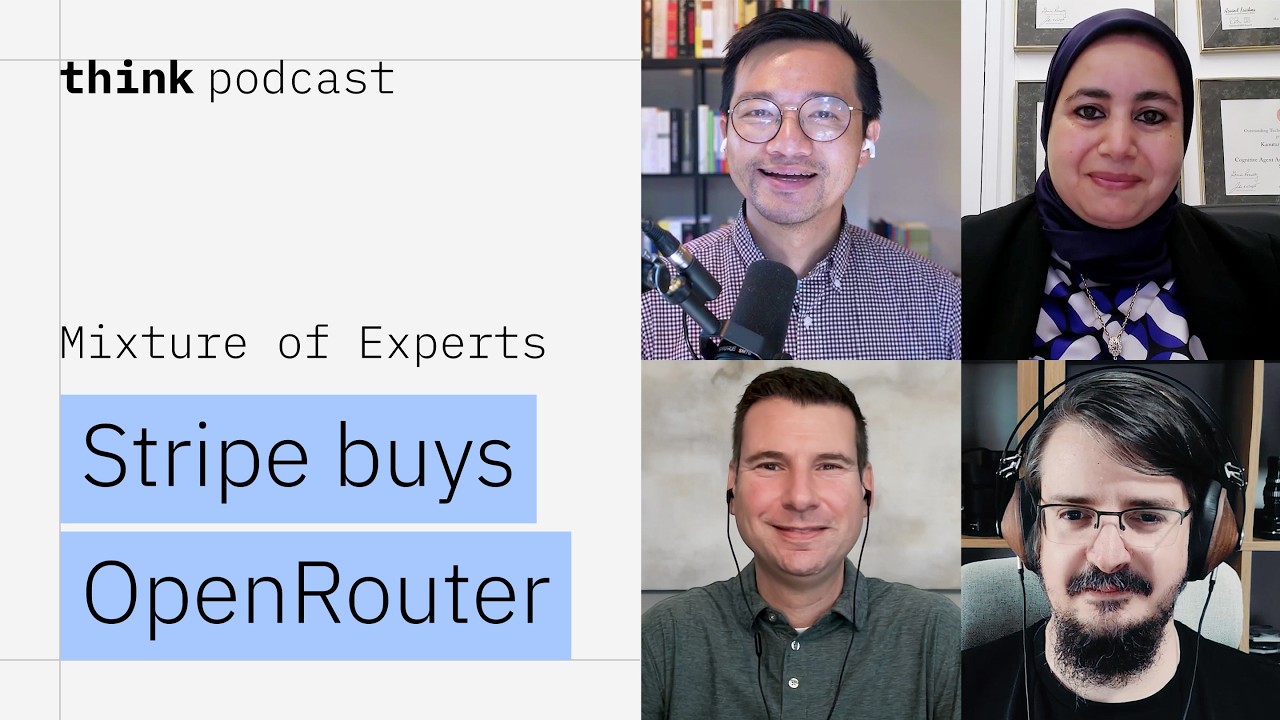
In this episode of Mixture of Experts, the panel discusses several major developments in the AI industry, starting with IBM’s recent partnership with OpenAI. IBM is integrating OpenAI’s capabilities alongside its existing collaboration with Anthropic to build a comprehensive enterprise AI practice. This approach positions IBM as a neutral orchestrator of AI models, focusing on governance, integration, and operationalization rather than competing solely on model development. The panel emphasizes that no single AI model fits all use cases, making IBM’s strategy of offering multiple model options and control layers a competitive advantage in enterprise AI adoption.
The conversation then shifts to Stripe’s acquisition of OpenRouter for over $7 billion, a valuation that has surged dramatically in just a few months. OpenRouter provides a multi-model AI gateway that allows users to access various AI models through a single platform, offering features like semantic caching, cost management, and secure API key handling. Stripe’s interest lies in positioning itself as the “toll booth” for AI transactions, managing the complex billing and routing of AI requests across different models and infrastructures. This move reflects a broader trend where the value in AI is increasingly found in orchestration and infrastructure rather than the models themselves.
The panel also explores the evolving AI consulting landscape, highlighting how companies like IBM and OpenAI are partnering with consulting firms to help enterprises integrate AI effectively. With the proliferation of AI models and tools, the role of trusted consultants and system integrators becomes crucial in managing model selection, deployment, governance, and cost optimization. The discussion underscores that AI adoption is not just about technology but also about change management, regulatory compliance, and aligning AI investments with measurable business outcomes.
Insights from Ramp’s AI Index reveal that while AI adoption is growing, it remains uneven across industries and departments. The data shows a significant disparity in AI spending per employee, with top adopters investing heavily while others remain cautious. The panel notes that the era of unmetered AI experimentation is ending, with CFOs demanding clear returns on AI investments. This shift is driving companies to focus on cost-effective AI usage, governance, and productivity gains rather than broad, unchecked deployment of AI tools.
Finally, the episode touches on the increasing use of AI in legislative processes, noting that AI-generated content is becoming common even in drafting bills. The panel stresses the importance of education, governance, and clear guidelines to ensure responsible AI use in sensitive areas like legislation. They advocate for empowering users to leverage AI safely and effectively, recognizing that AI will make mistakes and that human oversight remains essential. The discussion closes with a call for balanced regulation and smart adoption of AI across all sectors.