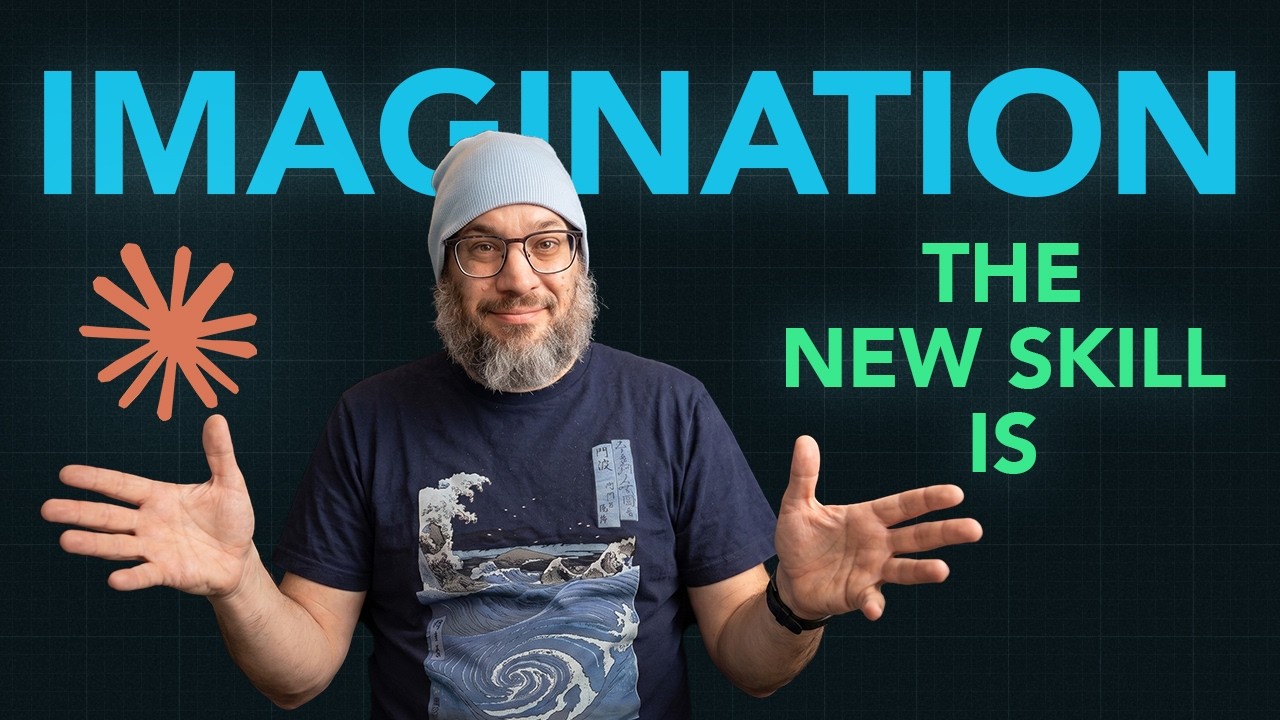
The video review discusses the groundbreaking capabilities of the AI model Fable 5, which is considered by many, including the reviewer, to be the best and largest model in the world, possibly with 10 trillion parameters. Although neither the reviewer nor the audience currently has access to Fable 5, the review aims to highlight its significance and the shift it represents in AI development. Unlike previous models, Fable 5 impresses not just by intelligence or benchmark scores but by its sheer scale, enabling it to handle complex, large-scale tasks that users themselves struggle to fully imagine or articulate.
A key breakthrough with Fable 5 is its ability to manage data quality in a novel way. Instead of smoothing over errors or hallucinating information, it quarantines questionable data and flags uncertainties for human review, allowing users to confidently delegate entire projects to the model and then focus on other work. This marks a departure from earlier AI interactions where constant supervision was necessary. Early users report that Fable 5 can compress months of engineering work into days, demonstrating a real leap in productivity, though the model is not without flaws, such as high cost and some limitations in visual design outputs.
The reviewer emphasizes that the true challenge and skill required now is “task imagination”—the ability to conceive and define large, complex jobs that leverage the model’s full power. Small, narrowly defined prompts waste Fable 5’s capabilities and are economically inefficient given its cost. Instead, users should identify big, ambiguous, and previously unmanageable tasks within their work, prepare comprehensive data packages, and clearly define what “done” looks like before handing the job over to the model. This approach transforms AI interaction from simple prompt engineering to managing substantial AI-driven projects.
Despite its power, Fable 5 still requires careful management, direction, and review by humans. It is not a job killer for roles requiring judgment and oversight but rather a tool that demands new skills in model management and data preparation. The model’s complexity means that people working with it are not being replaced but are evolving into new roles that involve guiding and refining AI outputs. The reviewer encourages viewers to embrace this shift by using Fable 5 to tackle the most painful and time-consuming parts of their work, thereby reclaiming time for higher-value activities and career growth.
Finally, the reviewer invites viewers to explore deeper resources on their Substack, where they provide detailed guides on how to work effectively with Fable 5, including how to communicate style, structure data, and manage large tasks. They stress that while Fable 5 is currently the pinnacle of AI models, success depends on how users adapt their workflows and thinking to harness its capabilities. The video closes with a promise of more analysis and updates on other emerging AI models, encouraging viewers to subscribe and stay informed about the evolving AI landscape.