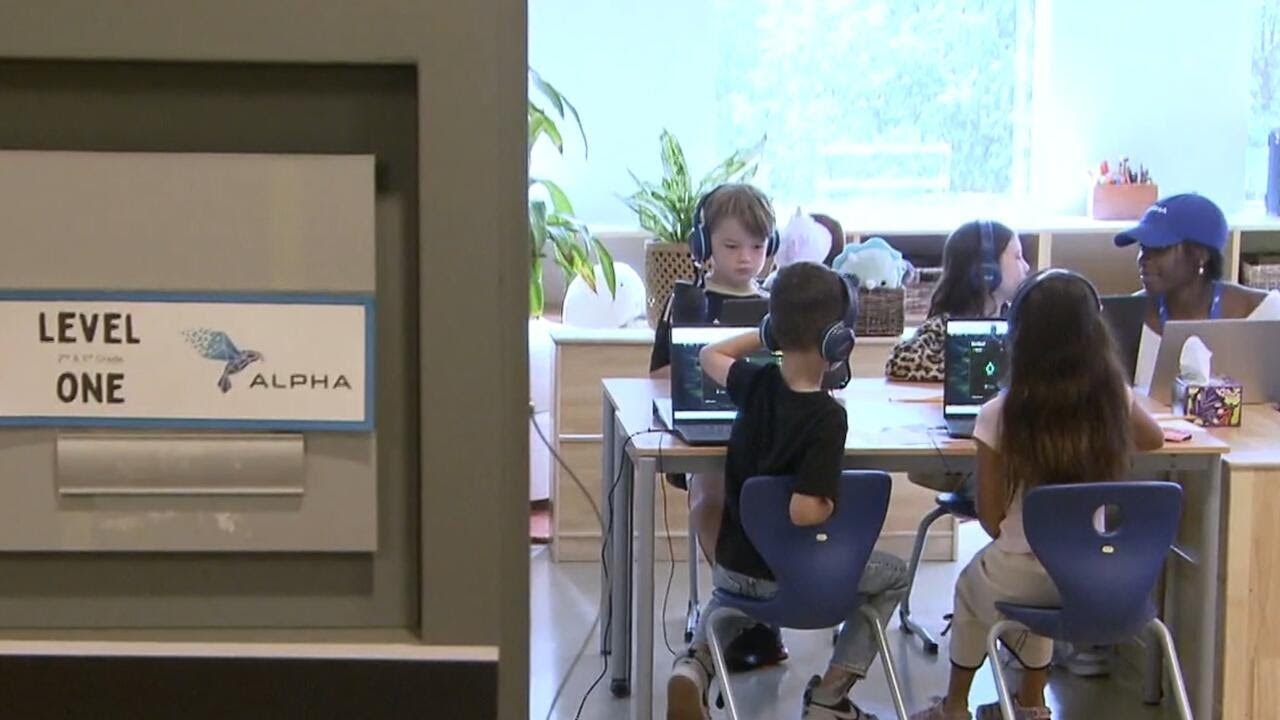
Chicago has launched its first AI-driven school called Alpha, catering to students from pre-kindergarten through 8th grade. Unlike traditional schools, Alpha operates without conventional teachers; instead, artificial intelligence handles academic instruction. The school day starts at 9 a.m., and students reportedly master core subjects such as math, writing, language, reading, and science in just two hours daily using an AI-powered learning model. The remaining school hours focus on life skills, including public speaking, financial literacy, teamwork, and leadership.
Students and parents have mixed reactions to this innovative approach. Thirteen-year-old Zayn Shaw, who previously attended traditional schools, feels the shorter, focused learning sessions are effective. His father, Benoy, who pays $55,000 in tuition, values the emphasis on life skills and the supportive environment. Adults in the school, referred to as “guides,” focus on providing emotional and motivational support rather than direct academic instruction, helping students transition through various activities like lunch, recess, and extracurriculars.
The school’s leadership emphasizes that AI is a tool rather than a decision-maker. Brian Howell, the dean of parents and a former anthropology professor, explains that humans control the students’ learning experiences, making the education model more human-centered. The school claims success in preparing students for higher education, with graduates gaining admission to prestigious universities such as Stanford, Northwestern, and Rice. The approach encourages independent learning, which is seen as beneficial for college readiness.
Despite the promising aspects, experts express caution. Dr. Rebecca Winthre from the Brookings Institution notes that Alpha’s model is experimental and lacks externally validated evidence to support its claimed outcomes. The launch of Alpha in Chicago coincides with growing skepticism and regulatory actions against AI in education, with some school districts, including Chicago, New York, and Los Angeles, imposing restrictions on AI use in public schools. Critics emphasize the importance of deep reflection and meaning-making in learning, which they fear may be compromised by AI-driven instruction.
Alpha clarifies that it does not use chatbots and operates on a proprietary AI platform that does not access external online information. Experts advise parents to engage in conversations with their children about AI, understand how it is used in schools, and maintain consistent screen time rules. The emergence of AI-driven education models like Alpha highlights both the potential and challenges of integrating advanced technology into traditional learning environments.
Useful Links