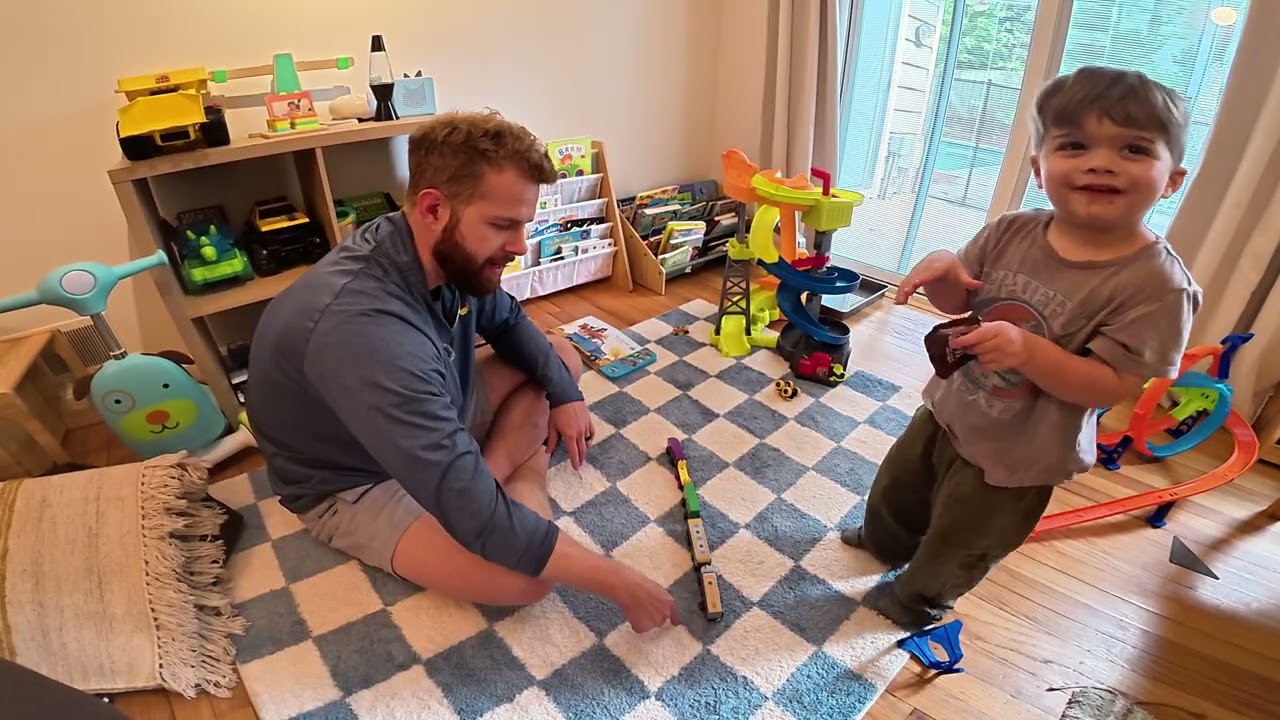
The video humorously depicts a parent teaching their 2-year-old how to reverse a linked list using playful analogies and hands-on involvement, first demonstrating the iterative method and then the recursive approach. Through engaging explanations and encouragement, the parent makes complex computer science concepts accessible and fun for a very young learner.
In this video, the creator humorously demonstrates teaching their 2-year-old child how to reverse a linked list, addressing common criticisms about American education by starting early with complex computer science concepts. The focus is on explaining the process of reversing a linked list, beginning with the iterative method. The parent uses colorful and playful language, involving the child in the explanation by referring to the nodes as colors and guiding them through the steps of reversing the list iteratively.
The iterative approach is explained by setting a temporary pointer to null and then moving through the list, rearranging the connections between nodes to reverse their order. The parent uses a train analogy to help visualize the process, making it engaging and accessible for the young child. After completing the iterative reversal, they acknowledge that the result is not quite right and decide to demonstrate the recursive method instead.
For the recursive method, the parent guides the child through the concept of recursion by moving to the end of the list, which serves as the base case. They explain how to reverse the list by creating cycles between nodes and adjusting pointers step-by-step as they move back up the recursive call stack. The explanation includes technical details like setting head.next.next to head and then nullifying head.next to avoid cycles, effectively reversing the links.
Throughout the video, the parent maintains a playful and encouraging tone, celebrating the child’s progress and understanding. They emphasize the importance of repetition and visualization in grasping the recursive process, making the abstract concept more tangible for a toddler. The interaction highlights an innovative and lighthearted approach to early childhood education in computer science.
In conclusion, the video showcases a creative and entertaining way to introduce complex programming concepts to very young learners. By combining iterative and recursive explanations with engaging analogies and hands-on involvement, the parent demonstrates that even challenging topics like linked list reversal can be made accessible and fun. The video ends on a positive note, with the child feeling confident and ahead of the game.