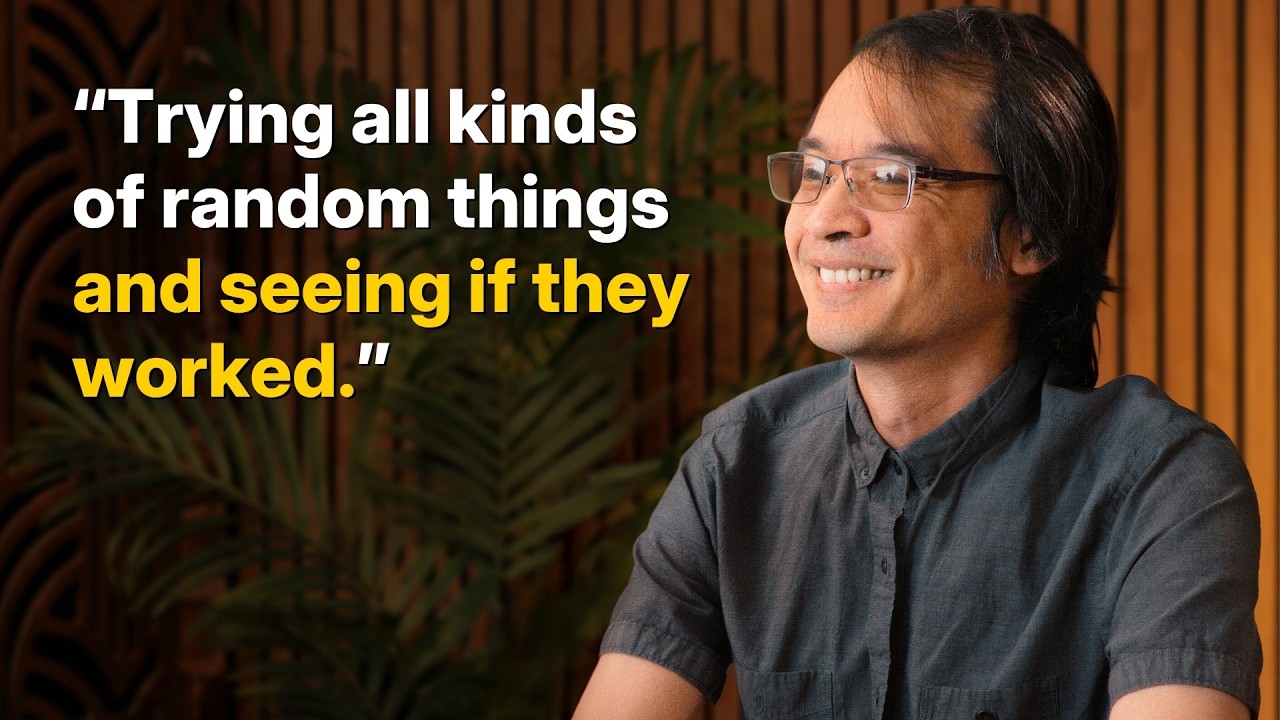
In this insightful conversation with Terence Tao, the discussion begins with the historical story of Johannes Kepler’s discovery of the laws of planetary motion. Kepler’s process involved building on prior astronomical theories, proposing geometric models involving Platonic solids, and painstakingly analyzing Tycho Brahe’s precise observational data. Despite initial failures, Kepler’s persistent data-driven approach led to the formulation of his three laws of planetary motion, which were later theoretically explained by Newton. This story serves as an analogy for how AI can assist in scientific discovery by generating numerous hypotheses and testing them against large datasets, highlighting the evolving nature of scientific methodology from hypothesis-first to data-first approaches.
The conversation then explores the current and future role of AI in mathematics and science. Tao notes that while AI has made impressive strides in solving certain mathematical problems, such as some Erdős problems, it has reached a plateau where the “low-hanging fruit” has been picked. AI excels at breadth, rapidly exploring many problems simultaneously, but struggles with depth and cumulative understanding. Tao emphasizes the complementary relationship between human mathematicians, who excel at deep insight and creativity, and AI systems, which can handle large-scale data analysis and routine tasks. This shift calls for new scientific paradigms that leverage AI’s strengths in breadth while humans focus on complex, nuanced challenges.
A significant theme is the challenge of verifying and validating the vast number of AI-generated hypotheses and scientific ideas. Traditional peer review systems are overwhelmed by the volume of AI-produced content, necessitating new frameworks for assessing scientific progress and distinguishing meaningful advances from noise. Tao discusses the importance of narrative, communication, and the social aspects of science, which remain difficult to formalize or automate. He also highlights the potential for formal proof assistants like Lean to revolutionize mathematics by enabling precise, atomic analysis of proofs and facilitating collaboration between humans and AI, though true AI understanding and cumulative learning remain elusive.
The dialogue also touches on the evolving nature of mathematical research and education in the AI era. Tao reflects on how AI tools have transformed auxiliary tasks such as literature review, numerical experimentation, and paper writing, making research more efficient and enriched, though the core creative process remains largely human-driven. He encourages adaptability and openness to new methods, noting that AI lowers barriers to entry, allowing even high school students to contribute to frontier research. Tao envisions a future where human and AI collaboration reshapes the landscape of mathematics, science, and learning, with AI handling routine or large-scale tasks and humans focusing on deep conceptual breakthroughs.
Finally, Tao offers philosophical insights on scientific progress, the unpredictability of future discoveries, and the importance of serendipity and human creativity. He stresses that while AI can accelerate many aspects of research, it may also disrupt traditional modes of inspiration and discovery. The conversation concludes with advice for aspiring mathematicians to embrace change, cultivate adaptability, and leverage AI as a powerful tool rather than a replacement. Tao’s reflections underscore the transformative potential of AI in science, balanced by the enduring value of human intuition, collaboration, and the art of storytelling in advancing knowledge.