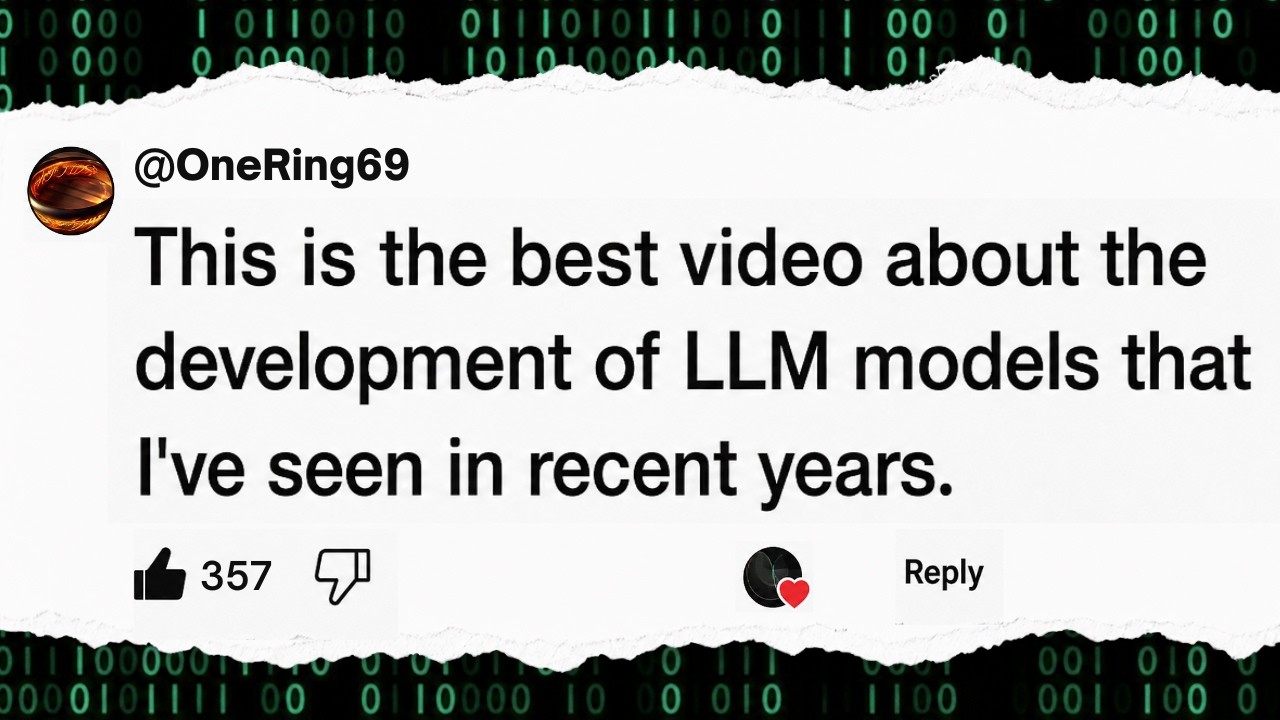
The video explores the remarkable progress in AI capabilities over the past six years by revisiting and testing some of the earliest AI language models, including GPT-3 from 2020 and the original GPT-4 from 2023. The creator attempts to have these models build the classic game Space Invaders, highlighting the limitations and quirks of early AI. GPT-3, trained solely to predict the next word in text without chatbot-specific training, often produces confusing or irrelevant answers unless carefully prompted with fabricated contexts. Despite this, GPT-3 demonstrates surprising abilities like few-shot learning, where it can understand and apply new concepts from minimal examples, and can generate some functional code snippets, though it struggles with complex tasks like building a full game.
Moving forward to GPT-4, the video shows a significant leap in AI sophistication, largely due to innovations like fine-tuning for conversational abilities and reinforcement learning from human feedback. GPT-4, accessed through a chat interface, better understands user intent and provides more coherent and relevant responses. When tasked with creating Space Invaders, GPT-4 can produce a playable, though imperfect, version of the game after iterative debugging through conversation. This marks a clear improvement over GPT-3, but the AI still faces challenges with complex game logic and maintaining long-term context within its limited token window.
The next major advancement discussed is the transition from chat-based AI to agentic AI, where the AI is embedded within an “agentic harness” that allows it to autonomously take actions on a computer, such as creating files, running code, and iteratively improving its work without human intervention. This capability enables the AI to build more sophisticated projects, like a 3D Space Invaders game with multiple gameplay modes and environments. However, the creator notes that while the AI can handle coding tasks effectively, human involvement remains crucial for guiding the AI’s creative decisions and ensuring the final product meets quality and fun standards.
Throughout the video, the creator reflects on how the role of the human collaborator has evolved alongside AI improvements. Initially, working with GPT-3 required intricate prompt engineering to coax useful outputs, whereas with GPT-4, the interaction became more conversational and iterative. Now, with agentic AI, the human’s role shifts to providing high-level direction and feedback while the AI handles much of the execution autonomously. This progression illustrates not only the technical advancements in AI but also how human-AI collaboration dynamics are changing.
Finally, the video contemplates the future trajectory of AI development, speculating on what the next three-year leap might bring by 2029. The creator wonders whether AI will gain even more powerful ways to interact with humans and the world, and whether the fundamental principle of prediction will remain central to AI intelligence. While the future is uncertain, the rapid progress so far suggests that upcoming advancements will be significant, warranting close attention. The video ends with an invitation to follow along for future experiments and insights into AI’s evolving capabilities.