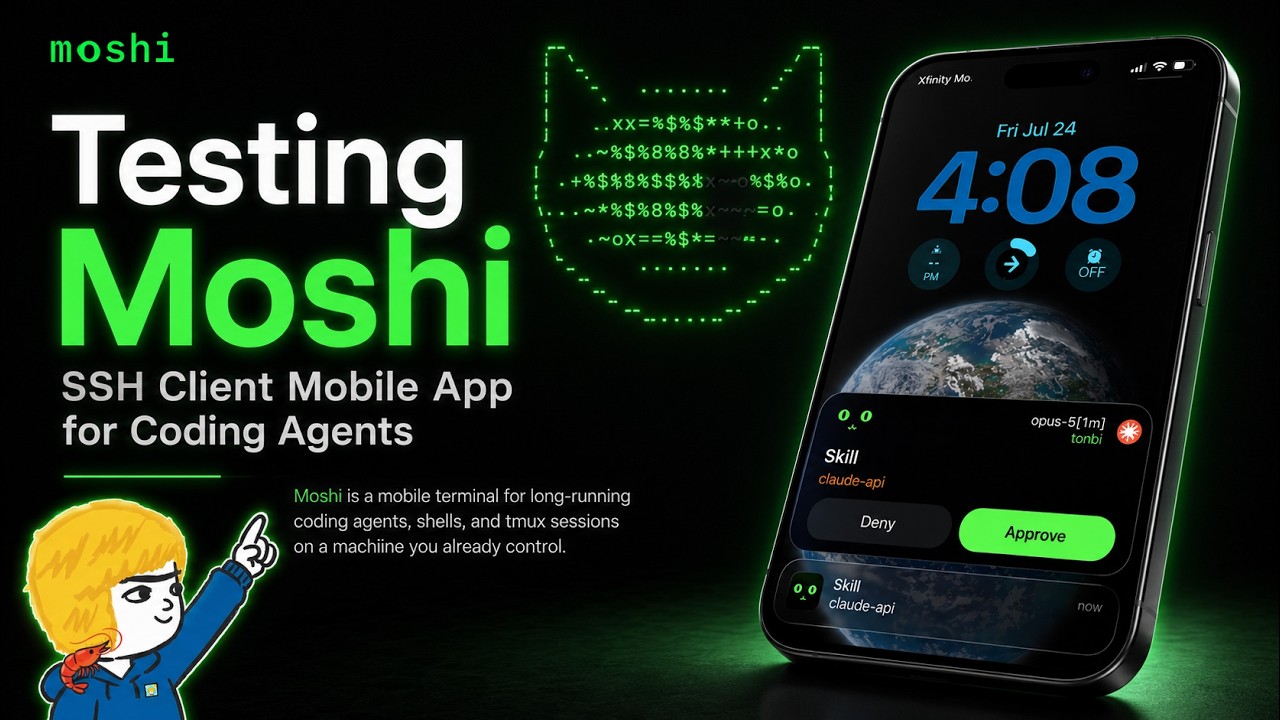
The video introduces Mosh, a mobile SSH client app designed specifically for controlling AI coding agents remotely from iOS and Android devices. Unlike general SSH clients like Termius, Mosh is agent-first, focusing on managing long-running autonomous agent sessions rather than broad server administration. The presenter explains how Mosh acts as a “steering wheel” for agents running on a host machine, allowing users to approve tasks, dictate commands, and monitor progress from their phone, even when the app is backgrounded or the network changes.
Mosh integrates tightly with tools like Herder and tmux, enabling persistent sessions that continue running on the host machine regardless of the phone’s connection status. The app features an agent inbox, voice input, image pasting into prompts, and a mobile toolbar, enhancing the user experience for managing AI agents. The presenter contrasts Mosh with Termius, noting that while both allow SSH access from mobile devices, Termius offers broader server management features such as port forwarding, snippets, and desktop clients, making it more suitable for infrastructure administration.
The video demonstrates the installation and setup process of Mosh, highlighting its ease of use with QR code pairing to connect to a Linux machine called Spark. Once connected, the presenter showcases how Mosh provides access to multiple AI agents running via Herder, allowing seamless switching between agents like Claude, Codex, Grok, and Hermes. The app’s smooth UI and responsiveness are praised, with the ability to interact with agents, send commands, and view real-time updates directly from the phone.
Additionally, Mosh supports a “hooks” feature that enables agent event notifications on the iOS lock screen, allowing users to receive live activity updates and approve tasks without unlocking their phone. This functionality is demonstrated with Claude Code, showing how notifications keep users informed about agent progress and allow quick interaction. The presenter also highlights a usage dashboard within the app that tracks subscriptions and agent activity, adding to the app’s utility for managing multiple AI coding agents.
In conclusion, the presenter finds Mosh to be a polished and promising mobile SSH client tailored for AI agent workflows, especially when combined with Herder on a persistent host machine. While still relatively new, Mosh offers a smoother and more agent-focused experience compared to traditional SSH clients like Termius. The video encourages viewers to share their experiences with Mosh or similar apps and suggests that Mosh and Termius can coexist, serving different but complementary purposes in mobile SSH and AI agent management.