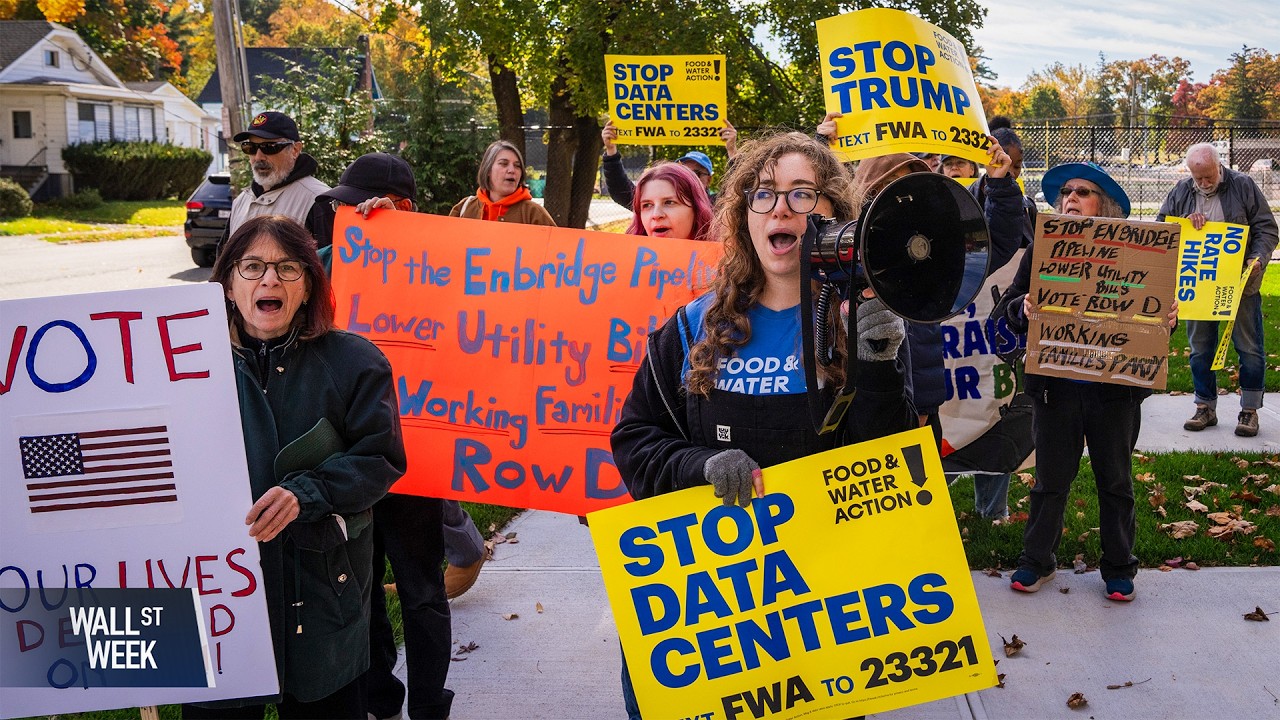
The upcoming midterm elections mark the first time AI will play a significant role in voter concerns, with a broad spectrum of opinions on its potential impact. While many recognize AI’s promising capabilities, fears range from job displacement to existential risks. However, the most immediate issue in this election cycle revolves around the construction of data centers necessary to support AI infrastructure. Communities across both red and blue states express apprehension about the environmental and social consequences of these data centers, including concerns about water usage, noise pollution, and overall community impact.
This resistance has led some states, like New York, to impose moratoriums on new hyperscale data centers, slowing AI development. Despite only 44% of voters considering AI very important to their vote, a significant 61% oppose building more data centers. Political groups linked to AI companies have invested heavily in elections, reflecting the bipartisan nature of AI-related concerns. Former Speaker Paul Ryan and Congressman Kevin Brady highlight that opposition to data centers often serves as a proxy for broader anxieties about AI itself, with communities unsure about the long-term implications for jobs, resources, and local environments.
Industry insiders, such as Blair Effron, note that the AI sector has struggled to communicate its benefits effectively, leading voters to focus on tangible local issues like land use and energy consumption. Voters’ concerns about AI span economic, security, and existential risks, with economic fears—particularly job losses—being the most immediate. While some sectors have seen job reductions due to AI, overall employment remains stable, leaving uncertainty about AI’s future impact on the labor market. This ambiguity fuels voter anxiety and underscores the need for policies that support workers through potential transitions.
The political landscape around AI is complex, with corporations generally favoring regulation that provides clear rules and global coordination, especially regarding security. CEOs recognize the risks associated with AI and are investing heavily in cybersecurity. However, political processes may be hesitant to fully embrace AI’s potential benefits, given the uncertainty about job creation and economic outcomes. International cooperation, particularly between the U.S. and China, is seen as crucial for effective AI governance, though recent summits have yet to prioritize this issue.
Despite local opposition and political debates, experts agree that halting AI progress in the U.S. is unlikely. The necessity of data centers to maintain technological competitiveness, especially against countries like China, is clear. The challenge lies in balancing technological advancement with community benefits, ensuring that data center development proceeds responsibly and inclusively. Ultimately, AI and its infrastructure will continue to shape political discourse and voter priorities in the near future.
Useful Links