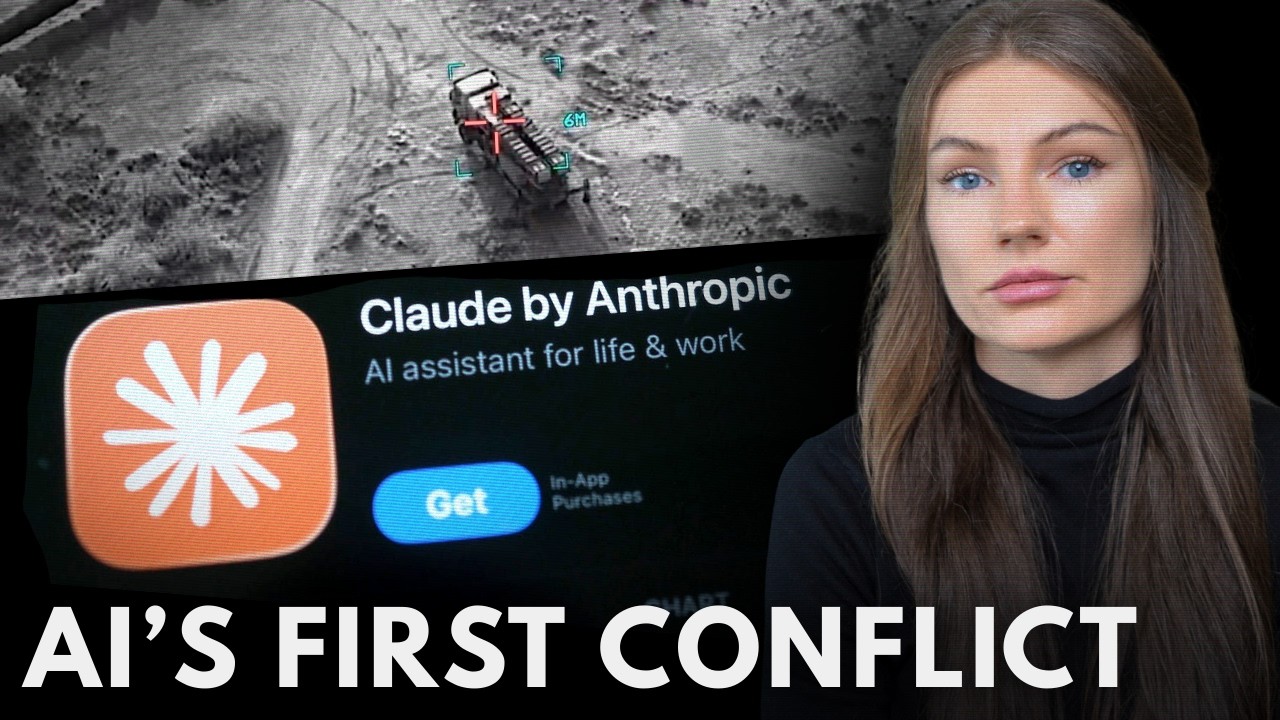
The video discusses recent controversies involving major AI companies, Anthropic and OpenAI, and their relationships with the U.S. government and military. Anthropic, creators of the Claude AI, had a $200 million contract with the Pentagon and their AI was already integrated into classified military networks. The government pressured Anthropic to drop restrictions on domestic mass surveillance and fully autonomous weapons, but Anthropic refused. As a result, Defense Secretary Pete Hegseth publicly labeled Anthropic a national security risk, an unprecedented move against an American company, and threatened their business.
Simultaneously, OpenAI’s CEO Sam Altman was negotiating with the Pentagon, publicly affirming similar safety principles—opposing domestic mass surveillance and requiring human oversight for autonomous weapons. However, OpenAI had just announced a massive $110 billion funding round, raising questions about their motivations and dependence on government contracts. The implication is that OpenAI aims to become indispensable to the U.S. military, making itself “too big to fail.” This maneuver sparked public backlash, with ChatGPT uninstall rates and negative reviews surging, while Anthropic’s Claude briefly overtook ChatGPT in app downloads.
Internally, OpenAI faced turmoil. In a leaked all-hands meeting, Altman admitted to employees that the Pentagon, not OpenAI, would control how their AI was used, contradicting his public statements. This led to the resignation of Caitlin Kalinowski, head of OpenAI’s robotics division, who criticized the lack of deliberation over issues like surveillance and lethal autonomy. The justification for OpenAI’s cooperation was framed as a lesser evil—if they didn’t comply, a less principled competitor might.
The situation escalated when, on the same day Anthropic was banned and OpenAI secured the Pentagon contract, the U.S. and Israel launched Operation Epic Fury, a military strike in which AI (specifically Claude, via the Maven system) was used to select targets. This operation resulted in civilian casualties, raising concerns about the reliability and accountability of AI in military applications. Despite being declared a security risk, Anthropic’s AI was still used for critical military decisions, highlighting contradictions in government policy and oversight.
Meanwhile, OpenAI faced a lawsuit from Nippon Life Insurance after ChatGPT fabricated legal cases and provided unauthorized legal advice, demonstrating the risks of deploying AI in sensitive domains. The video concludes by questioning the effectiveness of current AI guardrails, noting that both Anthropic and OpenAI have significant ethical shortcomings. The narrator reflects on their own reliance on ChatGPT, ultimately deciding to delete the app for personal well-being, underscoring broader concerns about dependency on AI and the lack of meaningful safeguards in its deployment.