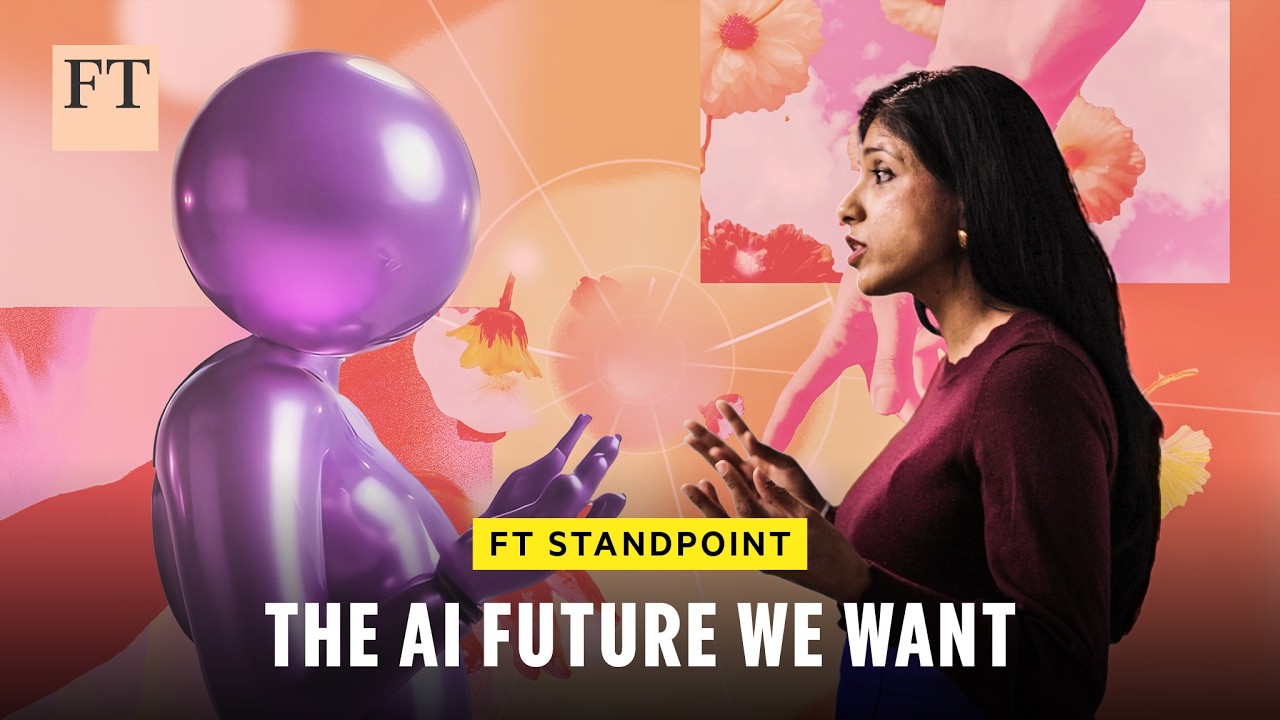
The video explores the transformative potential of AI across various domains, from environmental conservation and healthcare to cultural preservation, while highlighting the ethical, environmental, and societal challenges it poses. It emphasizes that the future of AI is not fixed and calls for inclusive reflection and decision-making to ensure AI benefits humanity broadly and responsibly.
Artificial intelligence has become an integral part of our lives and is poised to shape the future significantly. While technologists often envision a golden era where AI drives economic growth, scientific breakthroughs, and overall happiness, the current reality is more limited. AI is primarily used to boost productivity and profit, controlled by a few private companies that decide who can access and benefit from the technology. This concentration of power raises important questions about who should have the right to shape AI’s role in society.
There is a unique opportunity now to imagine diverse futures shaped by AI, beyond the narrow interests of a handful of technologists. One promising vision involves using AI to better understand and protect the natural world. With advanced sensors, cameras, and drones, AI could help scientists study fragile ecosystems, decode animal communication, and support species adaptation. However, this vision also acknowledges the environmental costs of AI itself and questions whether reliance on technology might distract us from urgent conservation efforts.
AI also holds the potential to transform our understanding of life and death. By analyzing embryos and predicting genetic vulnerabilities, AI could help prevent diseases and extend human lifespans. Yet, this raises ethical dilemmas about whether it is right to interfere with natural life cycles and whether extending life might come at the expense of truly enjoying it. These questions challenge us to consider deeper meanings of existence and what it means to live a fulfilling life.
Another fascinating possibility is AI’s ability to reconnect us with our past. By deciphering ancient scrolls, restoring paintings, and preserving cultural heritage, AI could reveal lost histories and enrich our understanding of human civilization. This could foster a stronger sense of identity and continuity. However, there is also concern that as we become more immersed in digital worlds, we might lose touch with the tangible, physical aspects of our history and culture.
Ultimately, the future shaped by AI is not predetermined. It belongs to everyone to imagine and influence. The video invites viewers to reflect on what kind of AI future they want—one that balances technological progress with ethical considerations, environmental stewardship, and a deeper connection to both our past and our humanity. The choices we make now will determine whether AI becomes a tool for collective flourishing or a source of new challenges.