In January 2024, Google DeepMind introduced Alpha Geometry, an AI model capable of solving challenging geometry problems from the International Mathematical Olympiad (IMO), a prestigious high school math competition. Alpha Geometry impressed by solving 25 out of 30 problems, outperforming a silver medalist. However, before AI was integrated, a 25-year-old non-AI approach called the deductive database (DD), which relies on a large set of geometric rules and pure logical deduction, could already solve 18 of these problems, roughly equivalent to a bronze medal performance. This method combined with algebraic reasoning (AR), which solves systems of linear equations, formed the backbone of the problem-solving process.
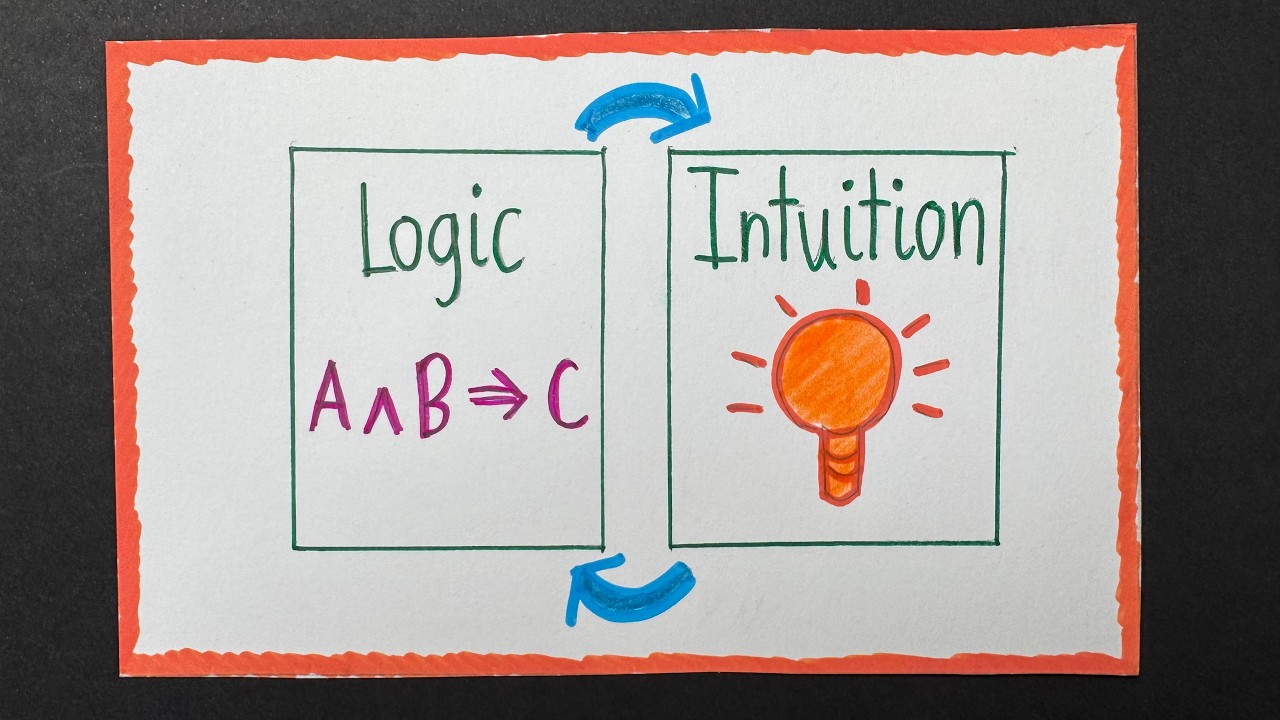
The DD approach uses a database of geometric facts and rules to deduce new theorems, but it struggles with auxiliary constructions—additional lines or points not originally in the problem diagram but essential for solving harder problems. To overcome this, DeepMind incorporated a language model designed specifically to generate these auxiliary constructions. The AI alternates between the creative language model, which proposes new constructions, and the logical DD plus AR modules, which deduce further facts, iterating until the problem is solved or time runs out. This synergy of creativity and logic is what enabled Alpha Geometry to reach its high success rate.
A significant challenge was the scarcity of training data for the language model, as few IMO problems with detailed solutions exist. To address this, the team generated synthetic training data by randomly plotting points and lines, using DD plus AR to deduce theorems, then erasing parts of the diagram to create problems requiring auxiliary constructions to solve. This process produced hundreds of millions of synthetic examples, including millions that required auxiliary constructions, enabling effective training of the language model to think creatively about geometry problems.
The final Alpha Geometry system, combining DD, AR, human-coded heuristics, and the AI language model, solved 25 out of 30 IMO geometry problems, a remarkable achievement demonstrating that machines can combine creative insight with rigorous logical reasoning. This approach is not only a breakthrough in automated geometry problem solving but also a promising model for how AI might tackle complex problem-solving tasks in other domains such as science, medicine, and engineering, where creativity and logic must work hand in hand.
The video also highlights the broader context of AI in mathematics, noting that other groups have recently achieved gold-level performance on a wider range of math contest problems using natural language processing without specialized domain languages. The presenter encourages viewers involved in math research to share their experiences with AI tools, emphasizing the evolving role of AI in mathematical discovery and problem solving. This video is part of a guest series aimed at exploring the intersection of AI and advanced mathematics.