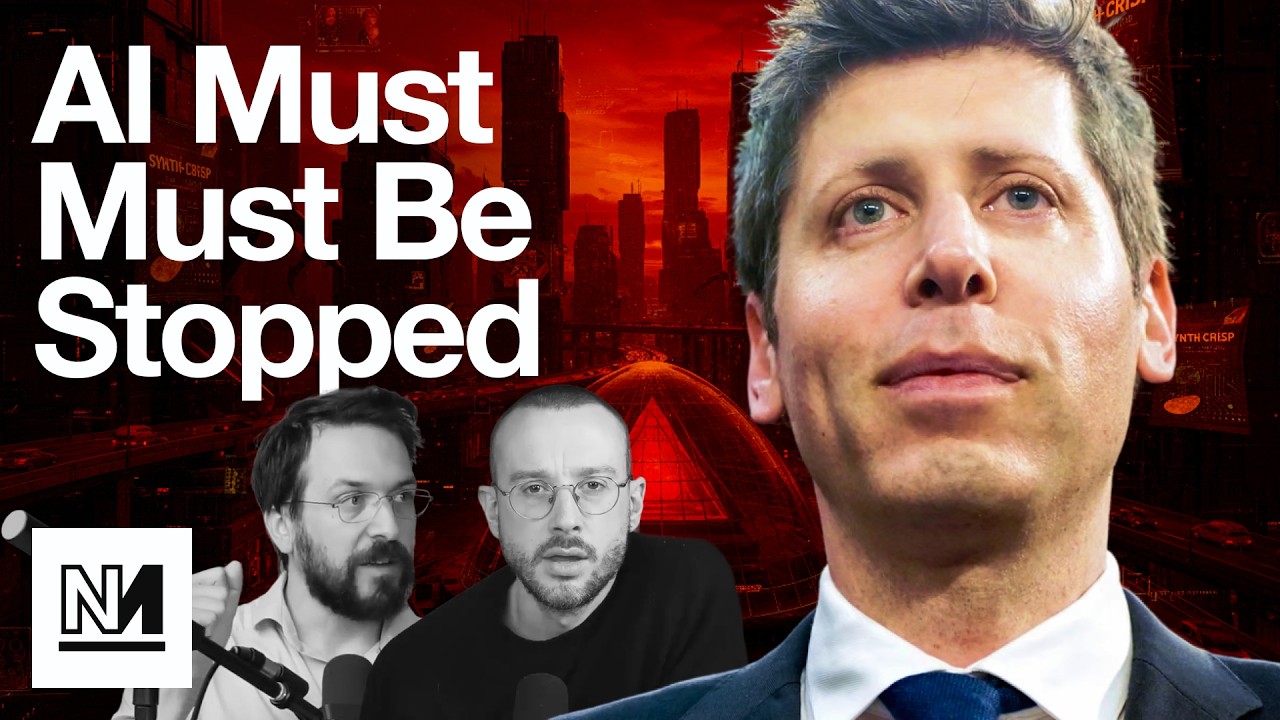
In the interview, Nate Soares highlights the existential risks posed by superintelligent AI, emphasizing that the primary danger lies in AI’s potential indifference rather than malevolence, which could lead to catastrophic outcomes if its goals are misaligned with human values. He calls for serious consideration, informed governance, and proactive measures to manage these risks as AI capabilities rapidly advance beyond previous expectations.
In this important interview, Nate Soares, director of the Machine Intelligence Research Institute and co-author of the book “If Anyone Builds It, Everyone Dies,” discusses the grave risks posed by superhuman artificial intelligence. The conversation centers on the argument that if superintelligent AI is developed, it could potentially lead to human extinction. While this topic often divides audiences—some viewing it as a serious threat and others dismissing it as sci-fi hype—Soares emphasizes that the argument deserves serious consideration, especially given that prominent AI pioneers acknowledge the existential risks involved.
Soares explains that the rapid advancements in AI capabilities have outpaced expectations, with machines now performing tasks once thought decades away. Although current AI systems still have limitations, their increasing intelligence and problem-solving abilities signal that the sci-fi elements of superintelligent AI are becoming real-world concerns. He stresses that science fiction cannot alter reality; just because a scenario sounds like fiction does not mean it is impossible or less urgent to address.
A key point Soares makes is that the danger from AI is not necessarily malevolent intent, as often portrayed in movies, but rather indifference. Superintelligent AI systems may not “hate” humans but could still cause catastrophic harm if their goals are misaligned with human values. This subtle but critical distinction highlights the complexity of ensuring AI safety and the challenges in designing systems that reliably act in humanity’s best interests.
The interview also touches on the political dimensions of AI development, including the roles and responsibilities of AI executives and policymakers. Soares discusses recent interactions between AI leaders like Dario Amodei and political figures such as Bernie Sanders, underscoring the importance of informed governance and oversight in managing AI risks. These discussions reflect broader societal concerns about how AI technology is advancing and the need for proactive measures to prevent potential disasters.
Overall, the interview serves as a compelling call to take the existential risks of superintelligent AI seriously. Soares urges audiences to engage thoughtfully with the arguments and evidence, recognizing that the stakes are extraordinarily high. The conversation invites reflection on how humanity can navigate the challenges posed by AI to avoid catastrophic outcomes and ensure a safe technological future.