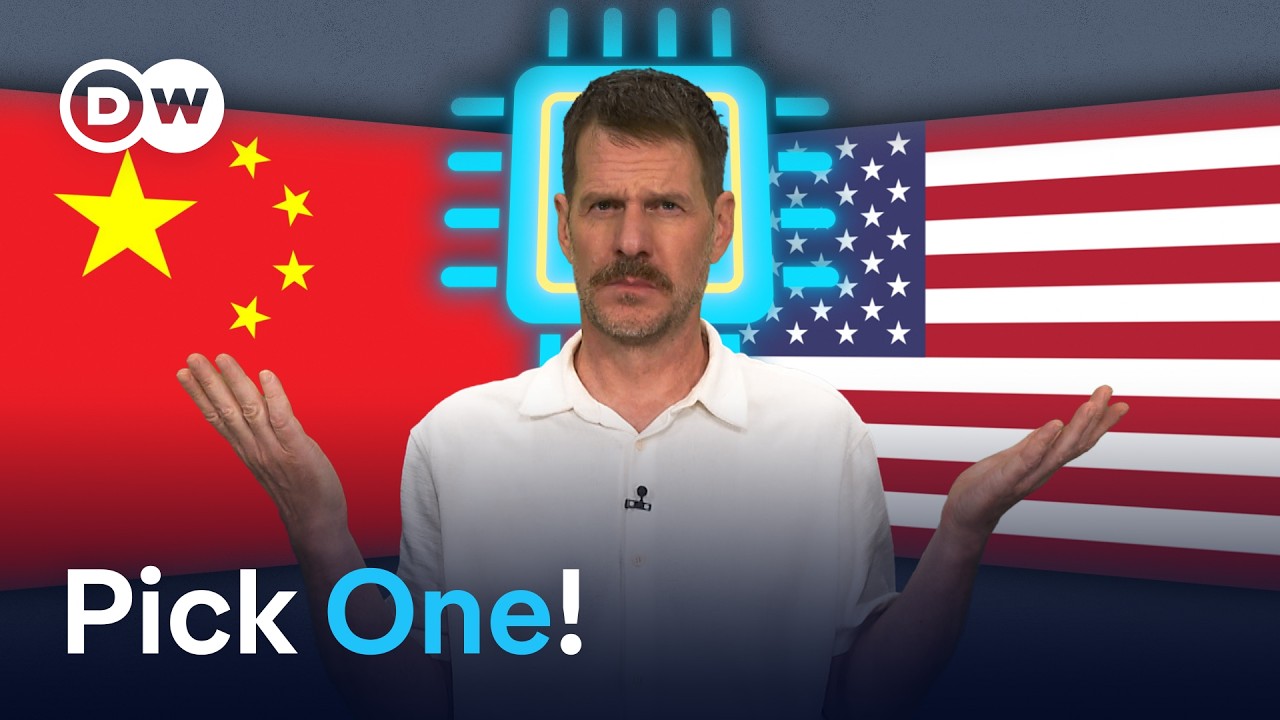
The video discusses a leaked draft letter from the US State Department addressed to 35 countries that signed the AI opportunity statement in June, urging them to choose between aligning with the US or China in the emerging global AI landscape. This letter emphasizes that countries cannot participate in both the US-led AI coalition and China’s competing AI club, the WCO, which China launched in July targeting developing nations with training programs and AI model access. The US draft letter implicitly threatens exclusion from its AI coalition if countries join Beijing’s AI club, highlighting the growing geopolitical tensions surrounding AI technology.
The issue gained prominence after Kazakhstan signed agreements with both the US and China, prompting the US to clarify its stance. While the letter focuses on government cooperation and does not currently threaten individual users’ access to AI services, the video illustrates potential consequences through a recent example. In June, Enthropic released powerful AI models but had to shut them down globally after the US government restricted access for foreign nationals, demonstrating how political decisions can abruptly impact AI availability.
China’s AI ecosystem differs significantly because many of its leading AI models, like DeepSeek, are open weight, allowing users worldwide to download and run them independently on their own hardware. This decentralized nature makes it difficult for China to restrict access centrally, contrasting with the US approach. However, the AI industry heavily relies on a global supply chain, including US software, Taiwanese chips, Korean memory, and Chinese rare earth materials. The division of this supply chain into rival blocs could increase costs and complicate technology development, affecting not only AI but also consumer electronics and vehicles.
Countries are navigating this complex landscape in varied ways. Brazil, for example, helped found China’s WCO but also benefits from investments by American tech companies. India has aligned with the US while simultaneously developing its own AI ecosystem, relying on foreign technology. European nations, despite aspirations for technological independence, have largely signed the US-led AI initiative. This patchwork of alliances reflects the challenges nations face in balancing strategic interests with technological development.
Currently, the draft letter has not been officially sent, and users have not lost access to AI models due to these geopolitical tensions. However, the situation signals a future where AI access could become politicized, with governments treating AI as a strategic asset. This evolving dynamic raises important questions about whether access to AI should be influenced by political considerations and how such divisions might impact users worldwide.