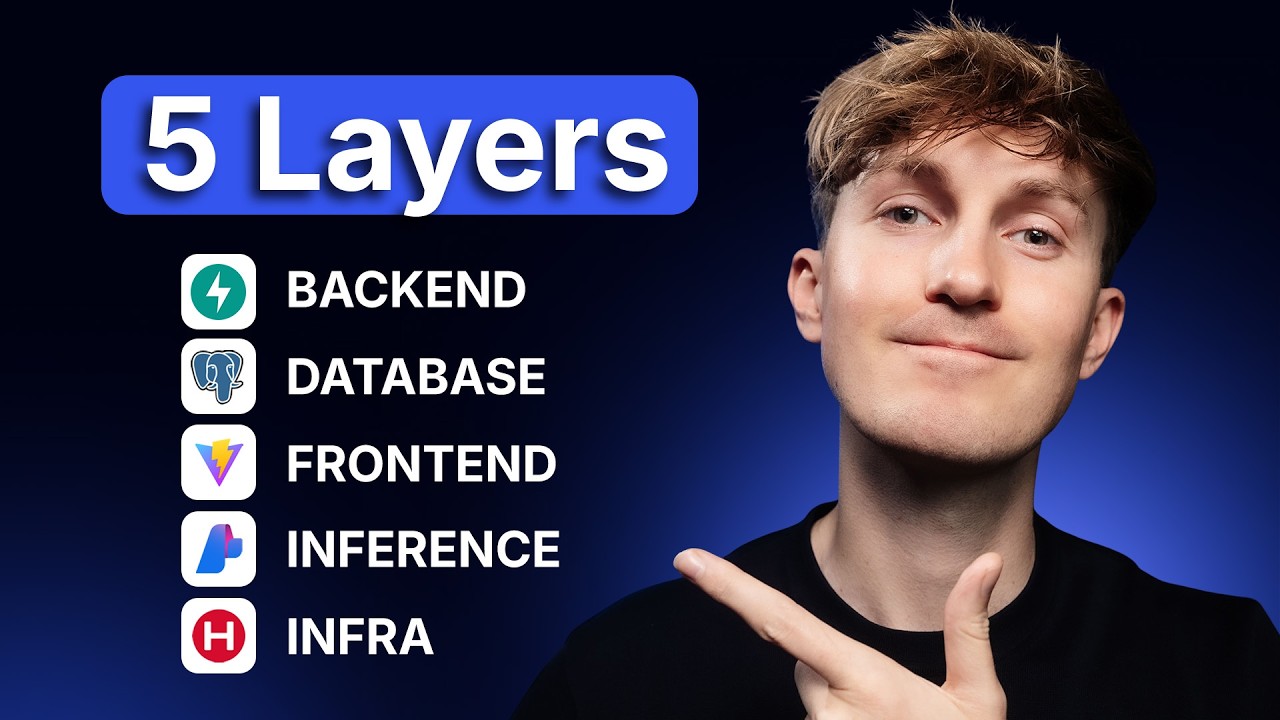
In the video, Dave Ablar introduces a comprehensive and enduring AI automation tech stack that he has been using for years and highly recommends for those serious about learning AI automation or pursuing a career in the field. He emphasizes that while many AI tools exist, job requirements typically focus on foundational skills such as backend development, database management, frontend creation, AI integration, and infrastructure deployment rather than specific tools. Dave outlines a five-layer stack covering these components, providing a roadmap for learners to build robust AI automation systems.
The first layer is the backend, where Python is the core programming language. Dave highlights two essential Python libraries: FastAPI, which is used to create API endpoints for communication with the system, and Celery, which manages background tasks and scheduled jobs to ensure scalability and robustness. Mastering Python and these libraries is crucial for building the engine that powers AI automations.
For the database layer, Dave recommends PostgreSQL as a reliable and scalable solution suitable for most applications, even those with millions of records. He suggests using Supabase, a cloud-based wrapper around PostgreSQL, which simplifies database management and authentication while providing a user-friendly admin interface. This setup offers a practical and efficient storage solution for AI automation projects.
The frontend layer involves building the visual interface, which is optional but often necessary for dashboards or admin panels. Dave advocates for using React as the primary JavaScript library, combined with Vite for development and deployment, and the Shadcn UI component library for ready-made, customizable UI components. This stack enables developers to quickly create functional and aesthetically pleasing frontends, even with limited design expertise.
The AI layer integrates various AI models, such as language models, embeddings, vision, and speech models, accessible through APIs from providers like OpenAI, AWS, Azure, or Google Cloud. Dave stresses that this layer is relatively straightforward since it mainly involves making API calls to these services. Finally, the infrastructure layer involves deploying the entire system using Docker and platforms like Railway or cloud providers such as AWS or Azure. Dave also shares a four-hour live build video demonstrating how to create a complete AI automation project using this stack, encouraging viewers to watch it to deepen their understanding and skills.