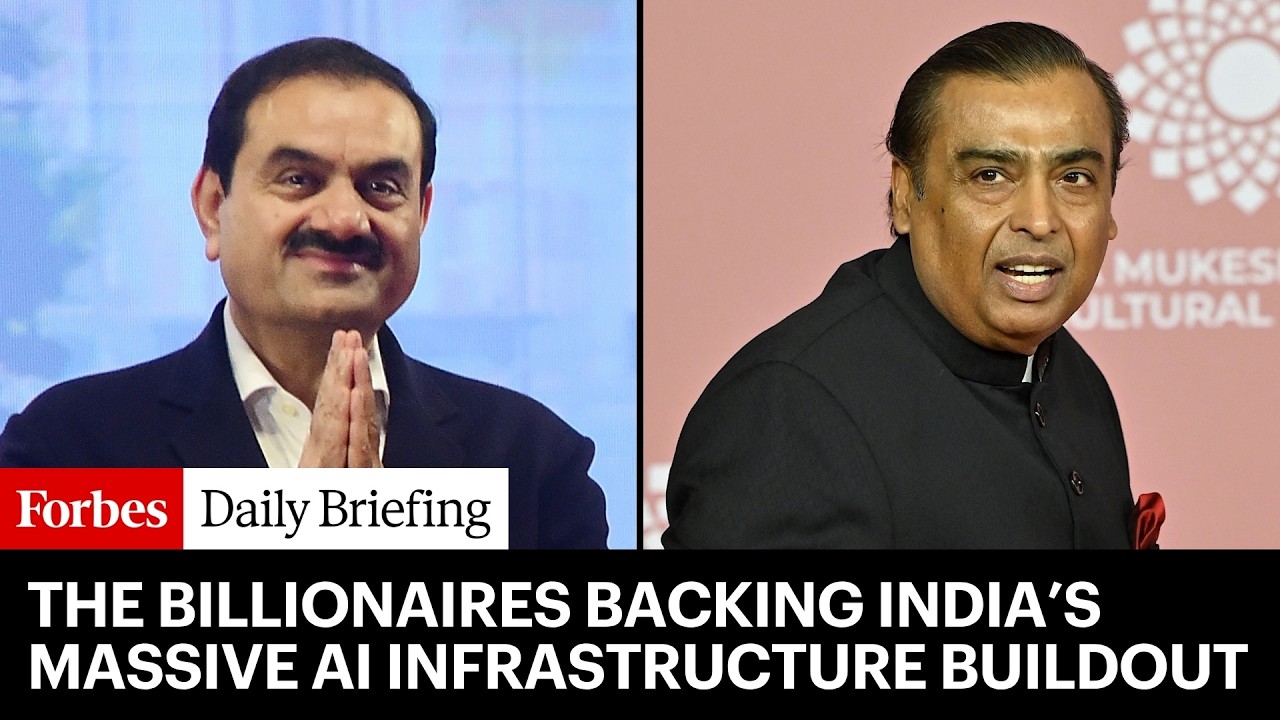
India is rapidly advancing its AI infrastructure ambitions, driven by significant investments from its two richest billionaires. Gautam Adani’s Adani Group announced a $100 billion investment plan by 2035 to build data centers powered by renewable energy from Adani Green Energy. Shortly after, Mukesh Ambani of Reliance Industries pledged $110 billion over seven years to develop new data centers and AI initiatives, aiming to make AI affordable for Indians. Ambani’s son, Akash, will oversee these efforts, reflecting a strategy similar to the disruptive pricing model of their Jio mobile operator.
Despite these ambitious plans, India currently lags behind other Asian countries like China in data center capacity relative to population. India has about one megawatt of installed capacity per 825,000 people, compared to China’s one megawatt per 288,186 people. The government aims to increase capacity from 1.8 gigawatts in 2023 to 5.7 gigawatts by 2030, but this will still fall short of China’s projected 6.8 gigawatts. Industry experts note that India’s scale, cost advantages, and domestic demand position it well to capture a significant share of the growing AI market in the Asia Pacific region.
To attract foreign investment, the Indian government has introduced a tax holiday from 2027 to 2047 for foreign cloud providers using India-based data centers. Major global players like Google, Microsoft, and Flipkart have partnered with the Adani Group to establish data center campuses across the country. Reliance is also building a 168-megawatt AI data center for Meta in Western India. Analysts predict that by 2030, India could generate $4.7 to $5.6 billion annually from leasing data center capacity, with AI inference workloads increasingly moving closer to Indian users, potentially positioning India as a cloud services exporter.
However, the development of these mega data center projects faces challenges such as securing adequate power, water, and connectivity. Local opposition and environmental concerns have emerged, exemplified by protests against Adani’s $15 billion project with Google in Vizag. Google has committed to using renewable energy, advanced cooling technologies, and watershed management to mitigate environmental impacts and support local communities. These issues highlight the balancing act between rapid infrastructure growth and sustainable development.
Meanwhile, the rise of AI is disrupting India’s traditional IT outsourcing sector, impacting the fortunes of tech billionaires tied to this industry. Companies like HCL Technologies, Wipro, and Infosys have seen significant stock declines, leading to substantial drops in the net worth of their founders and major shareholders such as Shiv Nadar, Azim Premji, and N.R. Narayana Murthy. This shift underscores the broader economic and technological transformations underway in India as the country positions itself for a future dominated by AI and digital infrastructure.
Useful Links