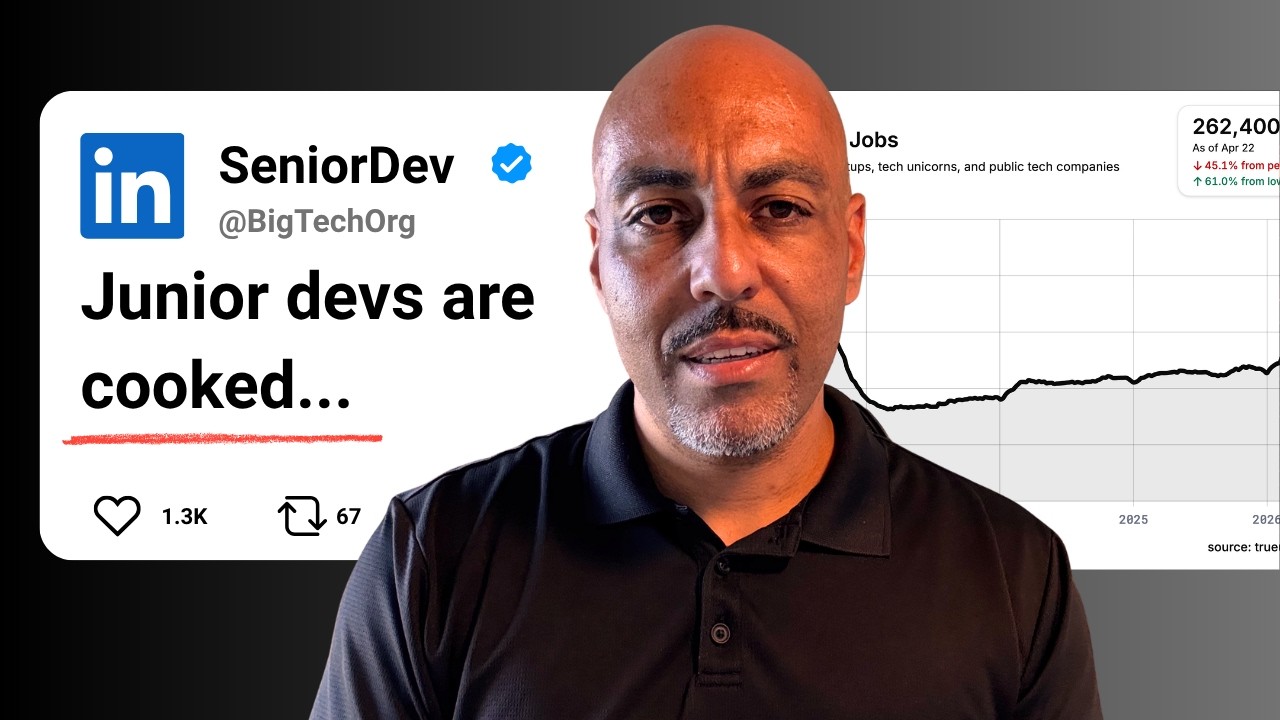
The video discusses the challenging reality of the junior developer job market in 2026, dispelling myths that it is impossible to get hired. The speaker, a senior software engineer and coding boot camp owner, acknowledges that while hiring for entry-level roles has declined significantly, it is still possible to secure a position with the right approach. He emphasizes that the market has changed since 2019 and 2023, and aspiring developers need to adapt by building strong, overengineered projects that solve real problems, rather than relying solely on front-end skills or numerous superficial side projects.
A major topic covered is the role of AI in software development and hiring. The speaker warns against the misconception that learning to code is obsolete and that knowing how to use AI tools alone is sufficient. Instead, he stresses that fundamental coding skills remain essential, as interviews still test core programming concepts, data structures, algorithms, and behavioral skills. AI-assisted programming is becoming more common but is rarely the sole focus of interviews. Candidates must demonstrate they can use AI tools effectively without relying on them as crutches.
Regarding technical skills, the speaker advises learning a versatile programming language such as JavaScript, Python, or TypeScript, with a focus on full-stack development using frameworks like React and Next.js. He highlights the importance of understanding backend concepts, cloud deployment, databases, authentication, and analytics to build comprehensive applications. Overengineering projects to include real-world features like payment integration and cloud hosting provides valuable experience that can be discussed in interviews and sets candidates apart.
The video also covers strategies for networking and job searching, particularly on LinkedIn. Posting weekly updates about meaningful projects, engaging genuinely with others’ content, and building authentic connections can increase visibility to recruiters. The speaker encourages leveraging personal networks and reaching out to friends, family, or acquaintances who might connect you to software roles, especially in smaller companies or less obvious locations. He cautions against applying indiscriminately and suggests targeting roles where you meet at least half the requirements to avoid being overlooked.
Finally, the speaker addresses interview preparation, emphasizing the importance of practicing with real humans to manage nerves and improve performance. He recommends mock interviews on platforms like Pramp and advises candidates to expect failure as part of the process. Preparing specifically for the type of interview you will face—whether technical, behavioral, or AI-assisted—is crucial. Behavioral questions require thoughtful stories about conflict and project experience, ideally drawn from your own overengineered projects. Overall, the message is that while the junior developer job market is tougher, with the right skills, mindset, and networking approach, success is achievable.