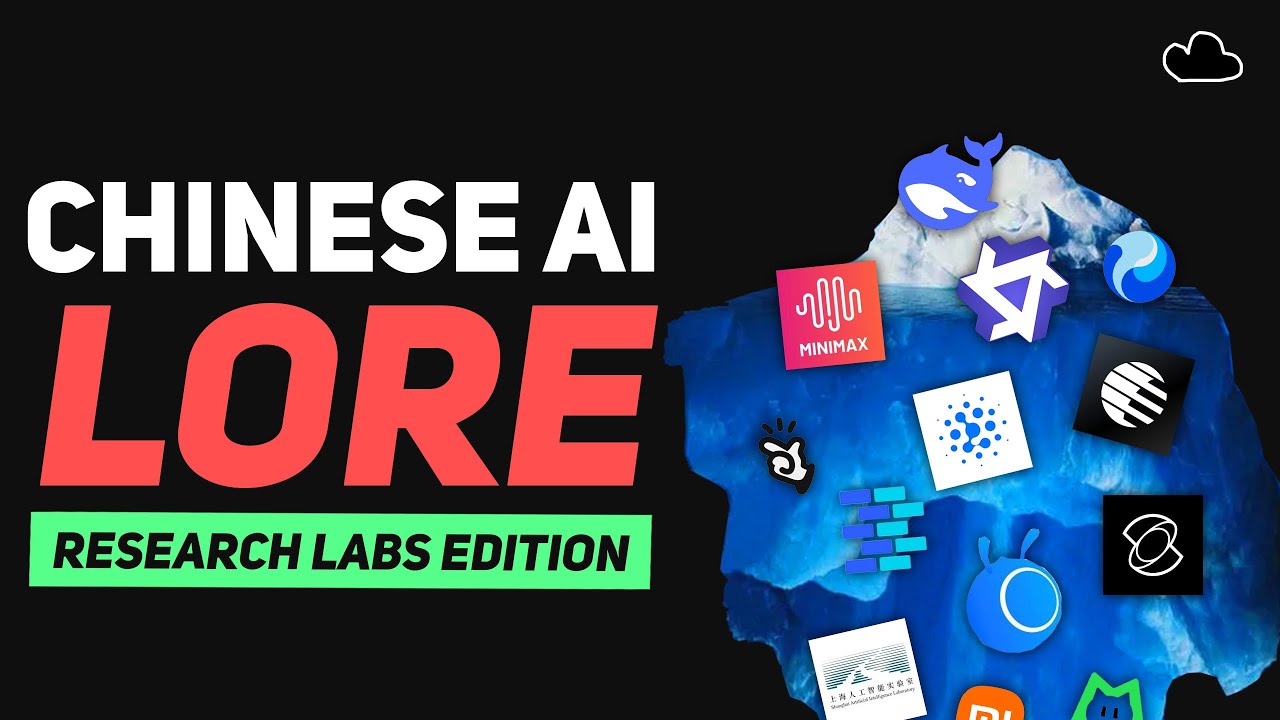
The video provides an in-depth overview of the rapidly evolving landscape of Chinese AI development, highlighting how Chinese labs are now dominating the open-source AI model space and closing in on the performance of private AI models. It begins by emphasizing the importance of understanding these developments, not only for individuals but also for businesses and jobs, especially as AI accelerates at an unprecedented pace. The video also promotes a free resource from HubSpot for Startups that distills blunt predictions from top AI executives, offering insights into market trends, productivity impacts, and reasons why many AI implementations fail.
At the forefront of Chinese open-source AI is DeepSeek, an AI startup operating with minimal funding and compute resources but consistently releasing state-of-the-art models and infrastructure for free. Despite its low profile and modest social media presence, DeepSeek has made significant breakthroughs, including award-winning research and models that have even impacted stock markets. Following DeepSeek, the video discusses the “Chinese Big Three” tech giants—Alibaba Cloud, ByteDance, and Tencent—each with massive AI budgets and significant contributions. Alibaba’s Quinn series is widely used in academic research and offers a range of model sizes for various applications. ByteDance’s AI division, ByteSeed, has rapidly risen with top-performing image and video generation models, while Tencent remains more secretive but continues to release notable models integrated into platforms like WeChat.
The video then explores several prominent Chinese AI startups such as Moonshot AI, founded by a renowned AI researcher, which quickly gained traction with open-source models supporting extensive Chinese language capabilities. Other startups like Zupu AI, Miniax, and Quao have made strides in hybrid reasoning models, video generation, and AI text-to-speech technologies, with Miniax notably leading in text-to-speech performance. An honorable mention is given to Butterfly Effect, known for its autonomous agent application Manis AI, which gained rapid popularity but faces challenges in scaling and maintaining its agentic capabilities.
Delving deeper into the AI ecosystem, the video covers earlier and less publicized players like Baidu with its Ernie model series, 01 AI and BRUN which had brief moments of prominence before fading, and underground labs such as StepFun and OpenB that contribute significantly to AI research despite limited visibility. Huawei’s AI efforts are also discussed, including a recent whistleblower revelation about the company repurposing open-source models as their own, which has damaged their credibility. Other notable institutions include SenseTime, Shanghai AI Laboratory, and Ant Group, all producing cutting-edge research and models, with Ant Group recently releasing a trillion-parameter model.
Finally, the video touches on unexpected entrants into the AI space, such as Shia Hong Su, Xiaomi, and even a food delivery company MTOIN, all releasing competitive open-source models. The overall message is that Chinese AI research and open-source contributions have surged ahead, shifting the global AI power balance. While US companies have slowed their open-source efforts, Chinese institutions are pushing the frontier, benefiting the global community by making advanced AI more accessible. The video concludes by encouraging viewers to stay informed through newsletters and social media, highlighting the dynamic and competitive nature of AI development worldwide.