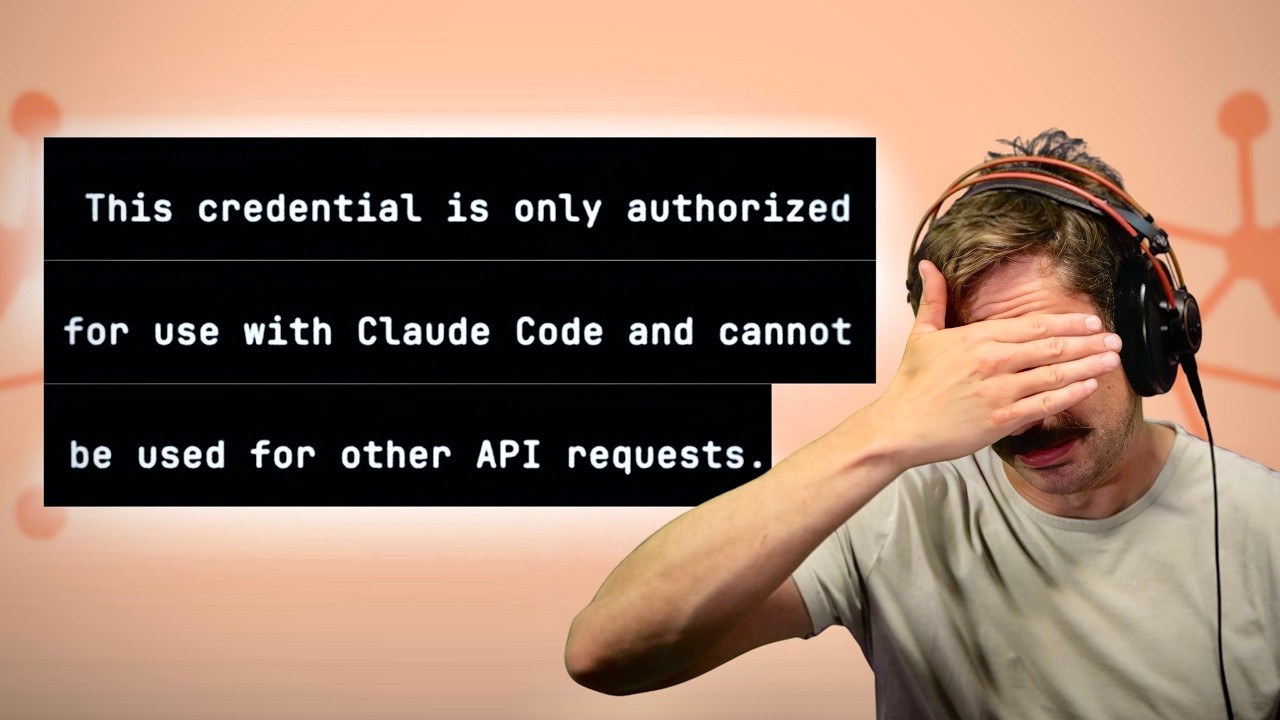
The video covers Anthropic’s decision to restrict Claude Code subscription tokens to its own platform, blocking their use in third-party coding tools and sparking backlash from developers who relied on these integrations. The host argues that this move is less about immediate costs and more about locking users into Anthropic’s ecosystem, criticizing the company’s anti–open source stance and warning of increased user dependence.
The video discusses the recent controversy surrounding Anthropic’s Claude Code tool and its new restrictions on how paid subscription tokens can be used. Previously, users with Claude Pro, Pro 5x, or Pro 20x plans could use their tokens in third-party coding tools like Cursor and OpenCode, allowing them to leverage their subscription benefits outside of Anthropic’s own platform. However, Anthropic has now enforced a policy that restricts these tokens to only work within Claude Code, sparking widespread backlash among developers who relied on third-party integrations.
The host explains that this restriction was technically always part of Anthropic’s terms of service, but enforcement was lax until now. Many third-party tools accessed Claude’s services by using OAuth tokens and mimicking official requests, a fragile workaround that broke as soon as Anthropic changed their systems. The sudden enforcement led to a flood of complaints on GitHub and Reddit, with users seeking workarounds or threatening to cancel their subscriptions. Anthropic justified the move by citing abuse, debugging difficulties, and the need to maintain control over their platform.
The video explores possible reasons for this timing. While some speculate that cost concerns drove the change—since API access is much more expensive than subscription plans—the host argues that this is not the main factor. Instead, he suggests that Anthropic wants to force users into their own ecosystem, making their tooling and platform the default choice for developers. This is especially relevant as open-source alternatives like OpenCode have rapidly gained popularity, offering a better user experience and more flexibility than Claude Code.
The host criticizes Claude Code’s quality, pointing out persistent bugs and usability issues compared to open-source competitors. He suggests that Anthropic’s move is less about immediate financial concerns and more about long-term strategy: by locking users into their stack, they hope to create a “sticky” ecosystem that discourages switching to other models or tools. The video also touches on the high operational costs of running large AI models, the rapid pace of hardware innovation, and the pressure to stay competitive in the AI landscape.
In closing, the host expresses skepticism about Anthropic’s leadership, particularly CEO Dario Amodei, accusing the company of being anti–open source and overly controlling. He warns that Anthropic’s vision is to centralize AI development and limit user independence, ultimately making developers dependent on their platform. The video ends with a call for viewers to share their opinions and a brief sponsor message.