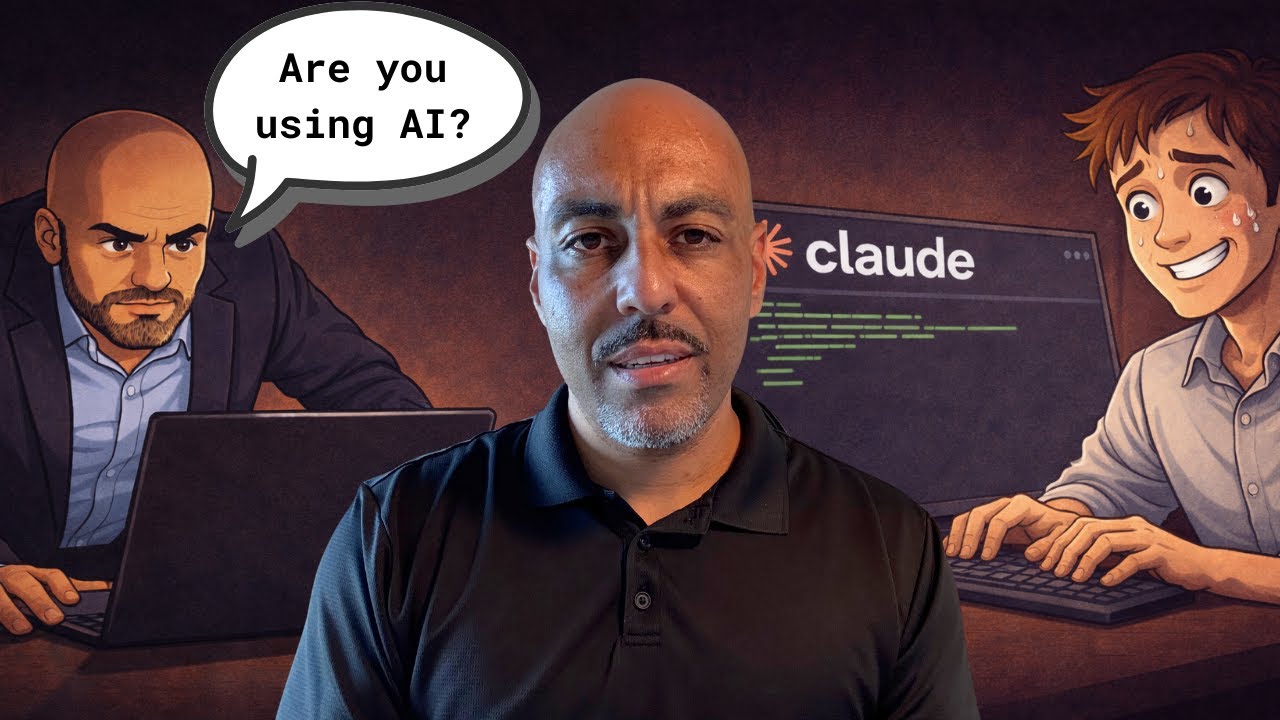
The video explains how technical interviews are evolving to expect and assess candidates’ use of AI coding tools, emphasizing the importance of transparency, communication, and genuine understanding when integrating AI into problem-solving. Success now depends not just on solving problems, but on demonstrating thoughtful use of AI, clear explanations, and the ability to review and justify AI-generated code.
The video discusses the evolving landscape of technical interviews in the era of AI-assisted coding tools. The speaker recounts experiences both as an interviewer and an interviewee at an AI startup, highlighting how candidates are now often expected to use AI tools like Cursor or Claude during live coding challenges. The company explicitly allows and even encourages the use of these tools, not just to see if candidates can solve problems, but to observe how they integrate AI into their workflow and decision-making process. This shift means that simply denying the use of AI or pretending to understand AI-generated code without genuine comprehension is a quick way to fail an interview.
The speaker shares anecdotes about candidates who were caught cheating—either by lying about their use of AI tools or by being unable to explain code they had clearly not written themselves. These incidents underscore the importance of honesty and transparency in interviews, especially as AI becomes more prevalent in software development. The speaker notes that most developers now use or plan to use AI tools, making it counterproductive to refuse them out of pride or a misguided attempt to impress interviewers.
To succeed in modern interviews, the speaker offers several practical tips. First, candidates should embrace AI tools rather than avoid them, as most companies expect their use. Second, it’s crucial to verbalize your thought process, explaining what you’re doing and why, especially when using AI. This not only demonstrates technical competence but also communication skills and the ability to reason through trade-offs. Silence during an interview is now more suspicious than ever, so narrating your actions is essential.
Another key point is to treat AI-generated code as a first draft, not a final answer. Candidates should review, modify, and justify any code they accept from AI tools, showing that they understand and can improve upon what the AI provides. Being able to explain every line of code is non-negotiable; if you can’t, it’s a red flag for interviewers. Admitting gaps in knowledge and showing a willingness to learn is far better than pretending to know everything.
Finally, the speaker advises optimizing for being hirable, not just for passing coding challenges quickly. Interviewers are looking for candidates who can communicate clearly, make sound judgments, and collaborate effectively—not just those who can produce correct code with AI assistance. As the interview process adapts to the widespread use of AI, candidates must be prepared for a mix of traditional and AI-driven challenges. The speaker concludes by offering a resource for hands-on practice and encourages viewers to focus on genuine skill development rather than shortcuts.