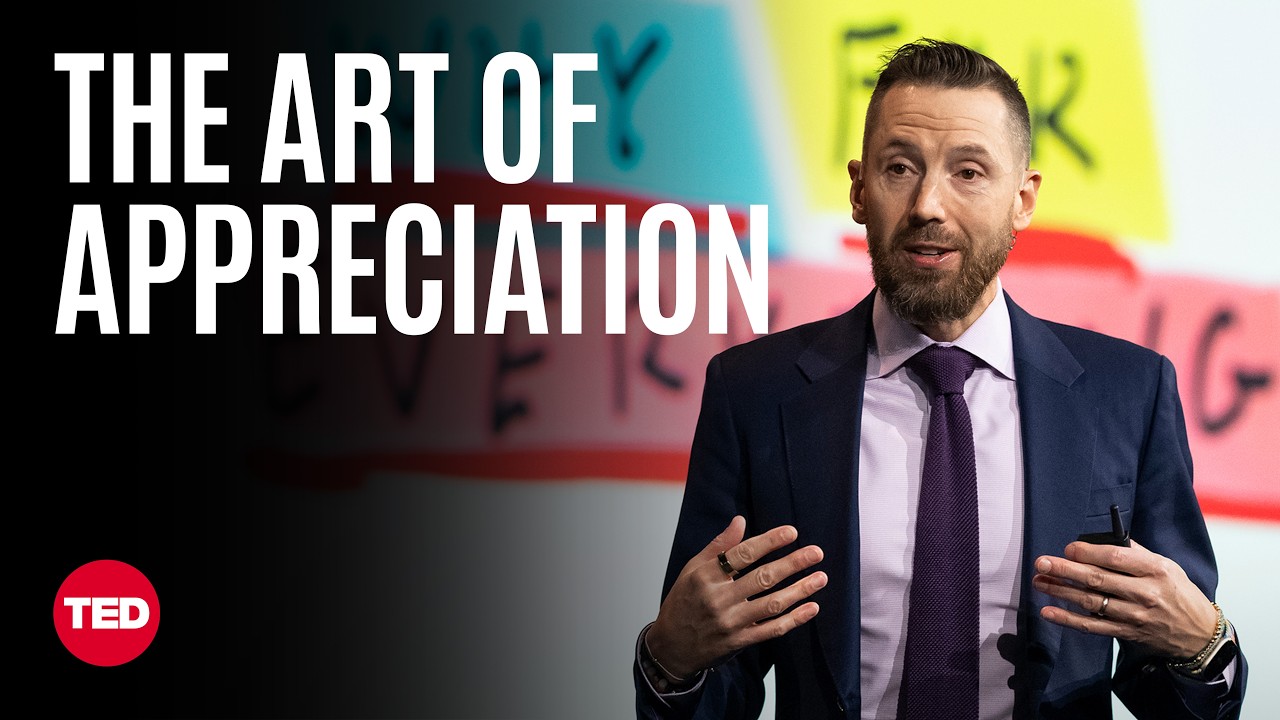
In his TED talk, Timm Chiusano shares how cultivating a daily practice of appreciation—distinct from gratitude—helped him find joy and presence amid life’s challenges by noticing and valuing the often-overlooked positives around him. Supported by scientific research, he encourages embracing appreciation to foster empathy, improve relationships, and rewire our brains for greater happiness and compassion.
In his TED talk, Timm Chiusano shares a transformative experience that led him to become “addicted to appreciation.” On one of the worst days of his corporate career, overwhelmed by stress and impending layoffs, he found his mind unexpectedly drawn to a simple manhole cover on the street. This moment sparked a realization that appreciating the small, often overlooked details in life could unlock a new level of joy and presence, even amid difficult circumstances. He defines appreciation as the act of noticing and valuing the good in our world, which can fundamentally change how we experience life.
Timm emphasizes that appreciation is different from gratitude. While gratitude is transactional and often tied to receiving something, appreciation is foundational and can be integrated into every aspect of daily life. It involves recognizing the positive qualities in people and situations, even those that initially seem challenging or mundane. By adopting this mindset, Timm found that he gained energy, joy, and a renewed zest for life, which helped him navigate his demanding corporate role and personal challenges with greater ease.
The talk also highlights scientific support for the power of appreciation. A Rutgers professor’s research shows that appreciation is a disposition made up of multiple components, with gratitude being just one part. This research validates Timm’s personal experience and suggests that anyone can cultivate appreciation by consciously noticing the good around them. His journey led him to share his perspective on social media, where his daily vlogs resonated with a large audience, helping others see life through a more positive and appreciative lens.
Timm offers practical advice on how to start practicing appreciation. He suggests beginning with simple, everyday objects like a light bulb, encouraging people to consider the progress and benefits behind such commonplace items. He also advises appreciating people, even those who might frustrate us, by recognizing the challenges they face in their lives. This shift in perspective can foster empathy and improve relationships, giving us a greater sense of connection and understanding.
In closing, Timm acknowledges that appreciation is not about ignoring the negative aspects of life but about balancing them with a deeper understanding and recognition of the good. He believes that cultivating appreciation can make us happier, more present, and more compassionate, ultimately helping us take less for granted and believe in each other’s potential. His message is a call to embrace appreciation as a daily practice that can rewire our brains and transform how we engage with the world around us.