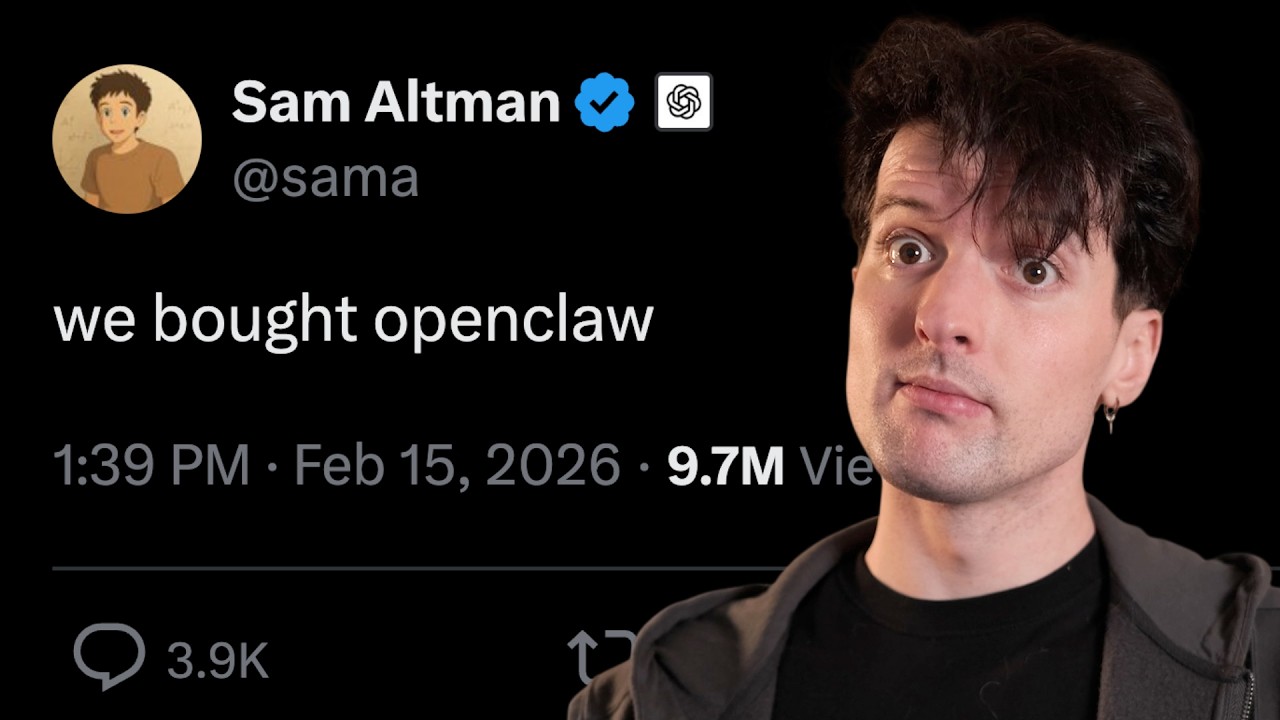
The video covers the rapid evolution and ultimate resolution of the Clawdbot (now OpenClaw) saga in the AI world. Initially, Clawdbot was a side project by Peter Steinberger, designed to act as a powerful AI agent capable of automating tasks on a user’s personal computer. The project quickly gained traction, becoming the fastest-growing GitHub project ever, surpassing even major frameworks like Next.js and Kubernetes. Its popularity stemmed from its ability to perform almost any action a user could do on their computer, albeit with significant risks due to its high level of access.
The project’s journey was turbulent, especially regarding its naming. Originally called Cloudbot, it was forced to rebrand after Anthropic, the company behind the Claude AI model, sent legal threats over trademark issues. This led to a brief stint as Moltbot before finally settling on OpenClaw. The video highlights Anthropic’s aggressive legal tactics, including DMCA takedowns and restrictive subscription policies, contrasting them with OpenAI’s more open and collaborative approach to open-source projects and developer relations.
Peter’s decision to join OpenAI was influenced by several factors. Despite interest from other companies like Meta and Anthropic, OpenAI’s supportive culture, commitment to open source, and willingness to fund and sponsor OpenClaw as an independent foundation made it the most attractive option. Peter, who was already financially secure from a previous startup exit, prioritized stability, creative freedom, and a positive working environment over monetary incentives or company ownership.
The video also delves into Peter’s unique approach to building and shipping projects, emphasizing his relentless productivity and willingness to document and share his methods. His philosophy centers on building tools that empower users, and his success with OpenClaw demonstrates the impact that individual builders can have in the AI space, even as large companies dominate the landscape. The host praises Peter’s ability to consistently deliver innovative solutions and inspire others in the developer community.
Ultimately, the saga concludes with Peter joining OpenAI to work on the next generation of AI agents, while OpenClaw remains open-source and independent under a new foundation. The story is framed as a testament to the power of open-source innovation and the importance of supportive company cultures. The host encourages viewers to keep building and experimenting, suggesting that individual contributions can still shape the future of AI, just as Peter’s work with OpenClaw has done.